| Main centres: | 1-3 business days |
| Regional areas: | 3-4 business days |
| Remote areas: | 3-5 business days |
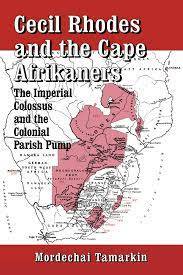
"CECIL RHODES AND THE CAPE AFRIKANERS - THE IMPERIAL COLOSSUS AND THE COLONIAL PARISH PUMP" MORDECHAI TAMARKIN, HARDCOVER, 339PGS, FIRST EDITION, 1996, EXCELLENT CONDITION.
This book focuses on the relationship between two seemingly incompatible political partners. On the one side Cecil Rhodes, perhaps the greatest British imperialist of his time - on the other side the Cape Afrikaners, part of the ethnic community which was engaged in a major war with that very empire at the close of the nineteenth century. Rhodes skillfully courted the Cape Afrikaners, despite his ardent imperialism and their autonomous colonial intent. While the impact of British imperialism and capitalism set in motion a process of ethnic and political consciousness, it also engendered a desire to be associated with the British. Such was Rhodes's charm that to some Cape Afrikaners he became a political hero, even an idol. Tamarkin successfully shows that the disengagement of the Cape Afrikaners from Rhodes was neither immediate nor inevitable. It was a painful and long process which was driven not just by the Jameson Raid but by Rhodes's increasingly provocative conduct. This extraordinary relationship only finally finished in 1898 during the election campaign, in which Rhodes and the Afrikaner Bond fought tooth and nail for control of the Cape Colony.