SOLAR PV PANEL
100 WATT , 12 VOLT OUTPUT
FEATURES:
MONO CRYSTALLINE CELLS
ANTI REFLECTIVE SiN4 COATING - THIS
OFFERS OPTIMAL PRICE/PERFORMANCE
RATIO
EFFICIENCY (25 YEARS) AND CONSTRUCTION
(2 YEARS) GUARANTEE

SOLAR PANEL BASICS:
A solar electric panel, often called a PV panel is basically a set of treated silicon cells arranged in a series string that produces electric power when exposed to light. There are three common types of solar panels manufactured. Briefly, they are:
- Monocrystalline - made from a single large crystal, cut from ingots. Most efficient, but also the most expensive. Somewhat better in low light conditions (but not as good as some advertising hype would have you believe).
- Polycrystalline - basically, cast blocks of silicon which may contain many small crystals. This is probably the most common type right now. Slightly less efficient than single crystal, but once set into a frame with 35 or so other cells, the actual difference in watts per square foot is not much.
- Amorphous - "thin film", here the silicon is spread directly on large plates, usually of something like stainless steel. Cheaper to produce, but often much less efficient, which means larger panels for the same power. Unisolar is one example.
- Vaporware - this is the 4th type - the one that pops up in the news about every 3 months, proclaiming the next major breakthrough that will make plastic spray on solar cells that will cost around 5 cents a watt, or some similar claim. Well, after almost 30 years in this business, we are still waiting for one of those to actually reach production, and I suspect we will be waiting for another 30.
For all practical purposes, how the three types work in applications is very similar. What is important when buying panels is to choose the right panel based on how much power you need, how much room you have, and where they will be mounted. They will all do the same thing - make electricity when the sun hits them. Thin film are often less efficient, so will take up more room for the same power, but on the other hand they work better in hot climates due to not losing quite as much at high temperatures.
You will see some manufacturers and websites claiming that panel XX is better because it is more efficient at low light. While it is true that monocrystalline ARE better, the difference in average daily production is less than 1%. If you have low light, you also have low sun energy. So converting 15% of very little is not much better than converting 14% of very little. So, yes, it is true, but about #18 on the list of things to worry about when buying solar panels.
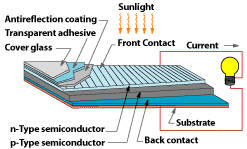
A typical solar cell consists of a glass or plastic cover or other encapsulant, an antireflective layer, a front contact to allow electrons to enter a circuit, a back contact to allow them to complete the circuit, and the semiconductor layers where the electrons begin and complete their journey.
PLEASE NOTE:
- Take care to read the item description and ensure you understand what you are bidding on. The picture is for display purposes and actual item may vary slightly.
- If you bid on this item, you legally commit yourself to purchase the item and accept the following conditions:
- Items won, need to be paid for within 3 Days from close of auction. Failure to communicate if there are problems in paying will result in the launch of an SNC with Bid or Buy and thereafter may result in legal proceedings.The item will ONLY be shipped once the amount reflects on our account.
- Combined shipping of up to 7 days is allowed, with a maximum of 15 items per package. This is effective from the initial winning bid. IF you wish to make use of this facility, please send us an email to notify us.
- We strive to have a 100% rating, so if there are any problems, we always appreciate if you approach us first, before placing a negative or NEUTRAL rating.