| Main centres: | 1-3 business days |
| Regional areas: | 3-4 business days |
| Remote areas: | 3-5 business days |
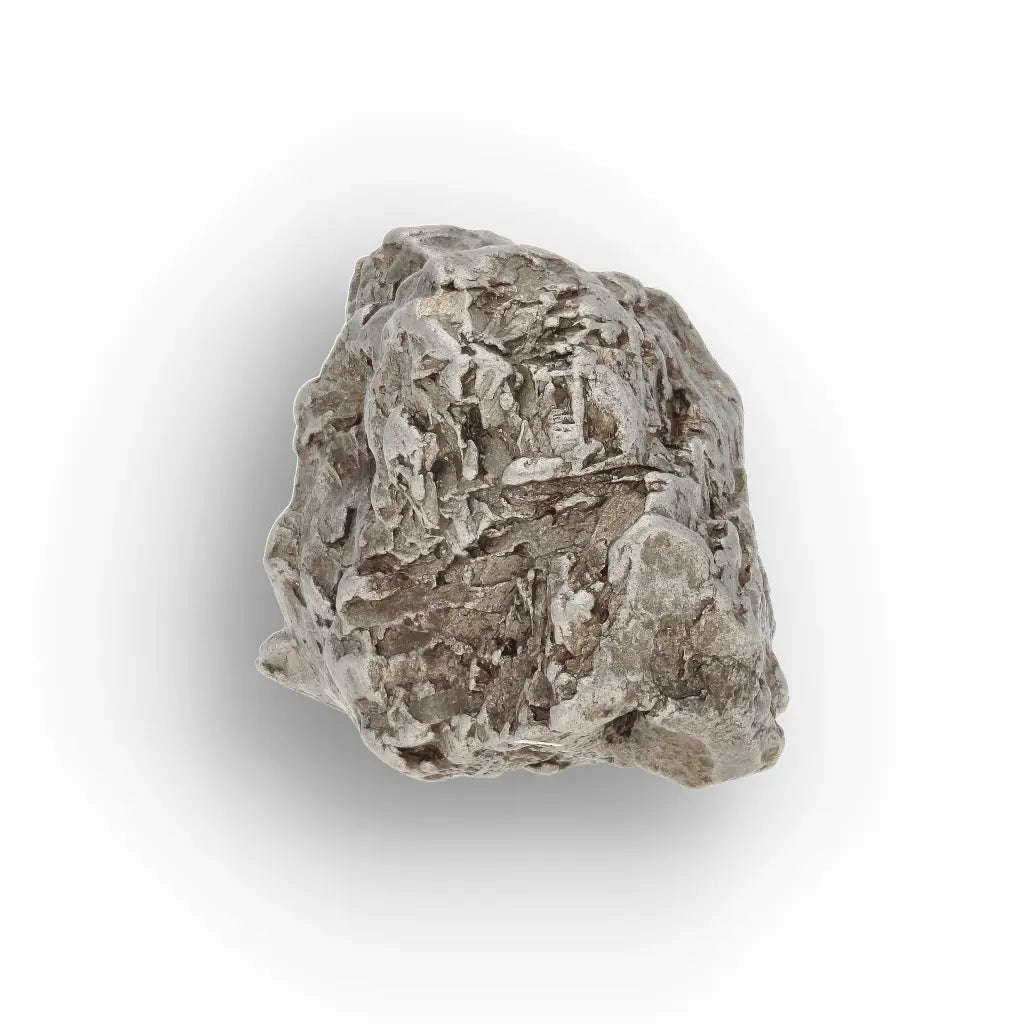
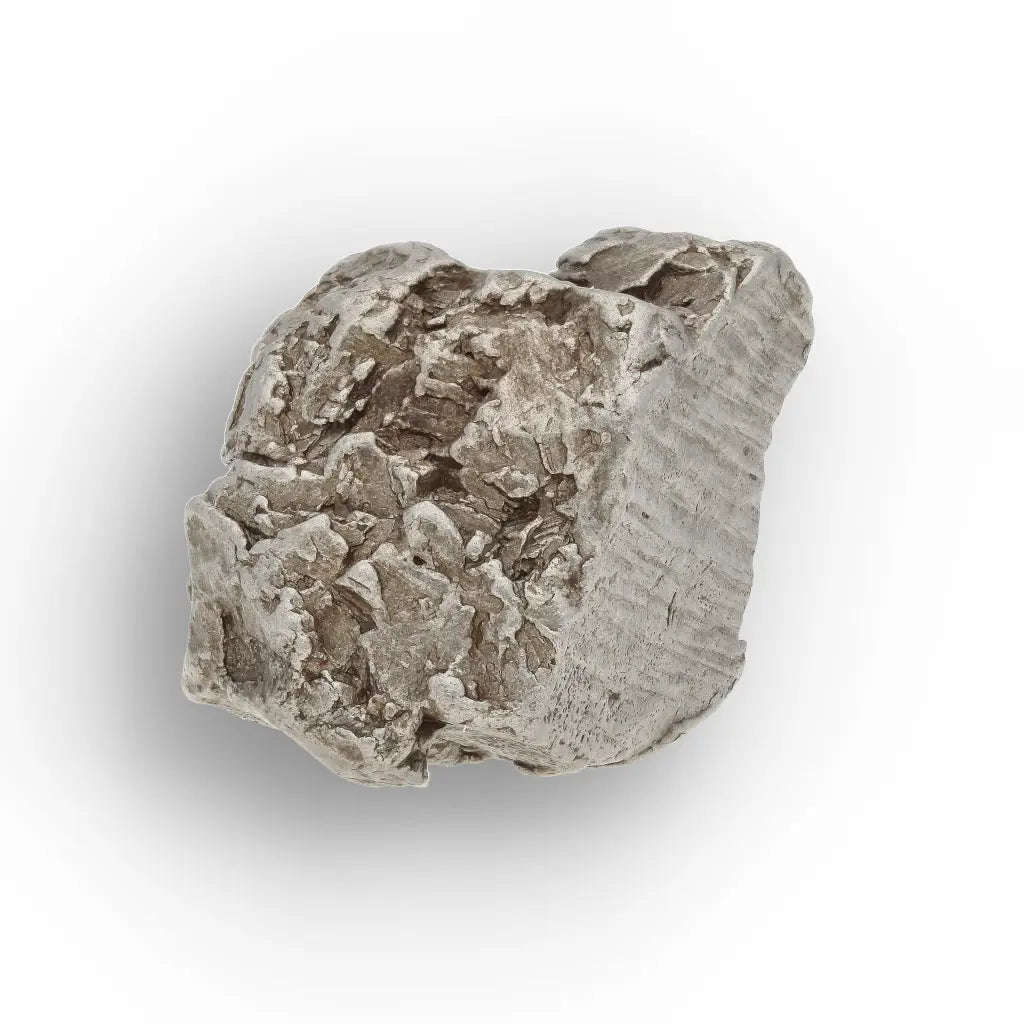
The Widmanstätten pattern is the definitive proof of iron meteorite authenticity an interlocking crystal structure that forms only over millions of years of ultra-slow cooling inside an asteroid, impossible to replicate in any laboratory. In the Aletai meteorite, that pattern is even more remarkable: described by scientists as distinct from all other IIIE iron meteorites, it is a visual signature as unique as a fingerprint.
The Aletai meteorite was first identified in 1898 under the name Armanty. Over the following century, additional fragments were recovered across Northern Xinjiang under different names Xinjiang, Ulasitai until their shared chemistry and mineralogy confirmed a single origin. In 2016, all known masses were formally unified as Aletai, after the Altay Prefecture in China. The fall created the largest meteorite strewn field ever recorded on Earth, stretching at least 430 kilometres, with total recovered mass exceeding 74 tonnes.
Classified as an anomalous IIIE coarse octahedrite unlike any known sample, the Aletai meteorite's complex mineralogy kamacite, taenite, plessite, schreibersite, troilite, cohenite, haxonite, and daubréelite along with its high cobalt, gold, and iridium content confirms a cosmic origin story unlike any other. The Widmanstätten pattern in this specimen is the visible expression of that extraordinary history.
Meteorite Type: Anomalous IIIE Iron Meteorite (Coarse Octahedrite)
Composition: Kamacite, Taenite, Plessite; elevated Cobalt, Gold & Iridium
Accessory Minerals: Schreibersite, Troilite, Cohenite, Haxonite, Daubréelite
Strewn Field: 430+ km longest ever recorded on Earth
Total Recovered Mass: Exceeds 74 tonnes
Fall Location: Northern Xinjiang (Altay Prefecture), China
First Identified: 1898 (as Armanty); formally named Aletai in 2016
Specimen Size: 29mm x 24mm x 18mm
Weight: 46 gram
Own an Aletai meteorite with a Widmanstätten pattern unlike any other a scientifically unique specimen from the world's largest strewn field.