| Main centres: | 1-3 business days |
| Regional areas: | 3-4 business days |
| Remote areas: | 3-5 business days |
The Aletai meteorite holds a record that no other fall on Earth can match: a strewn field extending at least 430 kilometres the largest meteorite debris field ever recorded. Scientists believe this extraordinary dispersal was caused by a unique stone-skipping atmospheric trajectory, in which the meteorite entered Earth's atmosphere at a shallow angle, bounced off the upper atmosphere like a stone skipping across water, and then re-entered at a different point before finally breaking apart and scattering its fragments across Northern Xinjiang.
This stone-skipping trajectory is exceptionally rare possibly unique in the documented meteorite record and it contributed to the difficulty in recognising the Aletai as a single fall. Fragments recovered at different points along the strewn field were catalogued separately for decades under names including Armanty, Xinjiang, and Ulasitai, before chemical and mineralogical analysis confirmed a shared origin. In 2016, all known masses were formally named Aletai after the Altay Prefecture in China.
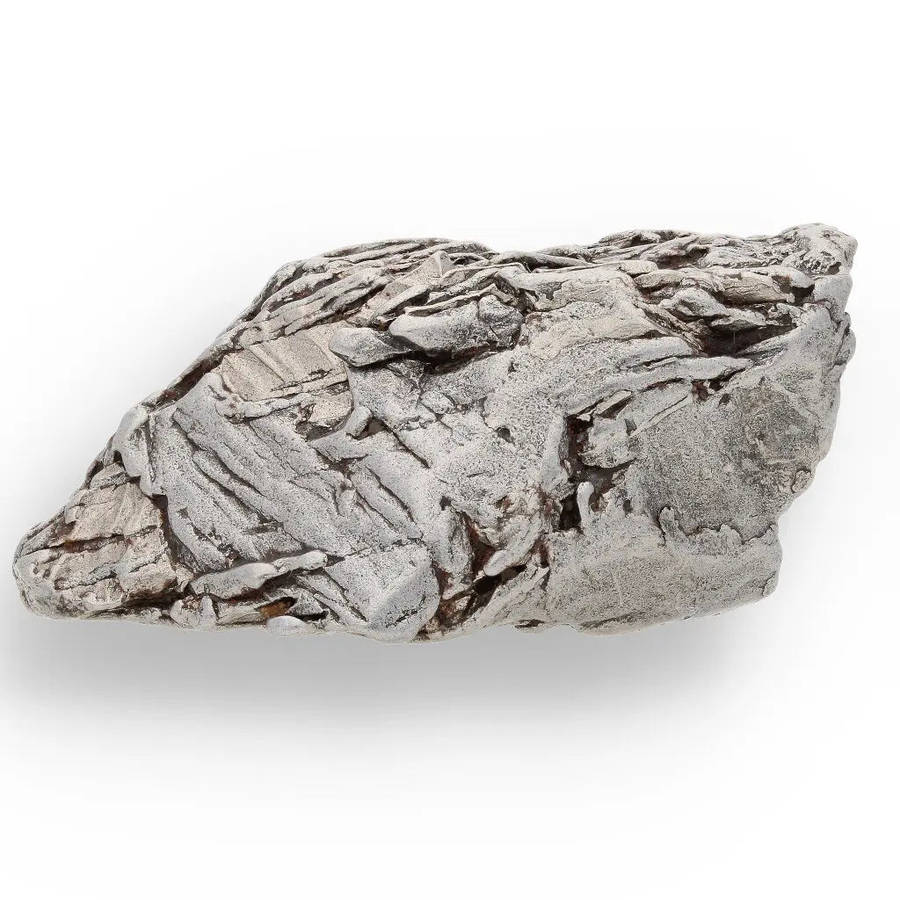
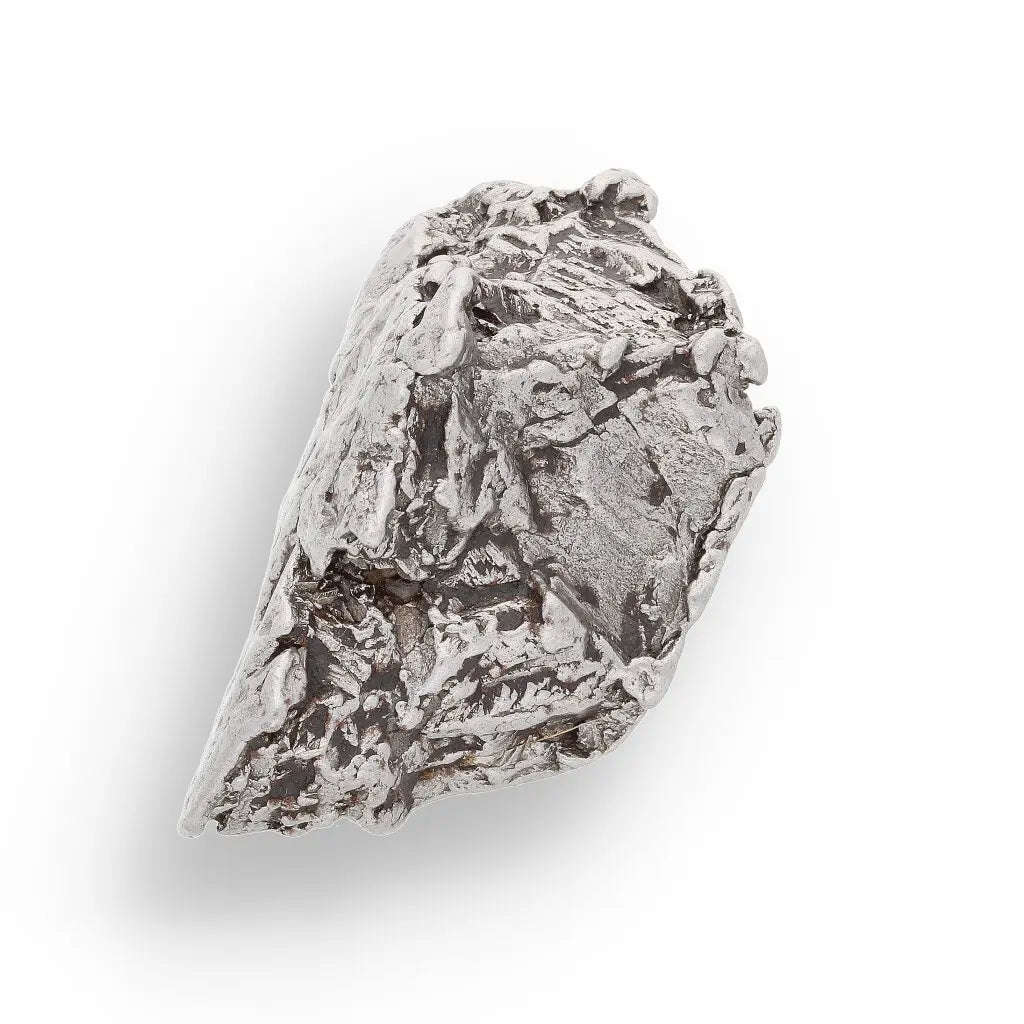
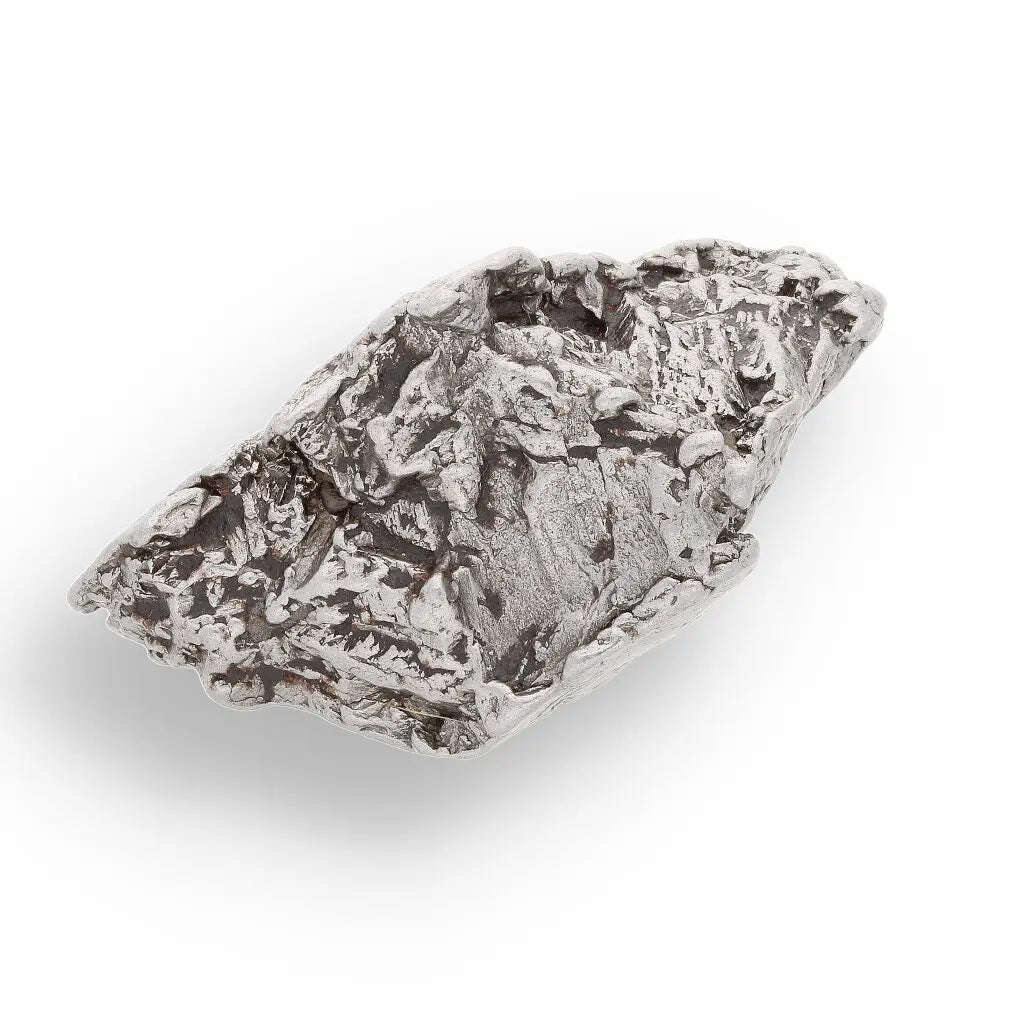
Classified as an anomalous IIIE iron meteorite a coarse octahedrite unlike any other known sample Aletai has a total recovered mass exceeding 74 tonnes, a Widmanstätten pattern distinct from all other IIIE irons, and a rare-element chemistry featuring elevated cobalt, gold, and iridium. This is a fragment of a truly one-of-a-kind cosmic event.
Meteorite Type: Anomalous IIIE Iron Meteorite (Coarse Octahedrite)
Composition: Kamacite, Taenite, Plessite; elevated Cobalt, Gold & Iridium
Accessory Minerals: Schreibersite, Troilite, Cohenite, Haxonite, Daubréelite
Strewn Field: 430+ km longest ever recorded on Earth
Total Recovered Mass: Exceeds 74 tonnes
Fall Location: Northern Xinjiang (Altay Prefecture), China
First Identified: 1898 (as Armanty); formally named Aletai in 2016
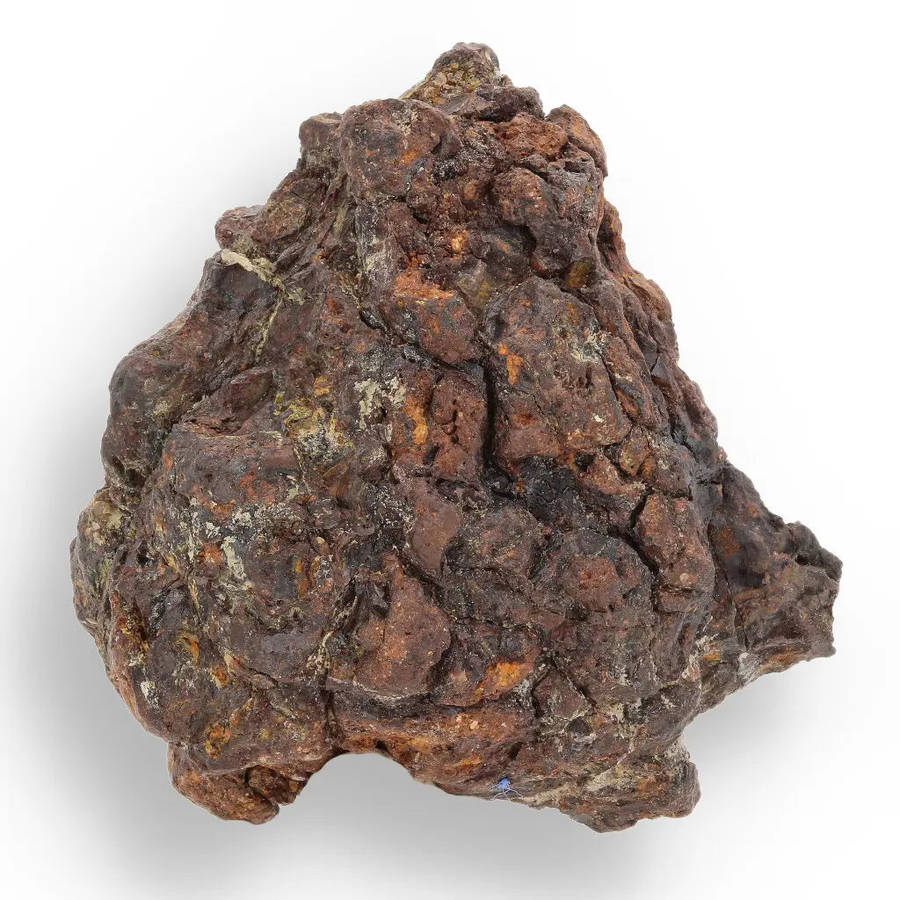
Specimen Size: 17mm x 37mm x 22mm
Weight: 38 gram
Own a fragment of the only known stone-skipping meteorite fall the Aletai, from the world's largest recorded strewn field.