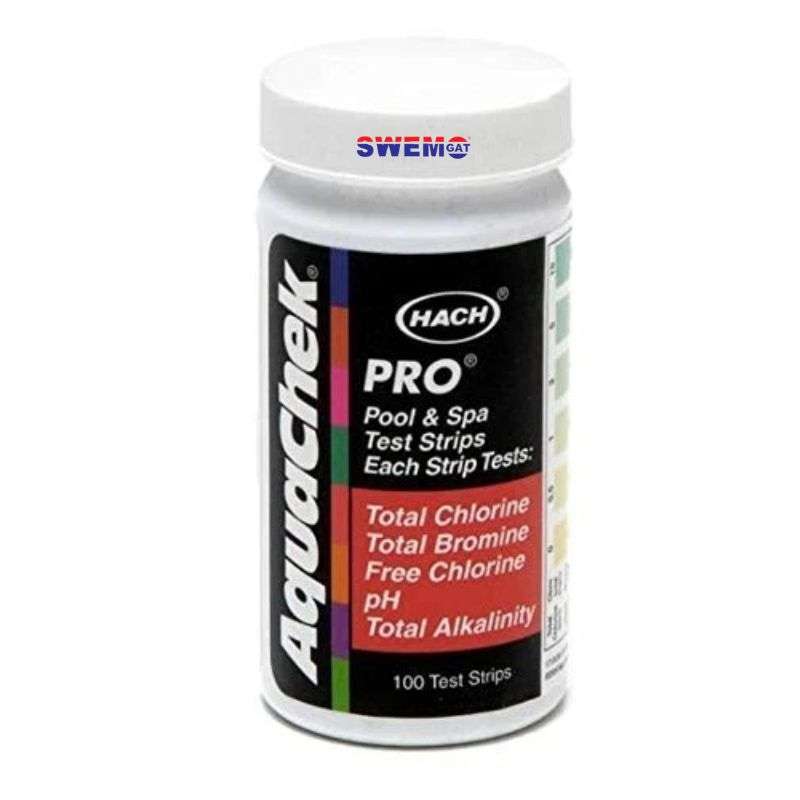
Keep your swimming pool or spa water properly balanced with AquaChek Pro 5-in-1 Test Strips.
Designed for pool owners, technicians and service professionals, these easy-to-use strips provide fast readings of the most important everyday water-balance parameters. Simply dip a strip into the water, remove it and compare the test pads with the colour chart printed on the bottle.
Each bottle contains 100 professional-quality test strips, making it a practical choice for regular pool maintenance, service calls and commercial use.
Tests Five Important Water Parameters
AquaChek Pro test strips measure:
- Free chlorine
- Total chlorine
- Total bromine
- pH
- Total alkalinity
Product Benefits
- Tests multiple water parameters with one strip
- Quick and easy colour comparison
- No liquid reagents or complicated testing equipment required
- Helps identify water-balance problems before they become serious
- Suitable for swimming pools, spas and hot tubs
- Ideal for pool owners and professional pool technicians
- Convenient bottle containing 100 test strips
- Useful for routine weekly testing and service visits
How to Use
- Remove one test strip without touching the test pads.
- Dip the strip into the pool or spa water and remove it immediately.
- Hold the strip level without shaking off the water.
- Allow the colours to develop according to the instructions on the bottle.
- Compare each test pad with the corresponding colour chart.
- Adjust the pool chemicals as required.
For more reliable results, test water away from return jets, chemical feeders and recently added chemicals.
Why Regular Pool-Water Testing Matters
Correct chlorine, pH and alkalinity levels help keep pool water clear, comfortable and easier to maintain.
Regular testing can help prevent:
- Cloudy or green pool water
- Ineffective chlorine
- Eye and skin irritation
- Corrosion of pool equipment
- Scale formation
- Unnecessary chemical use
If you are unsure about the treatment after testing, send a whatsapp message to Swemgat for support.
Important
1) AquaChek Pro 5-in-1 Test Strips do not measure:
- Swimming-pool salt levels
- Cyanuric acid or chlorine stabiliser
- Calcium hardness
Use a separate test product when these measurements are required.
2) Other test products that you may require
Swimming Pool Salt Levels
Salt testing is mainly required for pools fitted with a saltwater chlorinator. Correct salt levels are essential for efficient chlorine production and proper chlorinator operation.
For salt testing, use AquaChek Salt Test Strips
Cyanuric Acid or Chlorine Stabiliser
Cyanuric acid helps protect chlorine from being broken down too quickly by sunlight. Testing the stabiliser level is useful when chlorine consumption is unusually high and you want to reduce chemical costs.
It is also important to test cyanuric acid when chlorine floaters or stabilised chlorine products are used regularly, as these products can cause excessive stabiliser levels to build up over time. High cyanuric acid levels can reduce the effectiveness of chlorine.
Calcium Hardness
Correct calcium hardness levels help protect marble-plastered and cement-based pool linings.
Low calcium hardness can cause the water to draw calcium from the pool surface, which may lead to roughness, pitting and costly damage. Excessively high calcium levels can contribute to white scale deposits on mosaic tiles, pool surfaces and equipment.
Heavy or repeated use of granular chlorine may also contribute to calcium buildup, depending on the type of chlorine used.
For testing of cyanuric acid (i.e. chlorine protector levels) and calcium hardness, use Aquachek Silver Test strips