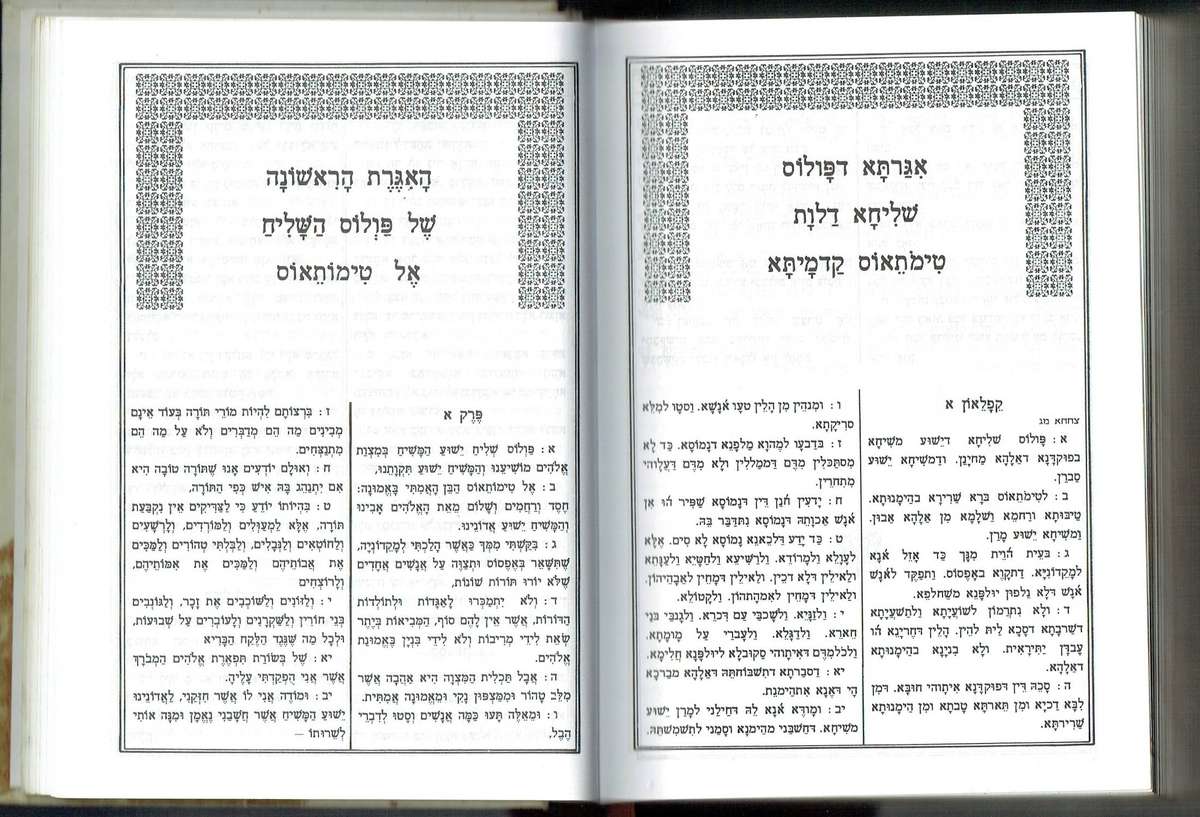
The Aramaic Scriptures Research Society in Israel (editors), The New Covenant: Commonly Called the New Testament. Peshitta Aramaic Text With a Hebrew Translation. Edited by the Aramaic Scriptures Research Society in Israel. Jerusalem: The Bible Society, 2005.
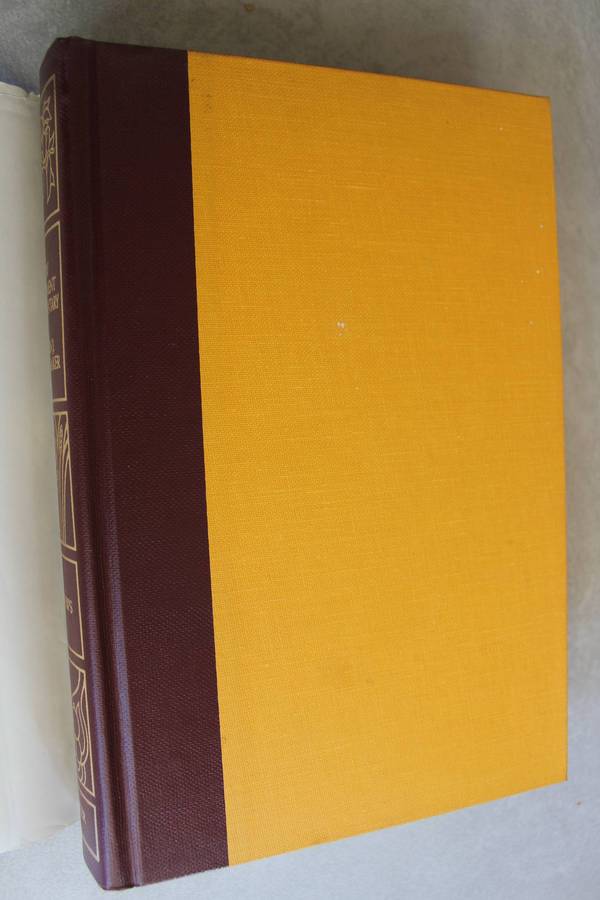
23 x 16.5 cm, hard cover, 353 + 353 pages.
TEXT IN HEBREW CHARACTERS.
Light shelf wear to the covers, slight grubbiness in places, extensive notes and light stain on the rear end papers (please see the relevant image). Generally, in presentable condition.
The New Covenant Aramaic Peshitta Text with Hebrew Translation is a bilingual edition of the New Testament presenting the traditional Syriac Aramaic Peshitta text alongside a modern Hebrew translation. It was edited and published by the Aramaic Scriptures Research Society in Israel.
Content: Features the complete New Testament (New Covenant) in Aramaic in a parallel or dual-column format with a facing Hebrew translation.
Text Tradition: Uses the Peshitta, the standard classical Syriac/Aramaic version of the Bible used by various Syriac Christian traditions.
Publication: Originally printed and released in Israel through collaborative efforts including the Bible Society in Israel.
The Syriac Peshitta text featured in this edition holds a monumental position in biblical scholarship, tracking back over 1,500 years to its standardization in the early 5th century CE. Often described as the "Vulgate of the East," the Peshitta serves as the authoritative, traditional Bible for Syriac-speaking Christian traditions across the Middle East and parts of Asia.
Chronological Age of the Syriac Text
Origin Context: While older "Old Syriac" text types date back to the late 2nd or 3rd century, the unified Peshitta New Testament revision reached its standard form around 400410 CE.
Physical Manuscripts: The text is remarkably well-preserved. It boasts some of the oldest surviving physical Bible manuscripts in the world, including one dated securely to 459/460 CEmaking it the oldest definitively dated biblical codex known.
Importance to Textual Criticism
In the field of New Testament Textual Criticism, scholars study ancient translations ("versions") to cross-examine errors and reconstruct the earliest possible readings of scripture. [7]
An Early Textual Witness: Because the Peshitta translation was finalized in the 5th century, it was translated from highly ancient Greek manuscripts. By looking at how the Syriac translators rendered certain passages, scholars can confidently deduce what those early, now-lost Greek source texts originally said.