


| Main centres: | 1-3 business days |
| Regional areas: | 3-4 business days |
| Remote areas: | 3-5 business days |
Note to the buyer
Based on the high-resolution photos, here is my assessment of the condition and authenticity of this item which is subjective and this is my opinion and based on my visual evidence. Please note that identification and information gathered was not done by any professional organisation or person but solely by my references to catalogues and other information. While I strive for accuracy, I cannot guarantee that all details and information are 100% correct.
Purchase decisions are made entirely at the buyers discretion.
Condition:
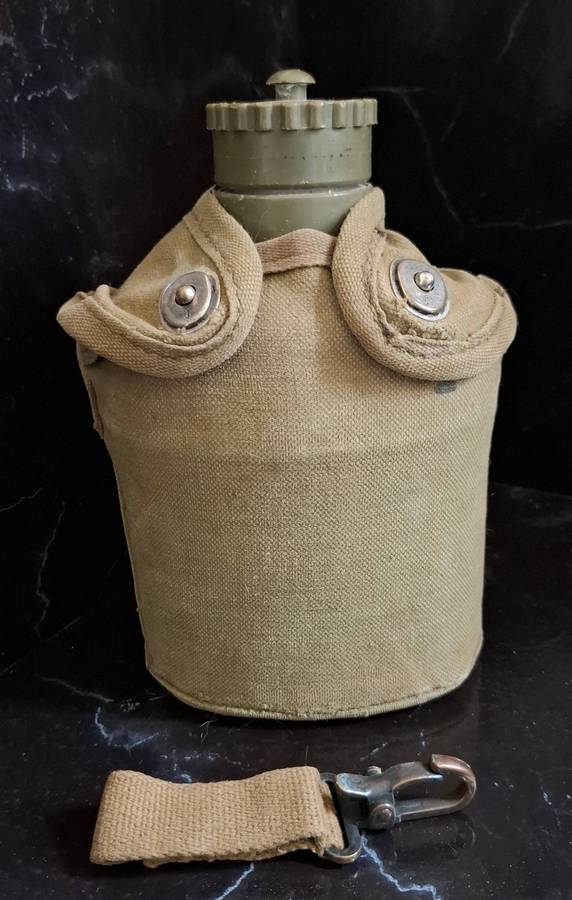
The canteen is in a perfect good condition, the leather strap is taught and not stretched out of proportion nor is the leather strap brittle from age. The bottle cap still comes with the link chain to keep the lid securely attached to the bottle. All the press studs are in good working order and do not show signs of rust. The paint on the aluminum cup is starting chip in some areas.
Overall condition is as new.
Historical Context:
The NVA was the military of East Germany during the Cold War. This specific canteen was standard issue for infantry soldiers.
Key Identifying Features:
Strichmuster (Rain Camo): The "vertical dashes" pattern on the fabric cover is the signature camouflage of East Germany, often nicknamed "rain camo" by collectors.
The Cup Design: The grey-painted aluminum cup sits on top and is held in place by a leather or web strap. This design is heavily influenced by the older WWII German Feldflasche.
Plastic Cap: The grey, ribbed plastic screw-cap (visible in the image) is a standard feature of the later Cold War-era East German models.
Construction: These usually consist of a plastic flask inside the insulated "rain camo" cover, accompanied by the aluminum drinking cup.
Usage Tip:
If you are planning on drinking from it, be cautious. Since it is likely dating from the 1960s through the late 1980s, the plastic inside can retain a "musty" smell or degrade over decades. It's often better as a collector's piece or for display unless you give it a very deep (and safe) cleaning.


