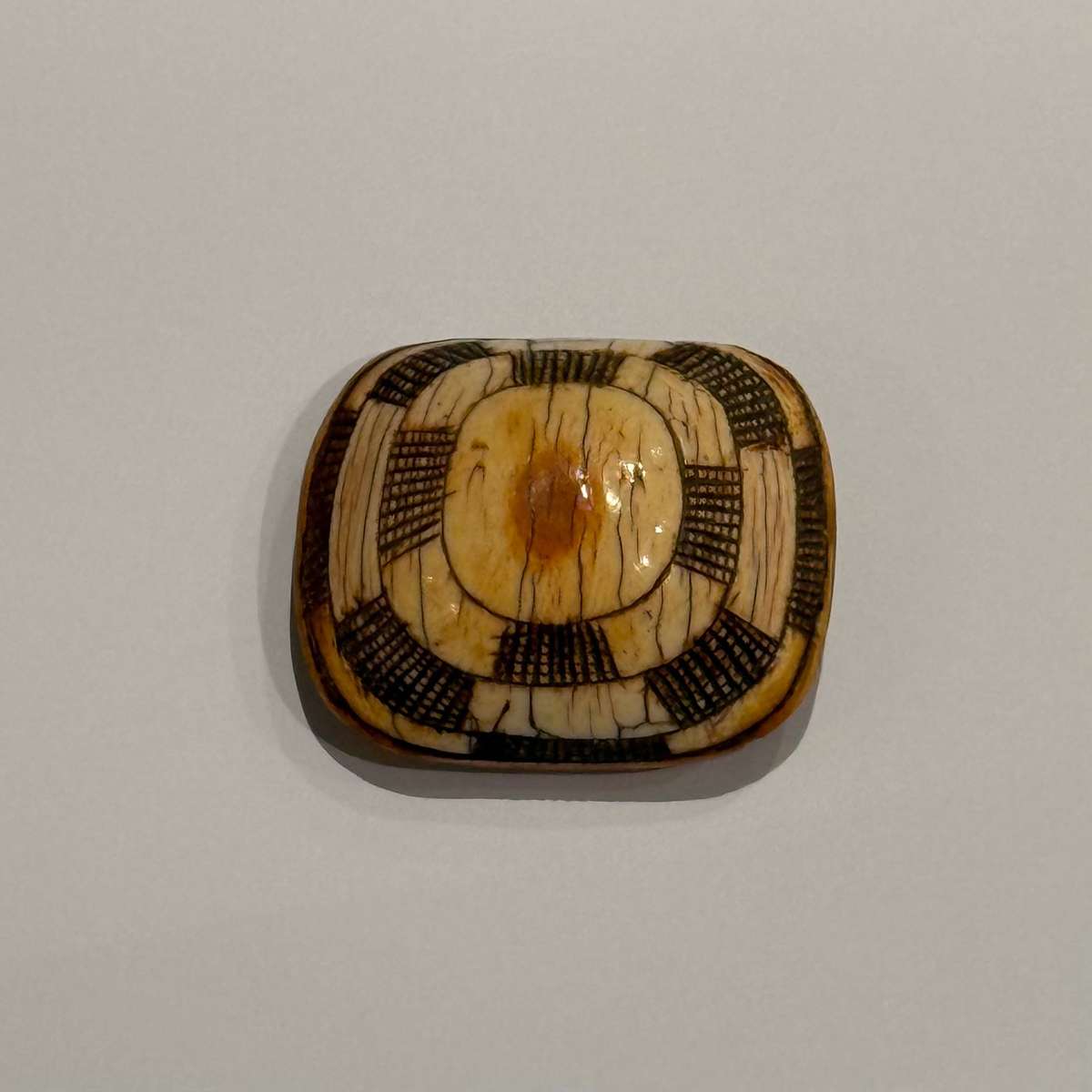
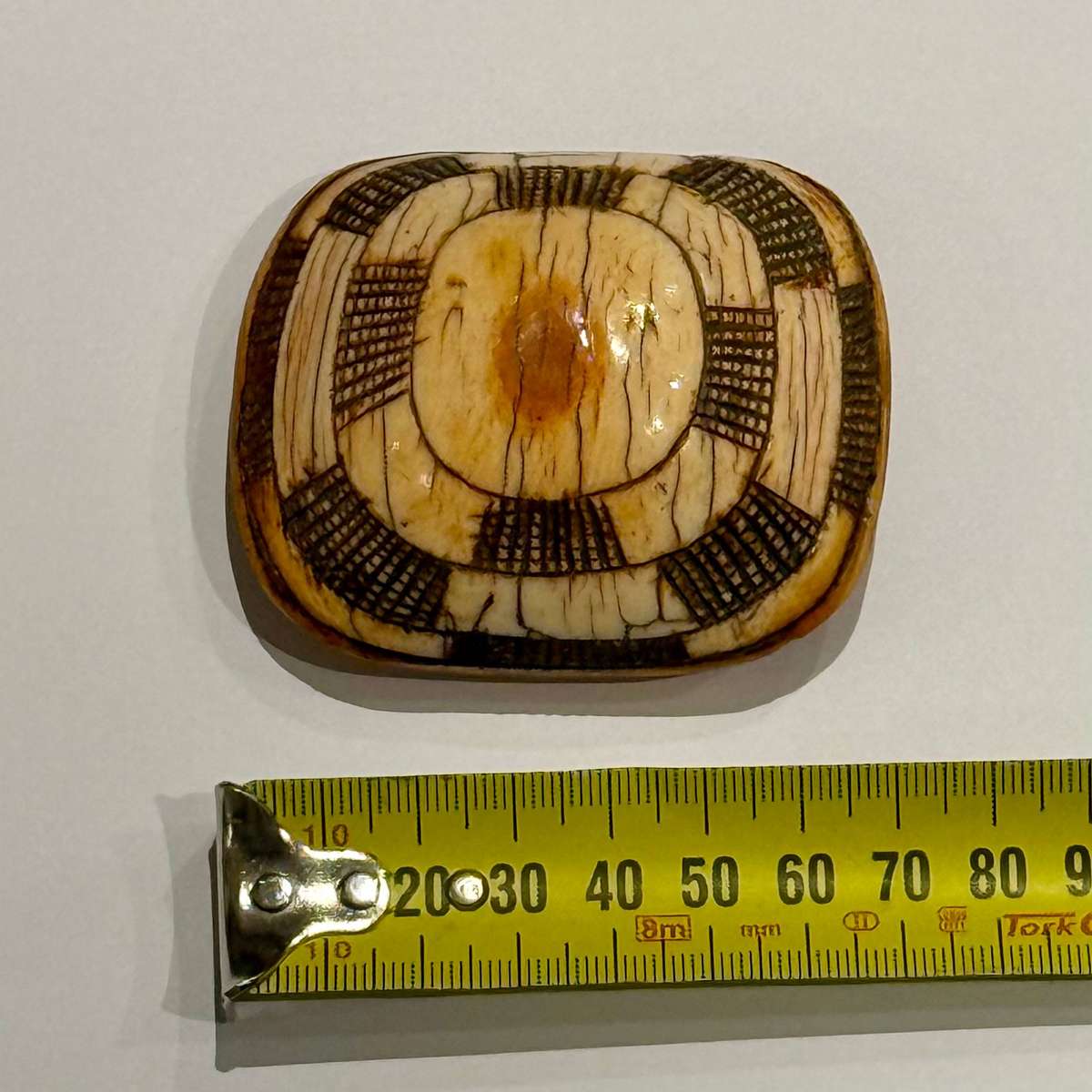
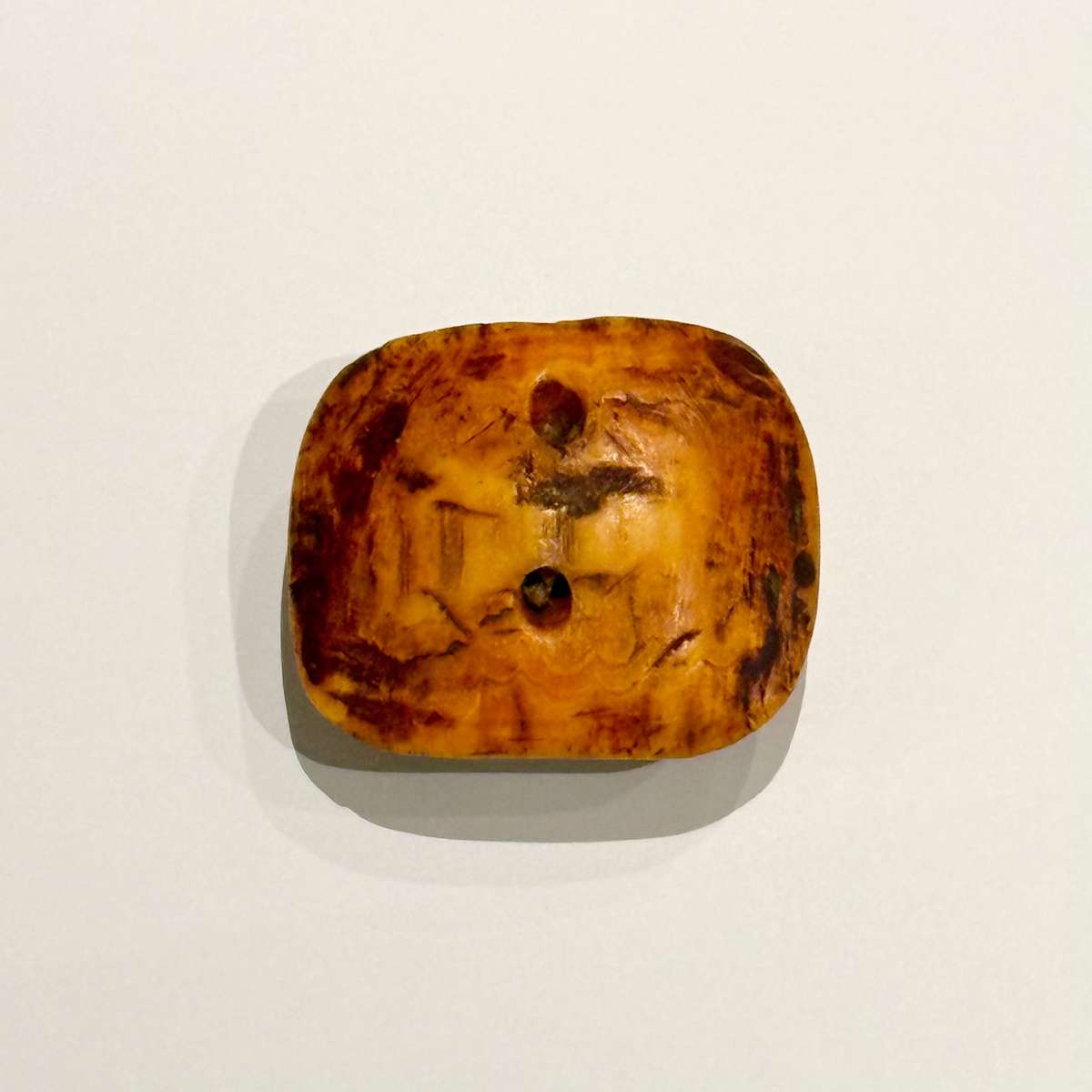
The Ovambo (also spelled Owambo) people carved Omakipa (or Ekipa, singular) primarily during the 19th century, with production and use peaking in the late 19th to early 20th century. Omakipa are domed or shaped buttons/clasps, incised with geometric patterns (cross-hatching, grids, etc.), and attached to leather belts or straps for womens ceremonial dress. They were softened by burial before carving and treated for patina.
Key Historical Timeline
Origins and Early Production: The tradition is traced back to the early 19th century. Some sources suggest possible deeper roots, potentially linked to earlier migrations or influences from Central Africa, with many surviving pieces dating before the full 19th century. Early examples often featured simpler designs (e.g., plain linear patterns with just two horizontal lines) and were sometimes combined with shell ornaments.
Peak Period: Production and cultural importance grew through the mid-to-late 19th century, especially among certain family groups in southern Angola who produced them for trade with neighboring Ovambo communities in northern Namibia. They served as symbols of wealth, prestige, and status, particularly in ceremonial contexts like weddings (grooms gifting them to brides, with husbands adding more over time).
Decline: Use as traditional adornments waned after the 1920s, influenced by the arrival of Christian missionaries who promoted more modest dress styles. By the mid-20th century, active carving of authentic antique-style pieces had largely ceased, though they remained family heirlooms.
Modern Context: Newer reproductions exist (sometimes from old ivory or other materials), but authentic historical Omakipa are rare collectors items. They gained renewed appreciation in the late 20th century as tribal art.