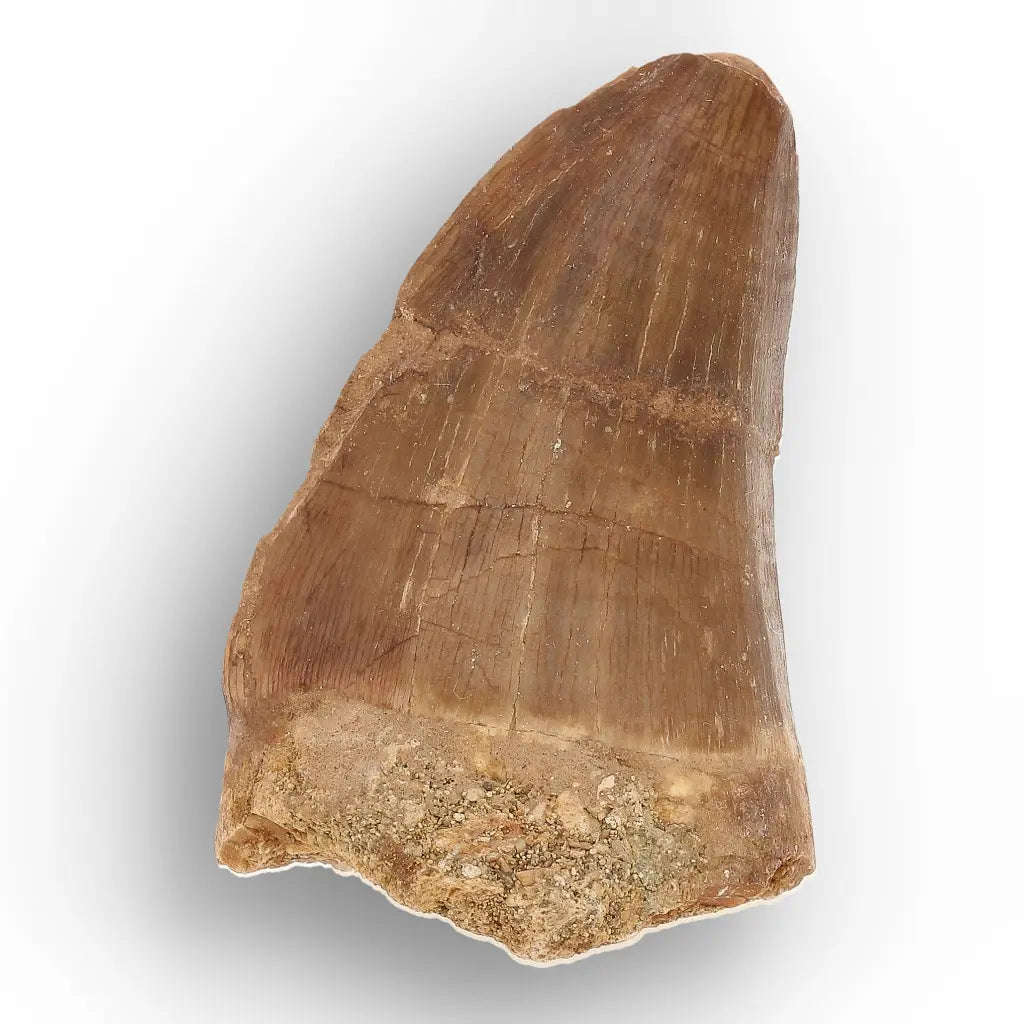
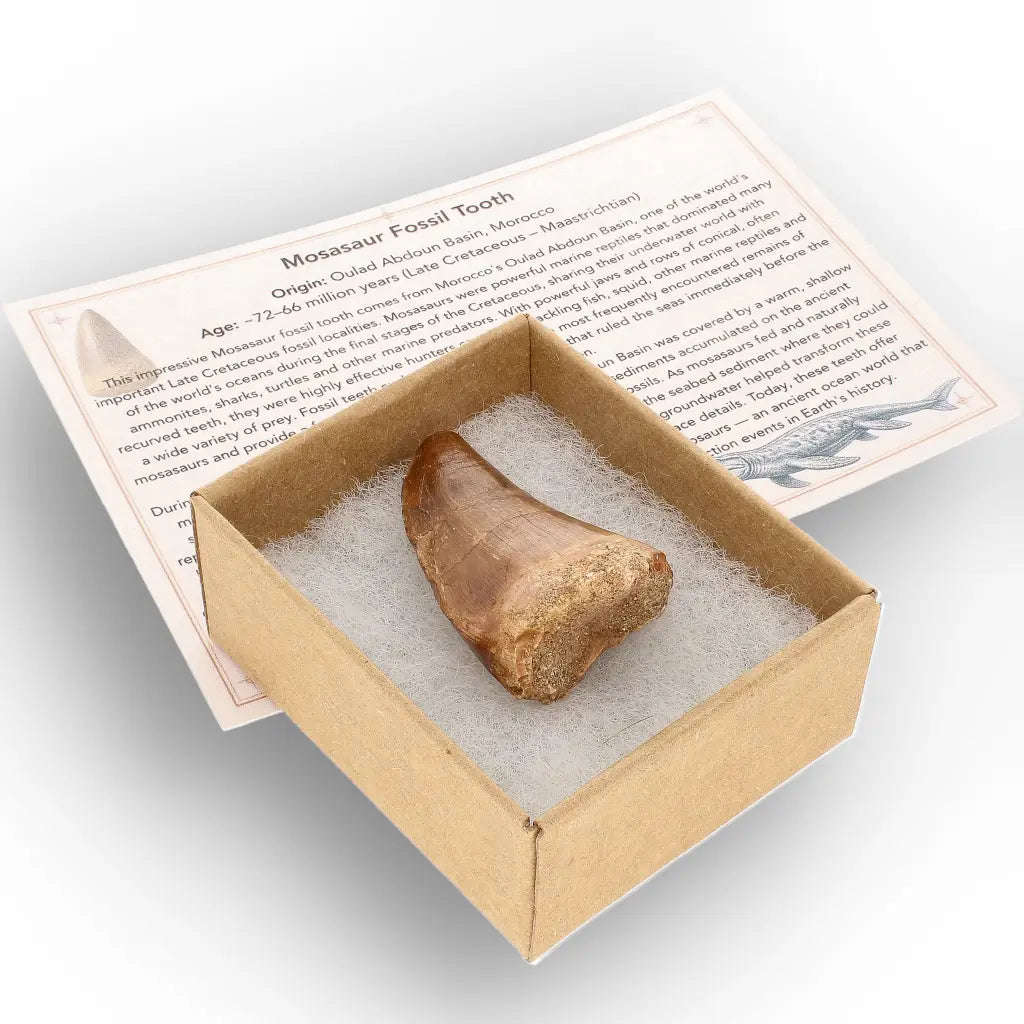
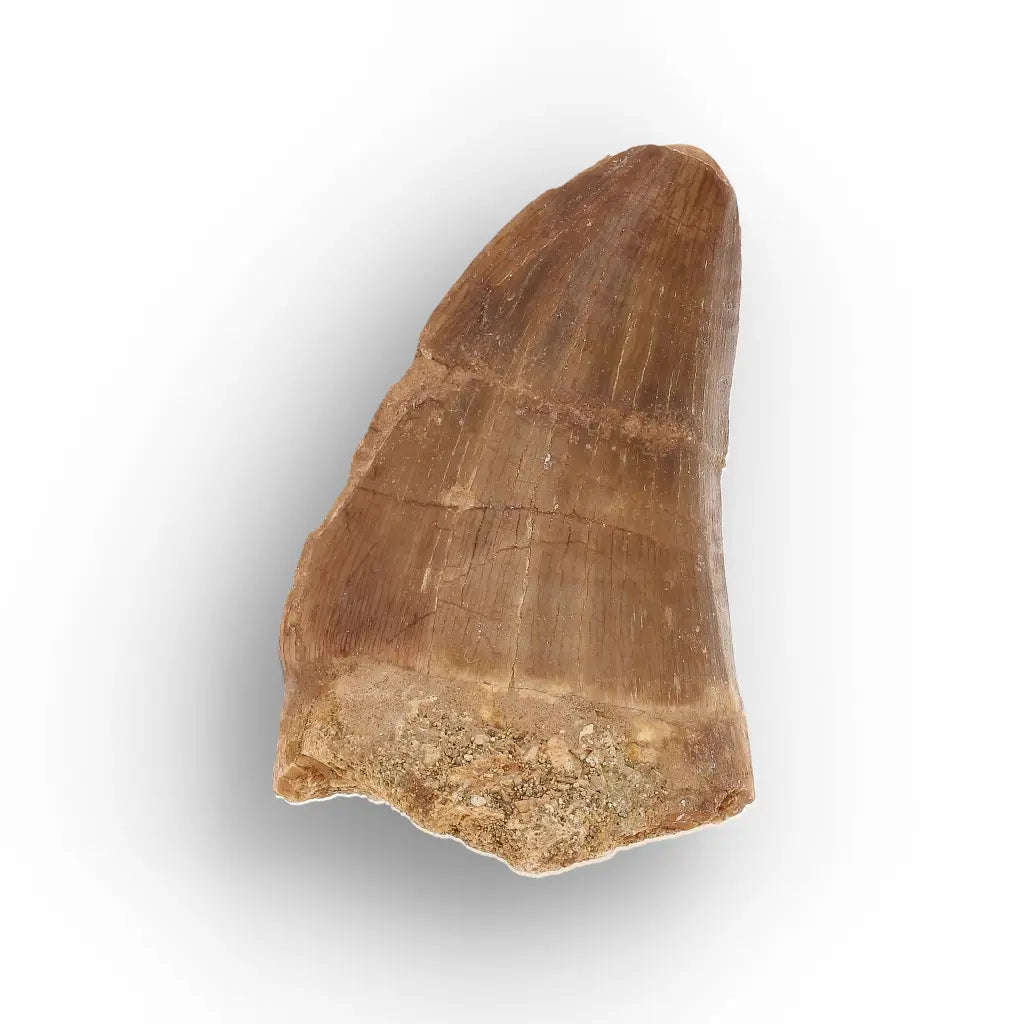
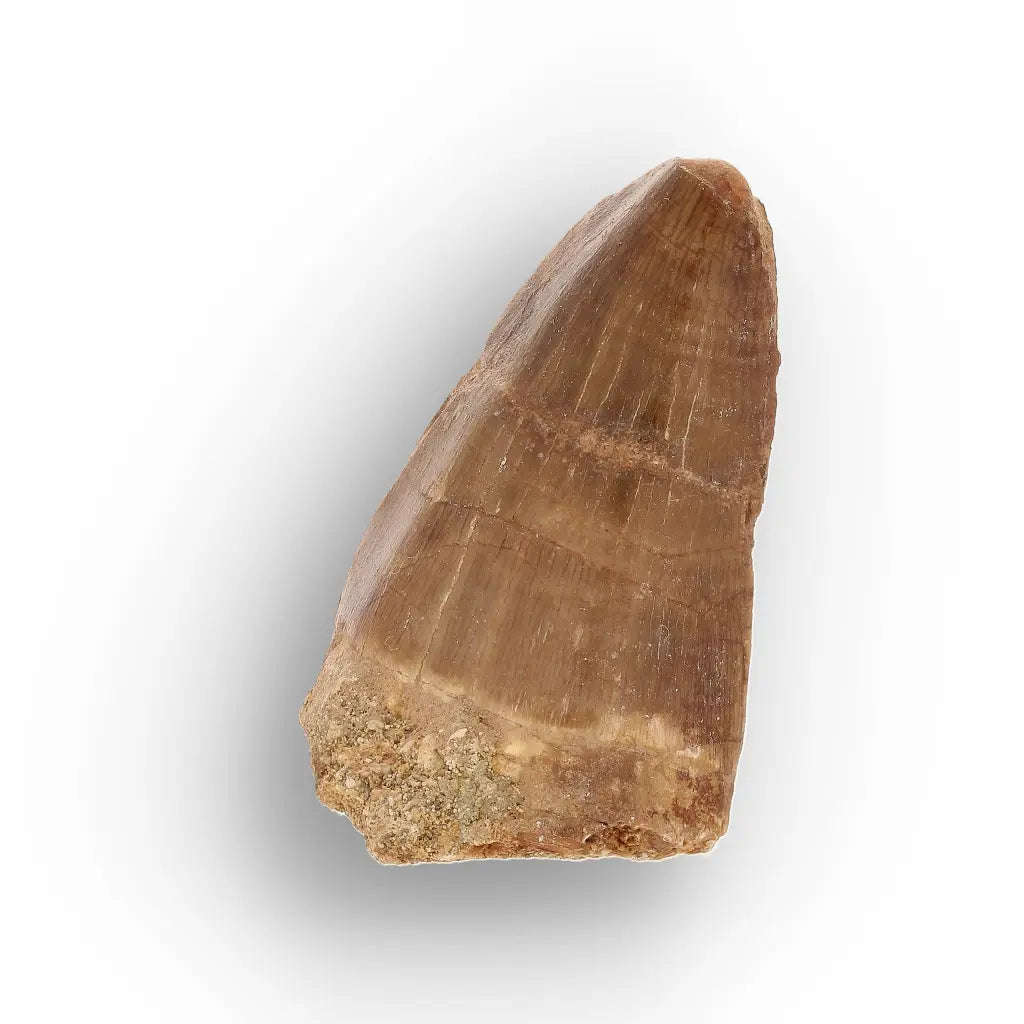
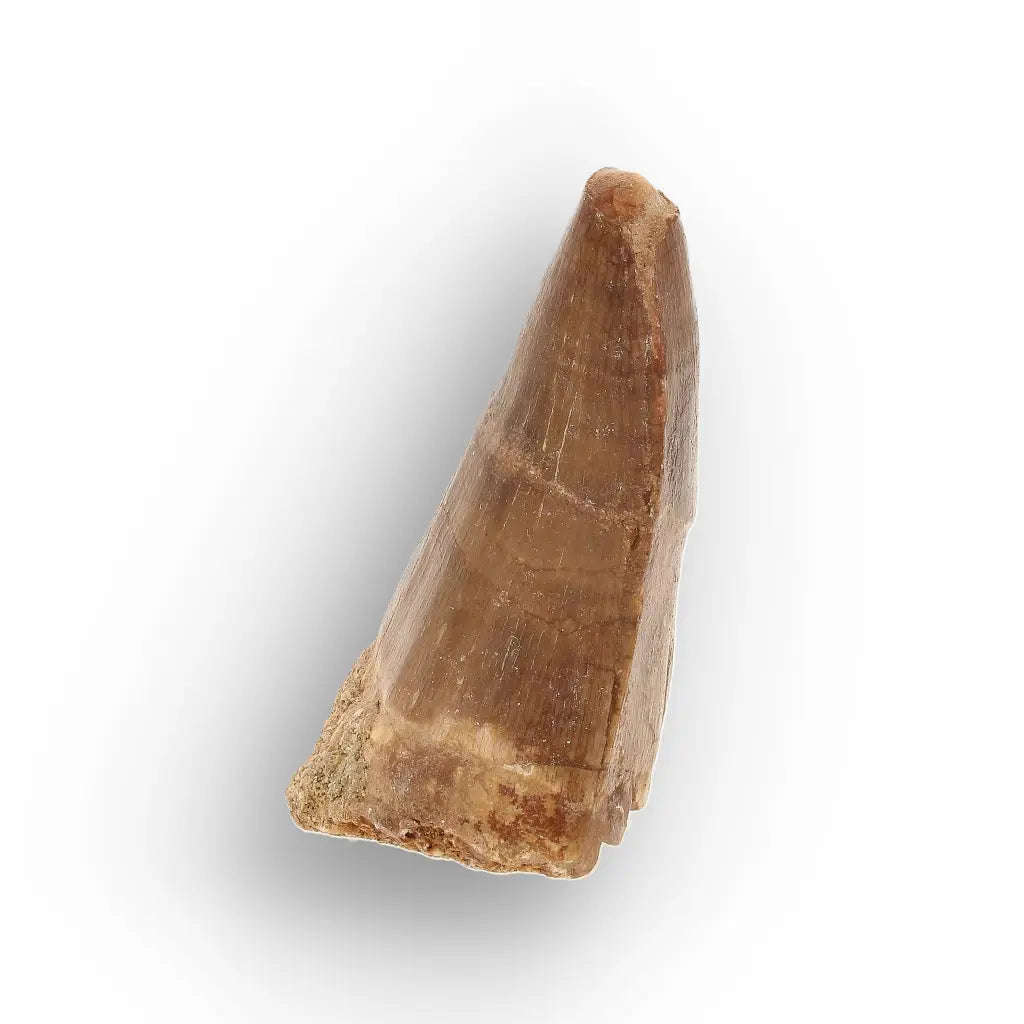
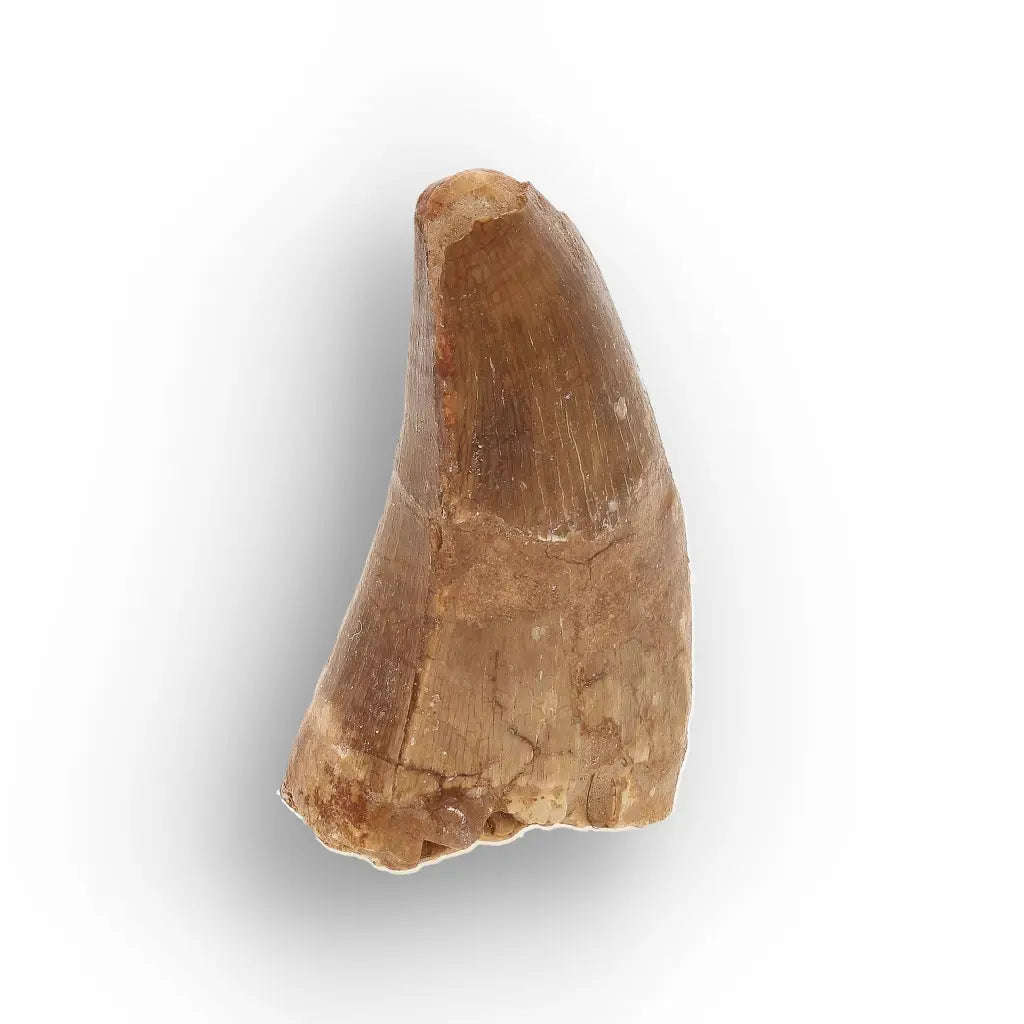
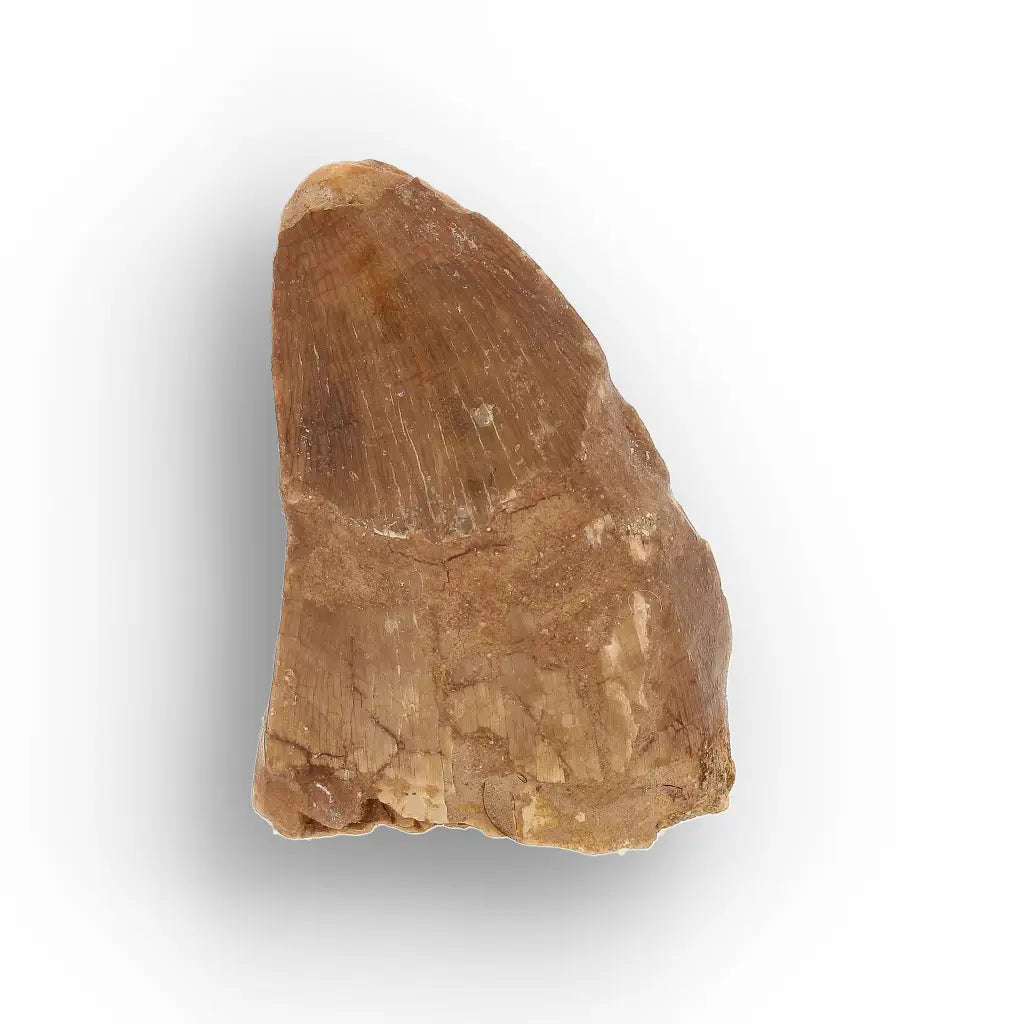
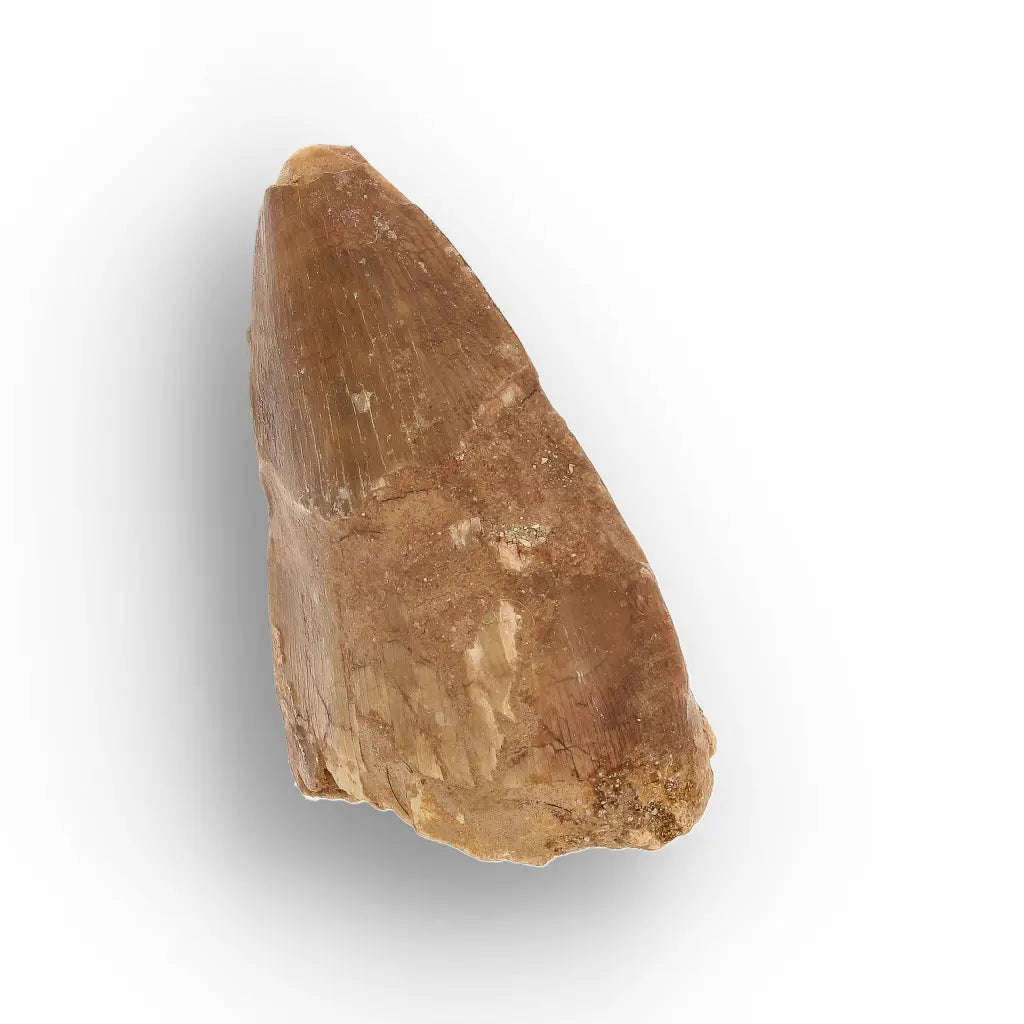
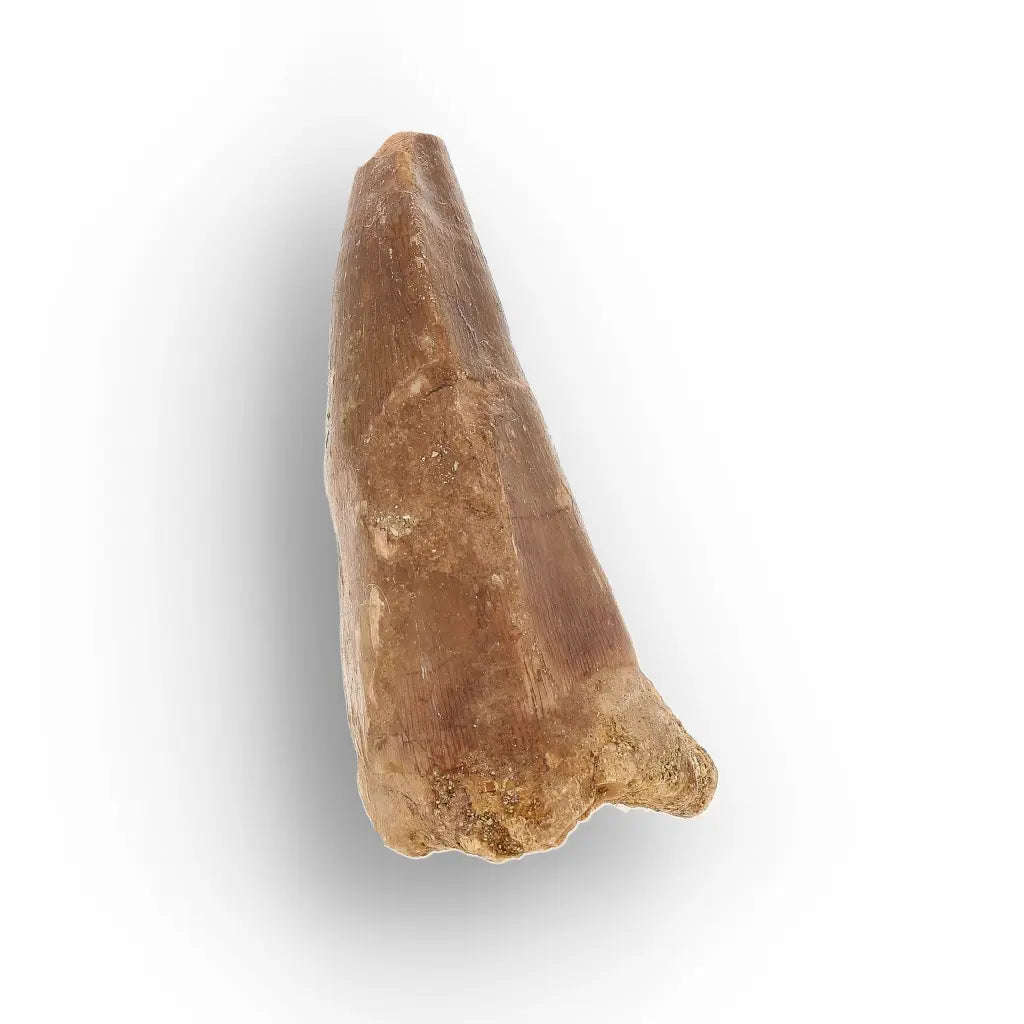
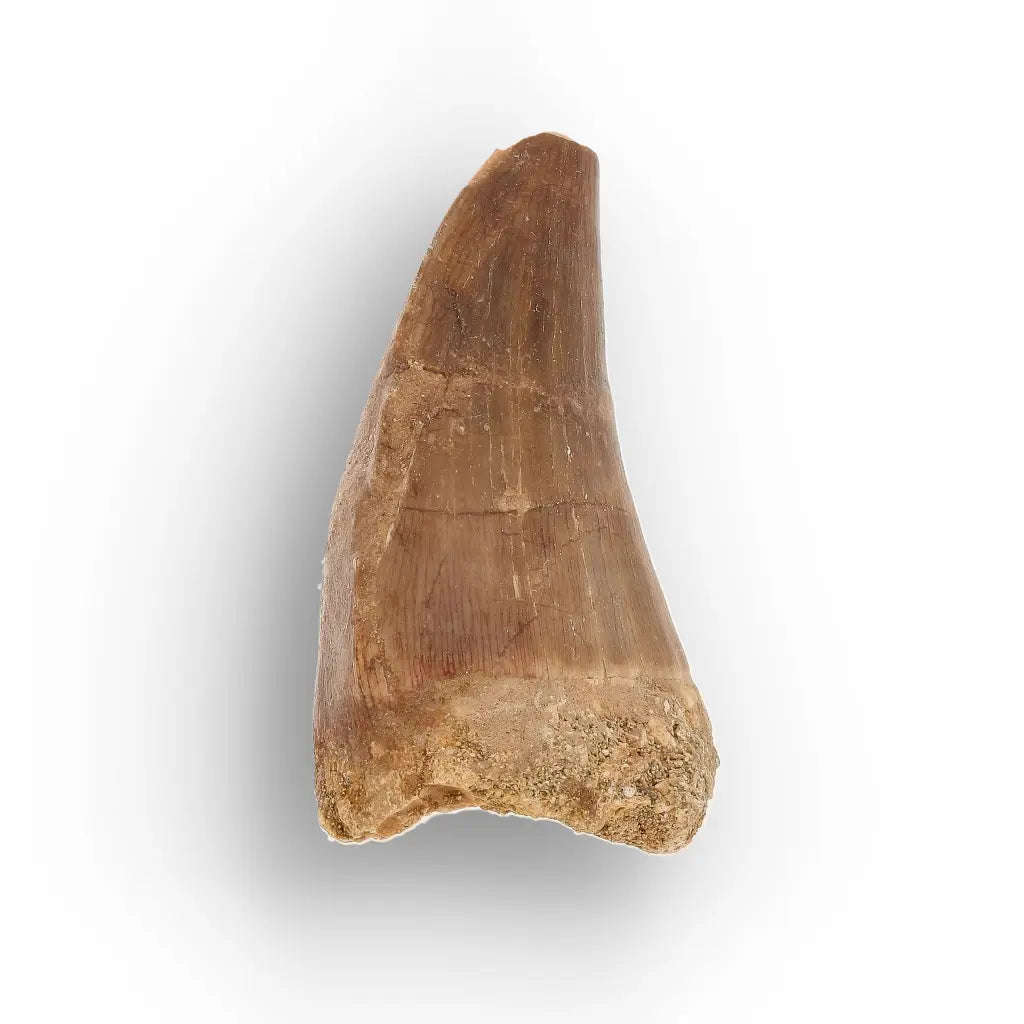
Discover an authentic mosasaur tooth fossil from Khouribga, Morocco, a region renowned for its remarkable Cretaceous marine fossils. Mosasaurs were powerful, air-breathing marine reptiles that hunted in ancient oceans approximately 7266 million years ago. Although they shared their world with dinosaurs, these formidable predators were reptiles adapted to life at sea, not dinosaurs themselves.
Specimen Details
Fossil: Authentic Mosasaur Tooth
Classification: Mosasauridae, species indeterminate
Age: Late Cretaceous, approximately 7266 million years ago
Location: Khouribga, Oulad Abdoun Basin, Morocco
Size: 26mm x 18mm x 36mm
Weight: 16 gram
Condition: Repaired
The Story Behind the Mosasaur
Imagine an ocean filled with giant predatory fish, ammonites, sea turtles and other marine reptiles. Among the most formidable hunters was the mosasaur, a streamlined reptile with powerful jaws, muscular tails and limbs adapted into flippers. Different species occupied different ecological niches, from smaller fish-eaters to enormous predators capable of tackling substantial prey.
Mosasaur teeth varied considerably according to the animal's feeding habits. Many had pointed or conical teeth suited to gripping slippery prey, while others possessed robust teeth adapted to crushing hard shells. These differences reveal how mosasaurs evolved to exploit a wide variety of food sources in Cretaceous seas.
One particularly fascinating group was Globidens, a mosasaur with rounded, specialised teeth adapted for crushing hard-shelled prey such as molluscs. We also have Globidens fossils available at Forever Gems, offering collectors an opportunity to explore the remarkable diversity of these ancient marine reptiles.
Morocco's Extraordinary Fossil Seas
Today, Khouribga lies in central Morocco, far from the coastline. During the Late Cretaceous, however, this region formed part of a marine environment rich in life. The sediments accumulated in ancient seas and eventually became phosphate-rich deposits that preserve an extraordinary range of marine fossils.
Over millions of years, the remains of marine animals became buried within these sediments. Their teeth and bones survived the processes of decay, burial and mineral alteration, leaving behind fossils that allow us to investigate ecosystems that disappeared at the end of the Cretaceous.
The Oulad Abdoun Basin is internationally recognised for its rich fossil record, including mosasaurs, sharks, fish and other marine vertebrates. Its phosphate deposits have yielded numerous isolated mosasaur teeth, making this region an especially fascinating source for fossil collectors.
Bring Prehistoric Marine History into Your Collection
Whether you are beginning a fossil collection, fascinated by prehistoric predators or searching for a distinctive natural-history gift, this mosasaur tooth offers a tangible connection to a world that existed millions of years before humans.
Add this authentic Moroccan Mosasaur tooth to your collection and own a remarkable relic from the ancient oceans of the Cretaceous!