
| Main centres: | 1-3 business days |
| Regional areas: | 3-4 business days |
| Remote areas: | 3-5 business days |
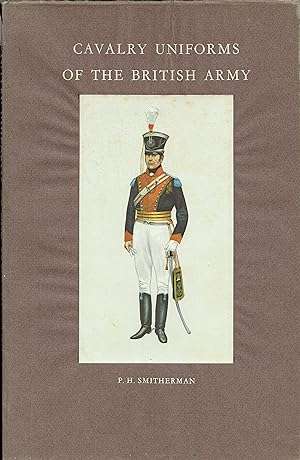
Hugh Evelyn publishers,1962, folio (24.7 cms x 37.7 cms), hardcover, illustrated, dust jacket has plastic protector, condition: as new.
Twenty colour uniform plates, illustrated and described by P H Smitherman. Subjects range from a Trooper, 3rd Horse (1705) to an Officer, 5th Royal Inniskilling Dragoon Guards (1960).
Hugh Street (1926-2007) was a publisher. He traded as Hugh Evelyn. He thought 18th Century print makers used plates to exploit the detail and decoration the camera often underplayed had they lived in the 20th Century. He developed themes with artists and skilled draughtsmen and made sensitive use of line-enclosing areas with exact colour. This is where the chromolithography excelled. Early on Street recognised an opportunity for colourful artwork to show the history of military uniforms and costume. He published over forty books all of which are long out of print. But he decided the prints justified their own outlet. Until the end of the 1960s Hugh had a shop in London where he sold his books along with the prints.