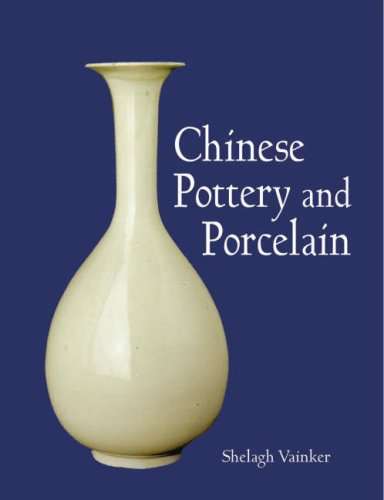
Chinese Pottery And Porcelain ( BRITISH MUSEUM)
Check my rate
View locations
| Main centres: | 1-3 business days |
| Regional areas: | 3-4 business days |
| Remote areas: | 3-5 business days |
| Main centres: | 1-3 business days |
| Regional areas: | 3-4 business days |
| Remote areas: | 3-5 business days |
Published by BRITISH MUSEUM Press 2005 softcover, large format, illustrated,index, 239 pages, condition: as new.
A comprehensive survey of the development of ceramics from the Neolithic period to the present day. Assessing the roles pottery has played in each dynasty throughout the history of China, Vainker (curator, Dept. of Oriental Antiquities, British Museum) also discusses its enormous impact on the ceramic industries of the rest of the world, where Chinese porcelain has been admired and collected for centuries. With 100 color and 98 b&w illustrations.
One of the best books on the history of Chinese pottery and porcelain I've ever read (and I am the former president of an Asian ceramic society with an extensive ceramics library). This is an older book (first published in 1991 by the British Museum, but with more recent paperback editions), but superlative and should be the first book anyone who is interested in Chinese ceramics invests in as a resource book. It's not a weighty tome as compared with Yale's 3" thick Chinese Ceramics but is a well-written introduction to the subject that is authoritative, concise and limits itself to the basic, useful information one needs to (='should') know.
What a blessing to find an authority on a subject who also writes beautifully and knows how to focus on the important, but then author Vainker was Assistant Keeper in the dept. of Eastern Art, Ashmolean Museum, Oxford (U.K.) I've owned this book for a number of years and only recently picked it up to look at again to discover what a gem it is. There are just the right number of beautiful photographs and four excellent appendices (on clays, glazes, kilns, and a glossary) that contain all the core information in clear, precise language. A bibliography contains just the right amount of recommendations for further reading for each chapter (five to twenty or so), to lead readers to the next stage in their exploration of this fascinating topic. I cannot praise this book highly enough and just pray it is still in print as I will be recommending it to a large number of fellow collectors and lovers of Chinese ceramics.