
| Main centres: | 1-3 business days |
| Regional areas: | 3-4 business days |
| Remote areas: | 3-5 business days |
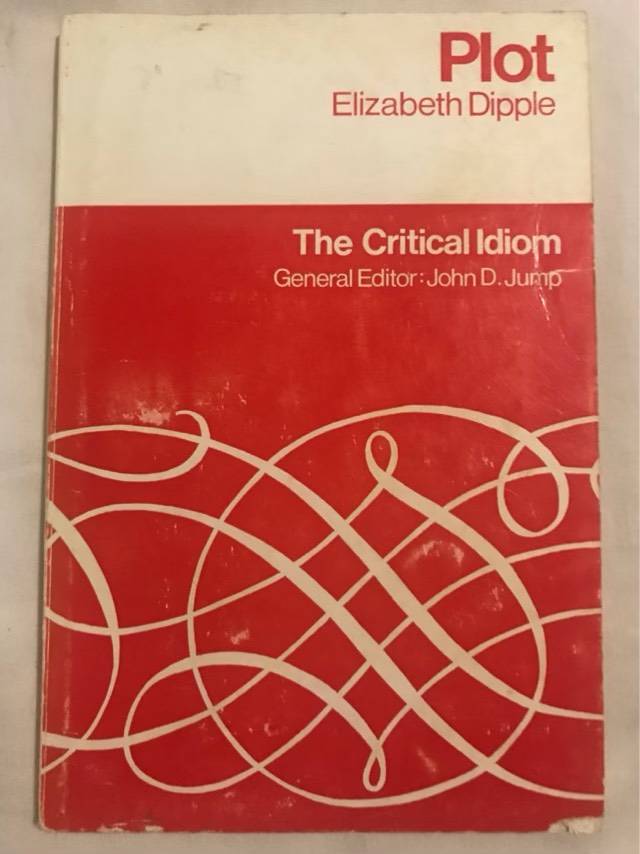
Published by Routledge Kegan & Paul, 1985, softcover, index, 303 pages, condition: very good.
Gillian Beer makes an important point in Darwins Plots, when she states that [t]he debate between constancy and transmutation of species had been mooted throughout the eighteenth century, and was part of a much older debate about the constancy and transformation of matter . As she explains, even the word evolution was at the time of comparative newness: mean[ing] the stages through which a living being passes in the course of its development from egg to adult, and providing an account of a single life span. Nevertheless, evolutionary theory would challenge the single life span as a sufficient model for understanding experience. To be exact, the biological term for this the pale of individual development is ontogeny, but later accounts of evolution, from the 1830s, expand to encompass the development of a species rather than an individual, that is, phylogeny (11). As Beer suggests, [t]he blurring of the distinction between ontogeny [] and phylogeny [] in the single term evolution proved to be one of the most fruitful disturbances of meaning in the literature of the ensuing hundred years and is a striking example of the multivalency of evolutionary concepts .
Beer does not add microgeny to the debate which might take account of a mode of theorising what Virginia Woolf describes as moments of being (in her Sketch of the Past). In other words, Beer describes ontogeny and phylogeny without the possible recapitulating genetic influence of microgeny. If one were to remain with Woolf, we might suggest that adding microgeny to the evolutionary vocabulary would enable us, on the one hand, to account for Woolfs own mode of theorising the said moments of being which she describes as separate, exceptional and, counterintuitively, as nonbeing, while on the other hand, we might attempt to disturb further the evolutionary account of meaning as one which deals not only with time across a lifetime, ontogeny, and time across aeons, phylogeny, but time across milliseconds, that is to say, microgeny: the time it takes from the moment a stimulus is presented until it registers in a behavioural response or in consciousness. That personal preference notwithstanding, Beers contribution here is indeed a landmark book.
In her reading of Claude Bernard, Beer suggests that, according to the Bernards formulation, man is blind to the extent of the present, the phenomena by which he is laterally surrounded and which lie just beyond the activity of his unaided senses yes, she writes laterally to assert quite rightly that [e]volutionary theory emphasises human unawareness of the past and obliges us to study a world from whose history we are largely absent . Human observation of our surroundings is in this way curtailed, and it is only within the narrow limits of our observation that we may come to know the world. That is to say, we are seeking a world of antiquity from which we were absent.
Dame Gillian Beers focus in Darwins Plots centres on nineteenth-century fiction she will in due course make interventions into Virginia Woolfs fiction too but her groundbreaking work has had and will continue to have a marked influence on literary studies now and well into the future.