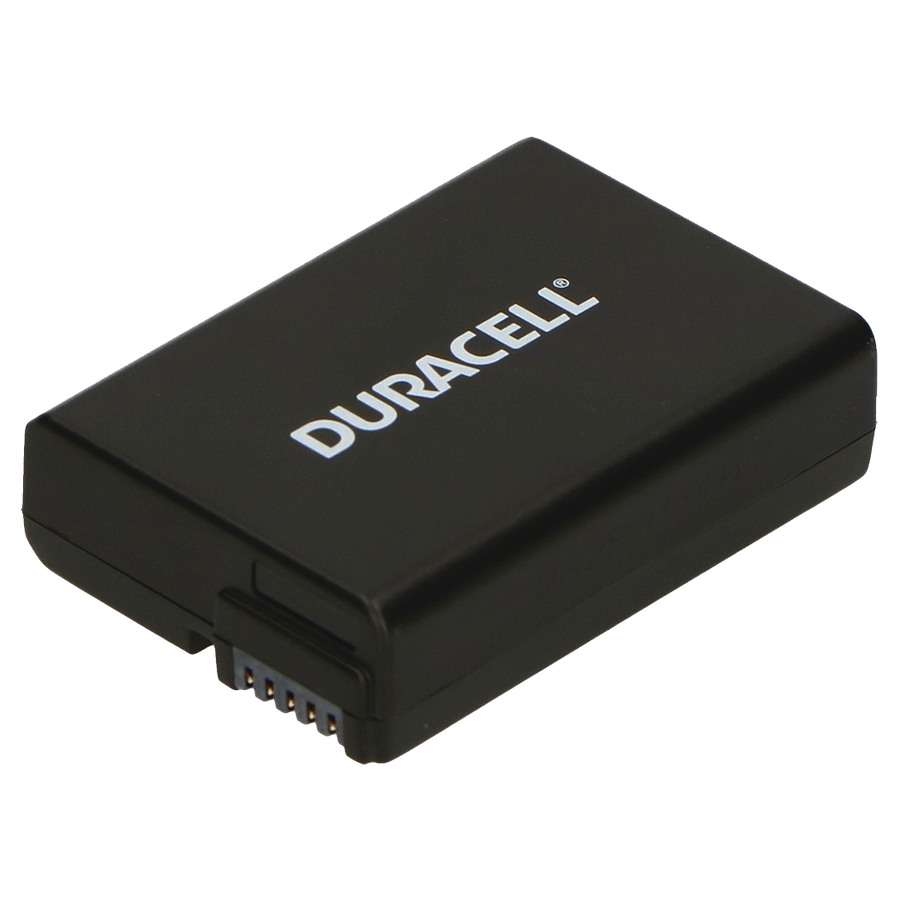
- 7.4v 1100mAh lithium-ion cell delivers reliable power for extended shooting sessions
- Drop-in equivalent for Nikon EN-EL14 and EN-EL14A original batteries
- 8Wh energy capacity supports back-to-back shoots without frequent recharging
- 43g weight adds negligible bulk to your camera bag or travel kit
- 52mm x 37mm form factor slots directly into Nikon battery compartments
- Fits Nikon D3100, D3200, D3300, D3400, D5100, D5200, D5300, D5500, D5600 bodies
- Works in Nikon Coolpix P7000, P7100, P7700, P7800 and Df models
- Lithium-ion chemistry maintains consistent voltage output across the discharge curve
- Fast recharge capability minimises downtime between photography sessions
- 2-year warranty backs the cell against manufacturing defects
Lithium-ion camera batteries deliver their strongest performance after the first few charge cycles, which is why experienced photographers treat the initial three cycles as a conditioning phase rather than expecting peak runtime straight out of the box. This Duracell replacement follows that same pattern, runtime and charge retention improve noticeably once the cell has been through a handful of full discharge and recharge sequences. Plan for that break-in window and you'll see the battery settle into consistent, reliable service that matches or exceeds the performance envelope of the manufacturer's own cell.
Duracell's engineering brief for this EN-EL14 equivalent centres on two non-negotiables: match the OEM capacity so you're not trading runtime for cost savings, and build the protection circuitry to the same fault-tolerance standard that keeps the brand's reputation intact across millions of units in the field. The result is a drop-in replacement that behaves identically to the original in your camera body, same charge time, same shot count per cycle, same behaviour under continuous video recording or burst shooting. You're not compromising on capability; you're accessing the same lithium-ion chemistry and the same capacity spec at a lower price point because you're not paying the camera manufacturer's markup.
The two-year limited warranty isn't marketing theatre. It's a structural part of how Duracell manages quality at scale: any cell that fails within the warranty window flags a batch-level review, which creates an incentive to get the manufacturing tolerances right the first time. For the buyer, it means you can treat this battery as a long-term investment rather than a disposable spare. If it develops a fault, swelling, failure to hold charge, unexpected shutdowns under load, the warranty covers replacement. That removes the financial risk from choosing a third-party equivalent over the OEM part, which matters when you're building out a multi-battery rotation for a weekend shoot or a travel assignment where a dead cell can cost you the shot.
Lithium-ion cells age whether you use them or not, so the practical lifespan of any camera battery is determined more by calendar time and charge-cycle discipline than by brand. What separates a reliable third-party cell from a problematic one is the quality of the protection circuit and the consistency of the manufacturing process. Duracell's scale and reputation hinge on getting both of those right, which is why this replacement can credibly claim equivalent performance to the original, it's built to the same functional standard, just without the camera brand's logo on the casing.
Shot count per charge depends on how you use the camera. Continuous video recording drains the cell faster than intermittent stills shooting. Live view and electronic viewfinder use draw more power than optical-viewfinder operation. Reviewing images on the rear screen after every shot cuts into runtime. Cold weather reduces capacity temporarily. But across typical mixed use, a combination of stills, short video clips, occasional chimping, moderate ambient temperature, this battery will deliver hundreds of frames before the low-battery warning appears. That's enough for a full day's casual shooting or a half-day event assignment, assuming you're not running the camera flat-out for hours.
The conditioning phase matters because lithium-ion chemistry relies on the formation of a stable solid-electrolyte interface during the first few cycles. Until that layer stabilises, the cell's internal resistance is slightly higher and its capacity slightly lower than the rated spec. By the third or fourth full cycle, the interface has matured and the battery performs as designed. This isn't unique to Duracell, every lithium-ion cell behaves this way, but it's worth knowing so you don't misjudge the battery's capability based on the first charge.
For photographers running a multi-battery workflow, third-party equivalents make economic sense as long as they're from a manufacturer with a track record of meeting the OEM spec. Duracell's position in the market depends on that equivalence being real, not claimed, which is why this EN-EL14 replacement can slot into a rotation alongside the original without you needing to track which battery is which. Same form factor, same electrical characteristics, same behaviour under load. The camera can't tell the difference, and neither will your shot count - DRNEL14.