



| Main centres: | 1-3 business days |
| Regional areas: | 3-4 business days |
| Remote areas: | 3-5 business days |
Want a soft cloud of little daisies for your border or patio pot? Follow our step-by-step Erigeron Profusion Grow Guide for surface sowing, germination, transplanting and care as your plants spread.
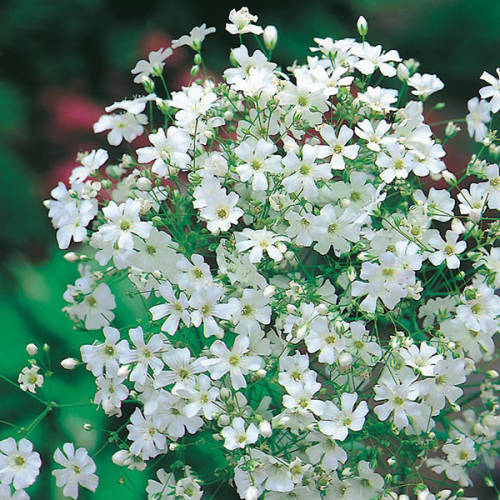
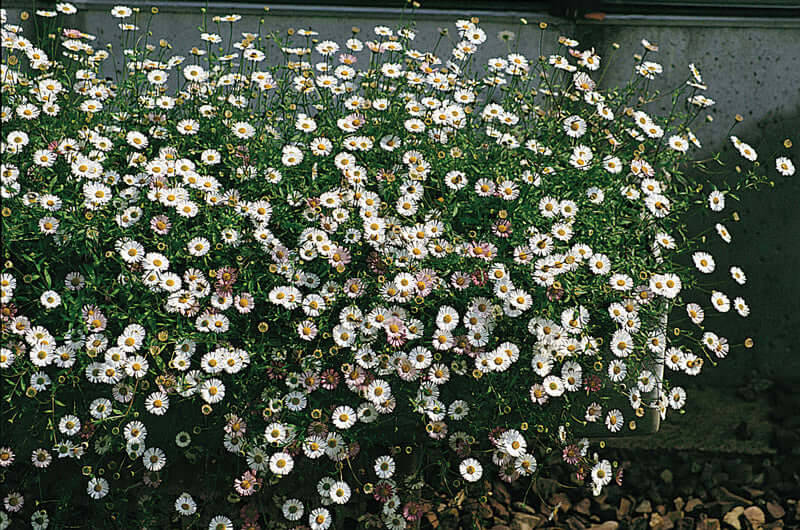
Erigeron Profusion is a low, spreading perennial with small yellow-centred flowers that open white and age pink. It suits sunny, freely draining borders and containers, with room for the mature mound and regular checks for self-sown seedlings.
Erigeron karvinskianus Profusion; perennial, often short-lived in warm areas. Packs of 100 or 1,000 raw seeds. Raw does not establish chemical-treatment status.
Surface sow on moist, fine seed-starting mix; press gently and leave uncovered for light. No soaking or cold treatment is specified in the cited cultivar method.
Aim for 1518°C in the medium; plan for 1430 days at home. Keep the surface evenly moist, never waterlogged.
Full sun, with some light shade tolerated, and freely draining soil. Choose spring or autumn conditions suited to your region; protect young plants from frost.
Usually about 1530 cm tall and 0.51 m wide over time; local supplier guidance gives approximately 90 cm spread. Plant about 30 cm apart for a joining edge, or allow 6090 cm for more separate mounds and trim as they expand.
Move sturdy seedlings once the rootball holds together; harden off gradually. First-year flowering is possible, but timing varies. Normally no staking or compulsory pinching is needed.
Start in trays or a final container where tiny surface-sown seed can be sheltered from heavy rain, wind and hot sun. Keep new rootballs moist while they establish, then water according to the soil and weather. Pots need more frequent checks than garden beds. Avoid heavy nitrogen feeding and improve drainage if the crown stays wet.
Trim straggly stems and cut older woody growth back towards healthy new shoots in spring once severe frost risk has eased. Deadheading is not essential for flowering, but removing developing seedheads helps limit unwanted seedlings. Keep this self-seeding plant within managed beds or pots and away from natural vegetation.
Ornamental use: grow for flowers, not eating. Do not eat sowing seed or use it for sprouts. Follow any treatment and handling instructions on the packet and prevent children and animals from eating the seed or plant.
Brought to you by Ubuntuberg Seeds, where our mission is to cultivate humanity & harvest unity. Ubuntuberg Seeds: the highest quality seed stock in all of Southern Africa, sourced from sustainable farms, guaranteeing you the best quality seed stock.


