This item has closed with no items sold
View other items offered by Jontys shop283

Similar products

Ethiopian Orthodox Cross Ethiopian Orthodox Cross
Closed

Ethiopian Orthodox Cross

Secondhand 1 was available
R1,500.00
Shipping
R35.00 Standard shipping using one of our trusted couriers applies to most areas in South Africa. Some areas may attract a R30.00 surcharge. This will be calculated at checkout if applicable.
Check my rate
The seller allows collection for this item. Buyers will receive the collection address and time once the order is ready.
The seller has indicated that they will usually have this item ready to ship within 3 business days. Shipping time depends on your delivery address. The most accurate delivery time will be calculated at checkout, but in general, the following shipping times apply:
 
Standard Delivery
Main centres:  1-3 business days
Regional areas: 3-4 business days
Remote areas: 3-5 business days
Buyer protection
Get it now, pay later

Product details

Condition
Secondhand
Location
South Africa
Product code
cross
Bob Shop ID
660716262

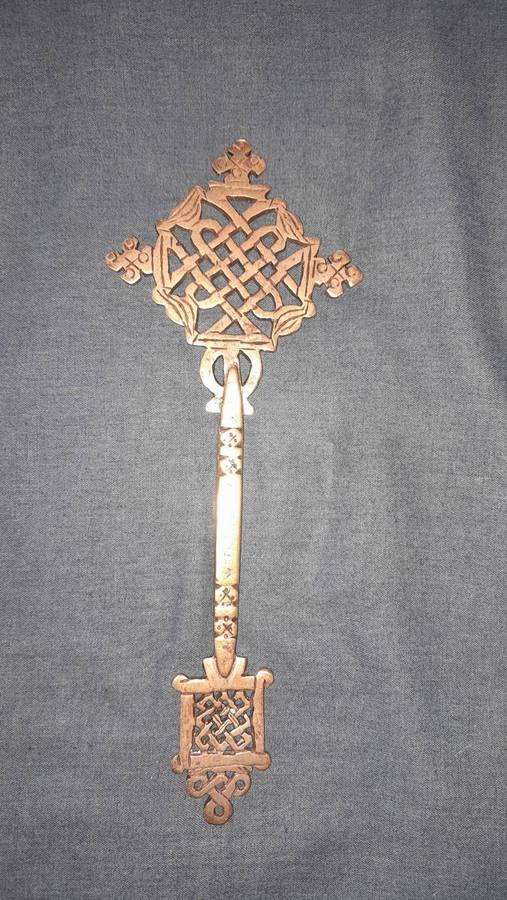
is one of the most distinctive and ancient Christian symbols in the world. It belongs to the Ethiopian Orthodox Tewahedo Church, one of the oldest Christian denominations (officially dating back to 328 CE when King Ezana of Aksum converted).

Key Features

  • Intricate lattice design: Unlike the simple Latin cross, Ethiopian crosses are highly elaborate, made of repeating geometric patterns (often squares within squares) that symbolize eternity and the interconnectedness of all creation.
  • No corpus (body of Jesus): Like most Eastern Orthodox crosses, it never depicts the crucified Christ, emphasizing resurrection over suffering.
  • Three distinct styles based on region and craftsmanship:
    1. Lalibela crosses (named after the rock-hewn churches) the most ornate, often made of silver or gold, used by high priests.
    2. Aksum crosses simpler, sturdier, with wider arms, reflecting the ancient Kingdom of Aksum.
    3. Gondar crosses lighter, more decorative, from the 17th18th century Gondarine period.

Types of Ethiopian Crosses

TypeDescriptionUsage
Hand crosses ()Small, held in the right hand by priests during blessingsMost common, highly personal
Processional crosses ()Large, mounted on long staffs, carried in ceremoniesUsed in Timkat (Epiphany) parades
Neck crosses ( )Worn by laypeople, usually simpler brass/silverDaily wear, baptism gifts

Symbolism

  • The open latticework represents the Tree of Life and never-ending faith.
  • The four corners often symbolize the Four Evangelists or the four corners of the world where the Gospel spreads.
  • Many have 12 smaller squares inside, representing the 12 Apostles.

Cultural Significance in Ethiopia

  • Every church has its own unique cross design; copying another churchs cross is taboo.
  • During Meskel (Finding of the True Cross, Sept 27), massive bonfires are lit and processional crosses paraded.
  • In rural areas, priests still bless people by touching the forehead with their hand cross while chanting in Geez.

Famous Examples

The Aksum Tsion Maryam cross ancient, linked to the Ark of the Covenant traditions.

The Cross of Lalibela (13th century) housed in Bet Medhane Alem, worlds largest rock-hewn church.


https://www.books.chilldiscounters.co.za/ethiopian-orthodox-cross/