

| Main centres: | 1-3 business days |
| Regional areas: | 3-4 business days |
| Remote areas: | 3-5 business days |
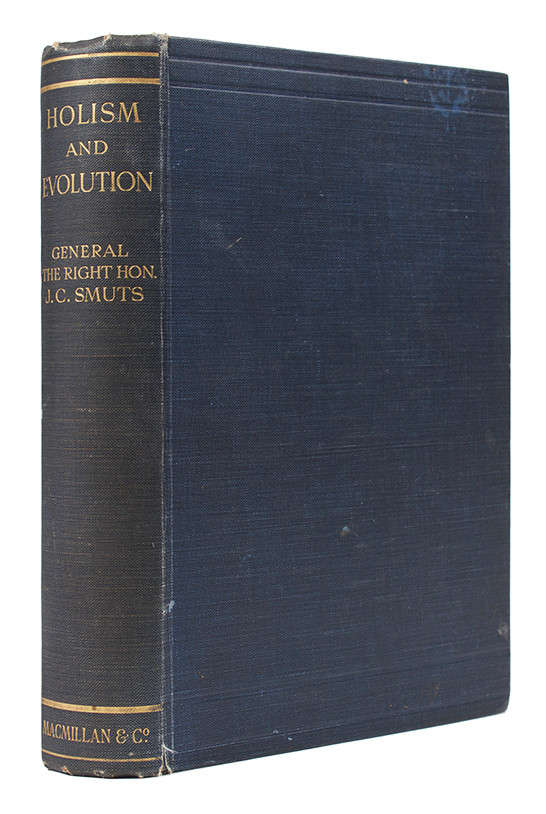
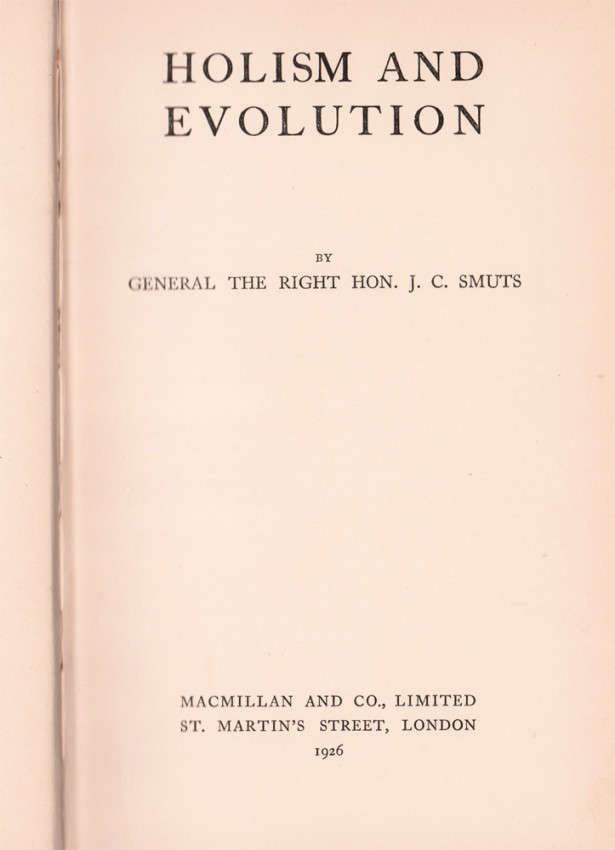
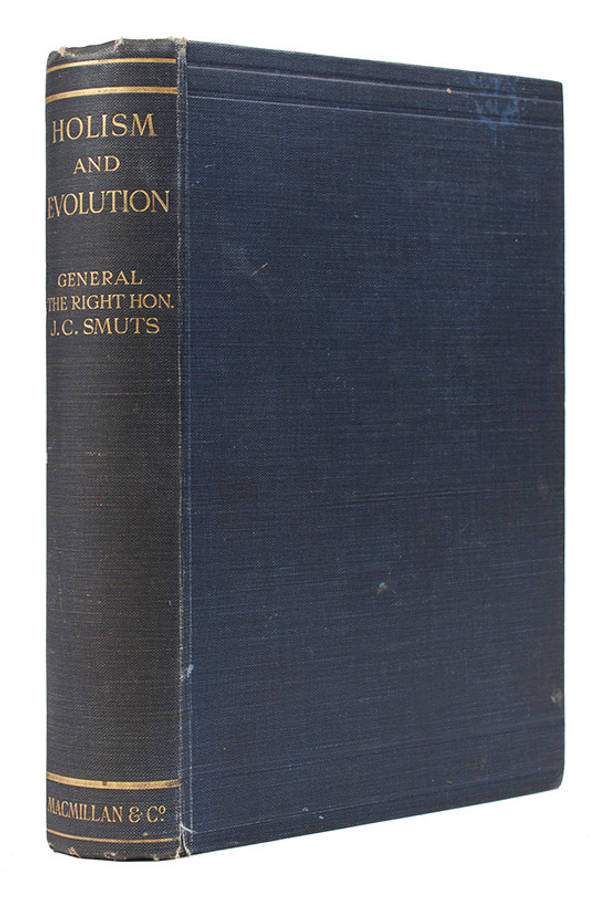
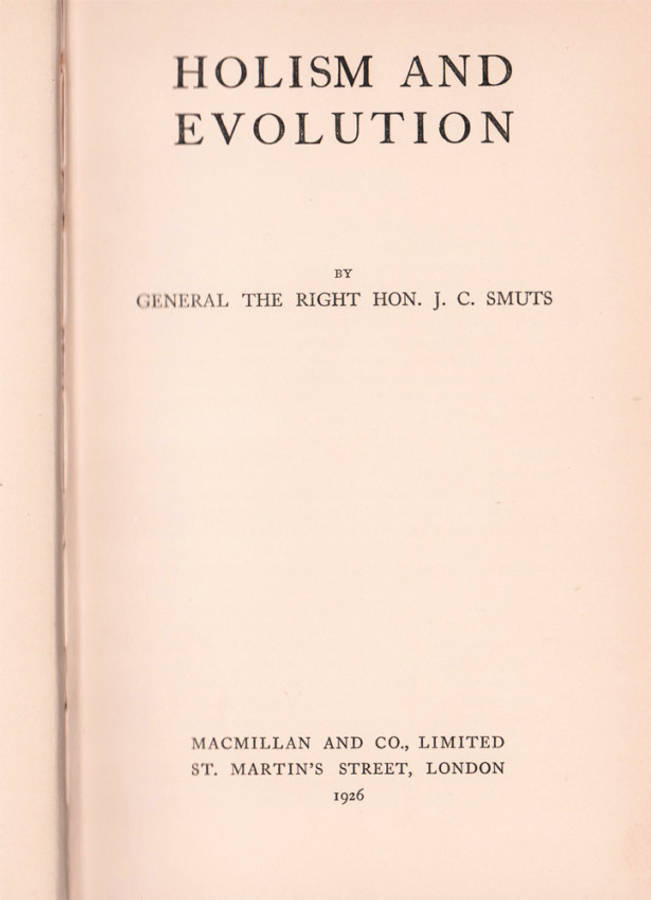
FIRST EDITION, published by MacMillan and Co., London, 1926, hardcover, index, 362 pages, condition: as new.
This seminal 1926 philosophical book written by the prominent South African statesman, military leader, and philosopher Jan Christiaan Smuts is historically significant for coining the term "holism", which Smuts defined as the fundamental, creative tendency in nature to form "wholes" that are greater than the sum of their individual parts.
Smuts viewed holism as a foundational, active force operating throughout the universe. It drives the synthesis of matter, life, and mind. He critiqued purely reductionist, mechanical views of science that treated matter as inert or passive. Instead, he argued that even atoms possess dynamic structures and functions.
Rather than limiting evolution to biological survival, Smuts frame it as a creative advancement where the universe builds progressively complex, stratified layers of wholesmoving from the inorganic, to the biological cell, to human consciousness and personality.
Wholes are the real, concrete units of nature, serving as the source of order, beauty, and ethical ideals.
The text bridges the gaps among physics, biology, and psychology, laid out across several focused chapters:
Reformed Concepts: A re-examination of space, time, and matter in light of new scientific breakthroughs, such as Einstein's relativity.
The Biological Cell: An entry into biological holism, studying the cell as an integrated system.
Mechanism and Holism: A breakdown of how holistic forces coordinate and regulate parts.
Darwinism and Mind: Exploring human consciousness as an evolved "organ of wholes".
Personality and Universe: A study of individual personality as the highest evolutionary whole, linking physical reality to spiritual and ethical values.
Upon its publication the book sparked widespread dialogue within the global scientific and philosophical communities. Notably, Albert Einstein praised Smuts concept of holism, suggesting it would be one of the key mental constructs to direct the future of human thought alongside relativity.
Today, Smuts' foundational ideas continue to influence systems thinking, ecology, and holistic health practices.