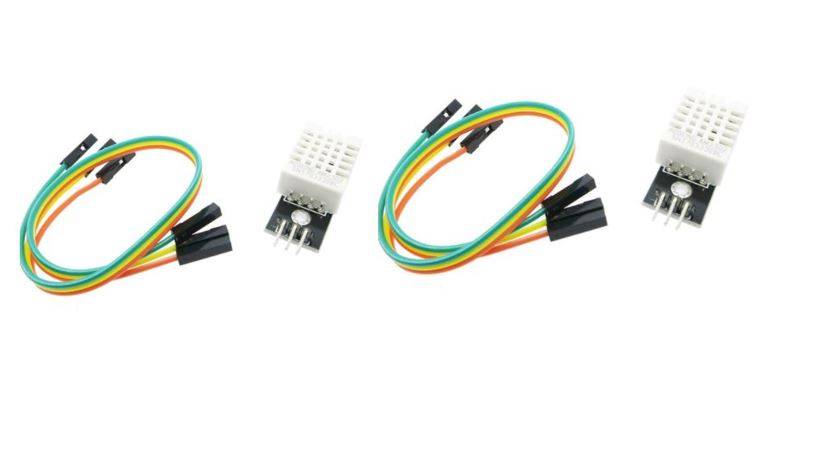
HW-503 Digital Temperature Sensor Module x5
Check my rate
View locations
| Main centres: | 1-3 business days |
| Regional areas: | 3-4 business days |
| Remote areas: | 3-5 business days |
| Main centres: | 1-3 business days |
| Regional areas: | 3-4 business days |
| Remote areas: | 3-5 business days |
HW-503 Digital Temperature Sensor Module, typically used in hobbyist electronics and microcontroller projects (like Arduino, Raspberry Pi, or ESP32) to detect ambient temperature changes.
Here is a breakdown of how it works and what the components do:
Core Functionality
The module can provide two types of temperature data:
Analog Output (AO): Gives a variable voltage signal that changes continuously depending on the actual temperature. This allows you to calculate the exact temperature in degrees Celsius or Fahrenheit.
Digital Output (DO): Acts as a simple switch. It outputs a HIGH or LOW signal depending on whether the temperature is above or below a specific threshold.
Key Components On The Board
The Thermistor (Left Side): The small black bead soldered to the left end is an NTC (Negative Temperature Coefficient) thermistor. Its electrical resistance drops as the temperature rises.
Blue Potentiometer (Trimmer): The blue block with the brass screw is used to set the threshold for the Digital Output (DO). Turning this screw changes the temperature point at which the digital signal flips.
Comparator IC (Middle 8-pin Chip): This is typically an LM393 voltage comparator. It compares the signal from the thermistor to the threshold set by the potentiometer to control the digital output.
Pinout Guide (Right Side Header)
The 4-pin header allows you to connect the module to a microcontroller:
VCC (+): Power input (usually 3.3V to 5V).
GND (G or -): Ground connection.
DO: Digital Output (Triggers a high/low signal based on your potentiometer threshold).
AO: Analog Output (Provides raw voltage relative to the temperature).
Common Uses
These are widely used for automatic control projects, such as building a smart fan that turns on automatically when a room gets too hot, or creating a basic temperature alarm system.