
| Main centres: | 1-3 business days |
| Regional areas: | 3-4 business days |
| Remote areas: | 3-5 business days |
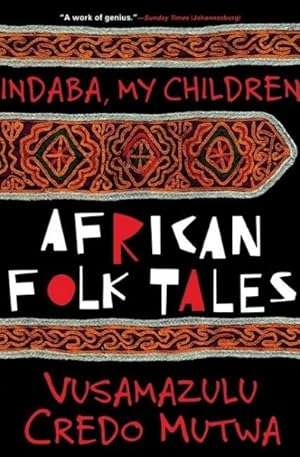
Published by Grove Press, 1999, softcover, illustrated, 695 pages, condition: new.
A definitive compendium of African myth and folktale, retold in rich, vibrant prose, Indaba, My Children is a stunning literary and ethnographic achievement. As a young man, Vusamazulu Credo Mutwa, a Zulu from the South African province of Natal, was determined to follow in the footsteps of his grandfather and become a tribal historian in order to keep the rich oral tradition of his culture alive. In this book, begun in response to the injustices against Africans and their culture, he sets these legends down in writing. He begins with the creation myth, when Ninavanhu-Ma, the Great Mother, created the human race. From there, an epic unfolds, an intricate and vivid cultural tapestry populated by gods and mortals, cattle herders and supreme kings, witch doctors, lovers, grave diggers, warriors, and handmaidens. The story continues all the way up to the colonial era, when a Portuguese Kapitanoh and his crew arrive on the African shore. Indaba, My Children is a classic and indispensable resource for anyone interested in the cultural life of Africa and the human experience as it is filtered into myth.
I was awestruck by Indaba, My Children because of the eloquent story-telling and because of Mutwas encyclopaedic knowledge of African history and myths. It is true that he mixes the material and his styles in order to convey all that he wants to, but who cares that it is impossible to categorize it neatly?
He felt impelled to reveal to the world how rich African legends, mores and philosophy were and are, and we are indebted to him for that. However, the culturally challenged, immoral and thoughtless among us will miss the riches and to their minds, he will only confirm their presumption of savagery. All great myths have savage elements, but that will not stop them.
I dont want only to generalise, so let me choose one character from the 700-odd pages. She is Ninavanhu-Ma, the great Mother, goddess of creation. What bowled me over is that she is portrayed as loving and nurturing, but also as evil and destructive. When this part of the story is told, the children are warned to be aware that as her children, they too have both good and evil in them. It seems wise and true to me. The Western world was so impressed by Solzhenitsyns tracking of the line between good and evil right through every human heart, but this thought was already established in Africa.