




| Main centres: | 1-3 business days |
| Regional areas: | 3-4 business days |
| Remote areas: | 3-5 business days |
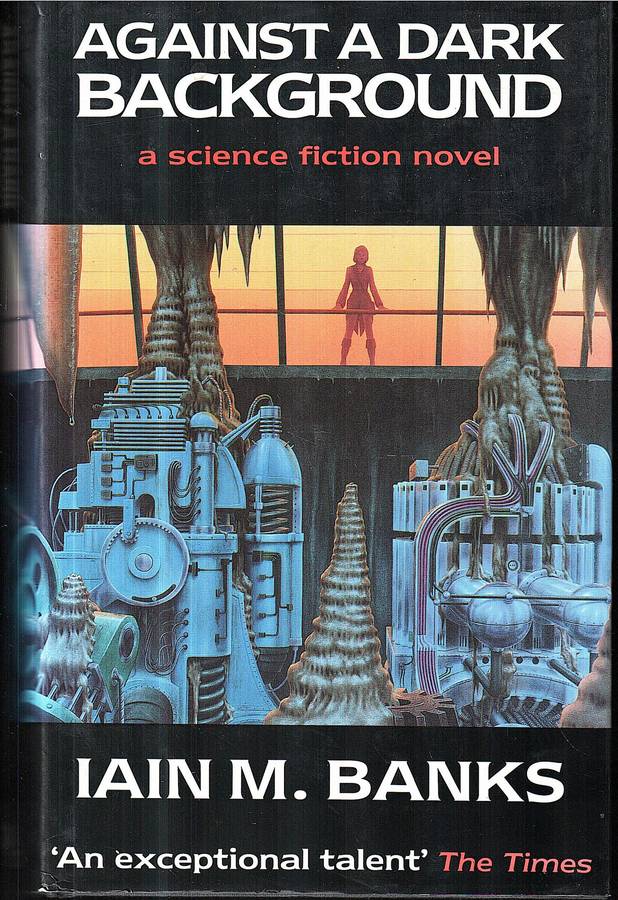
About the book:
A Culture novel disguised as a fantasy two storylines set in a medieval-style world that only gradually reveal their connection to Banks's science fiction universe.
One of his most formally inventive books, operating simultaneously as court intrigue, philosophical dialogue, and quiet science fiction.
Rewards rereading once you understand what Banks is actually doing.
Good secondhand condition.
Follow the link below to view our other listings:
https://www.bobshop.co.za/seller/5375758/Orphan_Books
About the author:
Iain Banks (1954 to 2013)
Born in Dunfermline, Fife, Banks led one of the more unusual double lives in modern literature: under the name Iain Banks he wrote literary fiction, under Iain M. Banks he wrote science fiction, and the only thing distinguishing the two was a middle initial. Both bodies of work were taken seriously; the distinction was his own quiet joke about publishing categories.
He emerged from a Scottish literary tradition with a thoroughly unScottish debut: The Wasp Factory (1984) arrived as a controlled act of provocation dark, formally precise, deeply strange and established him immediately as someone working in a register all his own. The novels that followed ranged widely in tone but shared a Gothic undertow, a political conscience rooted in committed Scottish socialism, and a gift for structure that he wore lightly. The Bridge, The Crow Road, and Complicity are among the best of them. The Crow Road opens with one of the great first lines in British fiction.
The Culture series his science fiction is a separate achievement of comparable ambition: a post-scarcity civilisation run by benevolent superintelligent AIs, used as a philosophical sandbox for questions about power, ethics, free will, and what humans do when material want is abolished. The Player of Games and Use of Weapons are the best entry points.
His influences are legible but not easily summarised: Kafka in the dreamlike structures, Ballard in the cool examination of violence and society, the whole tradition of Scottish vernacular fiction in the political ground beneath everything. Ursula K. Le Guin matters for the Culture's moral seriousness.
In early 2013 he announced he had terminal gallbladder cancer in a statement so characteristically direct and wry it became its own kind of legend. He died that June at 59, having finished The Quarry a novel about a dying man while dying. His influence runs through almost all contemporary science fiction that takes ideas seriously, and through any literary fiction that refuses to be polite about darkness.

