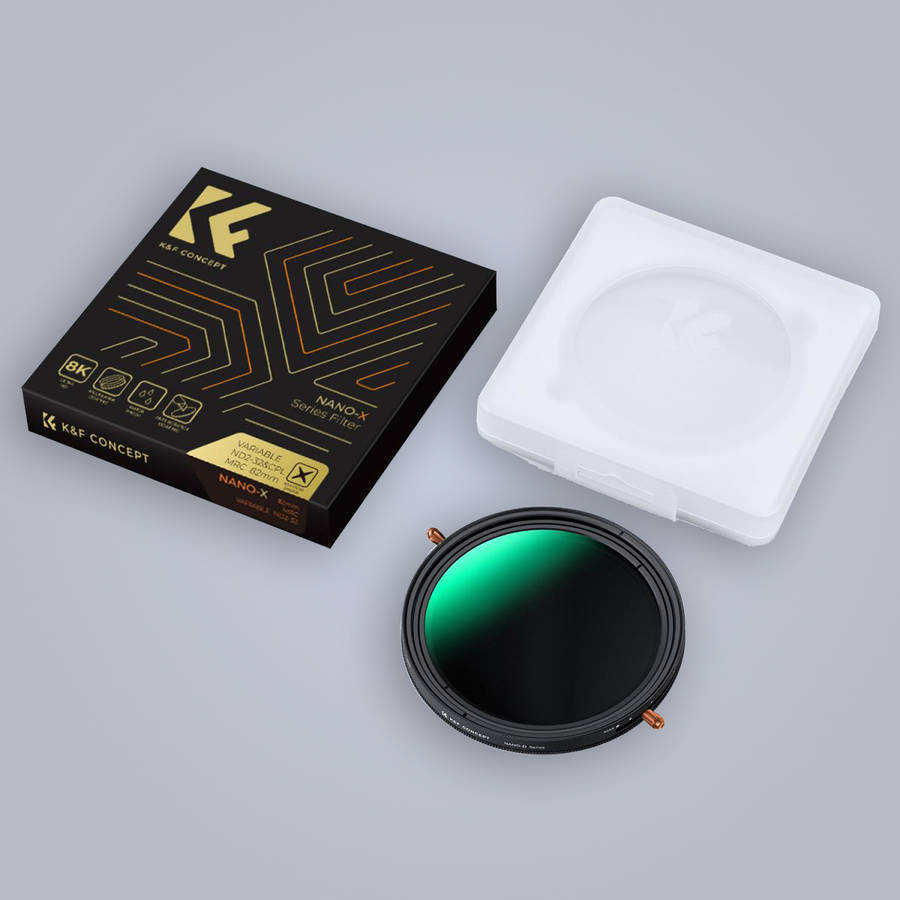
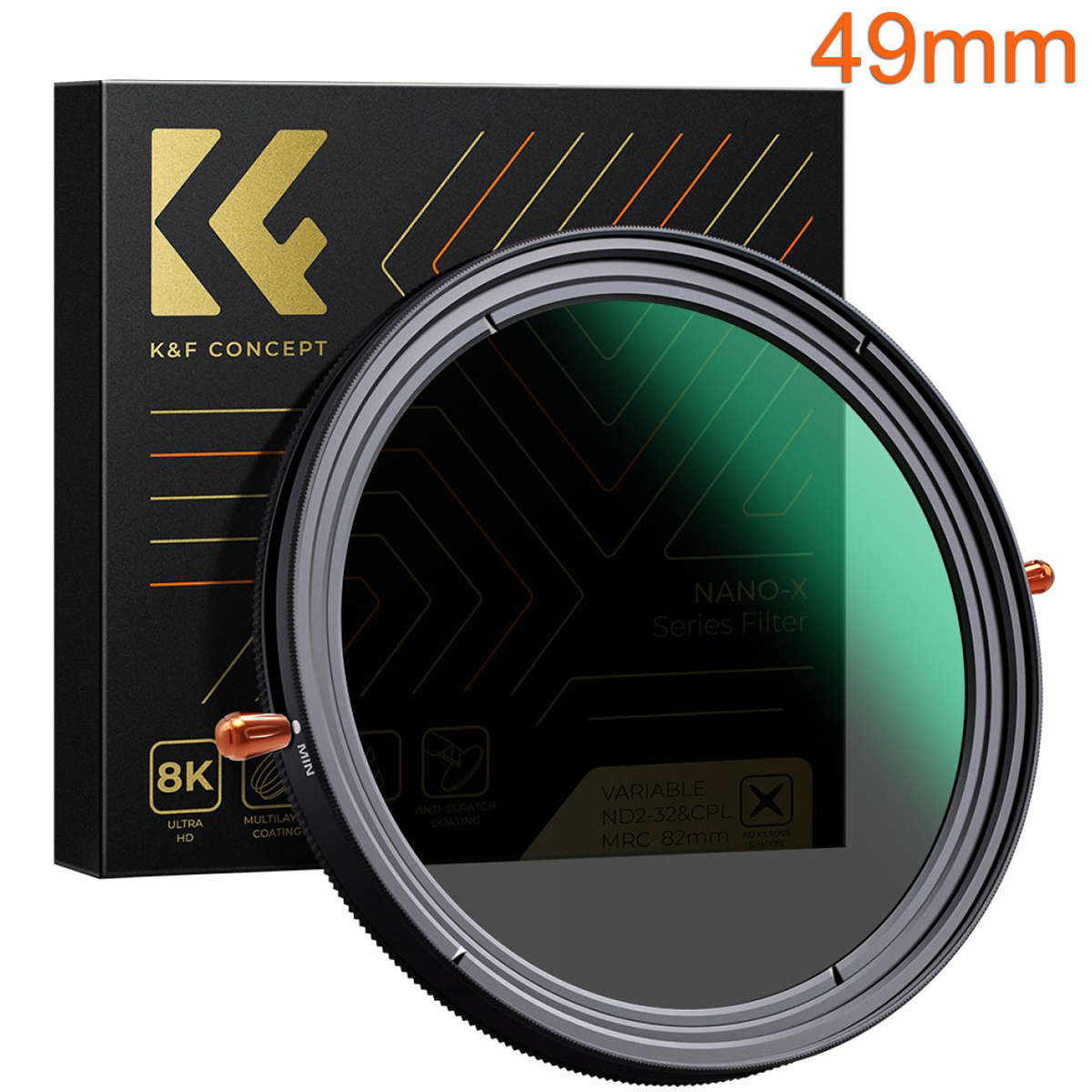
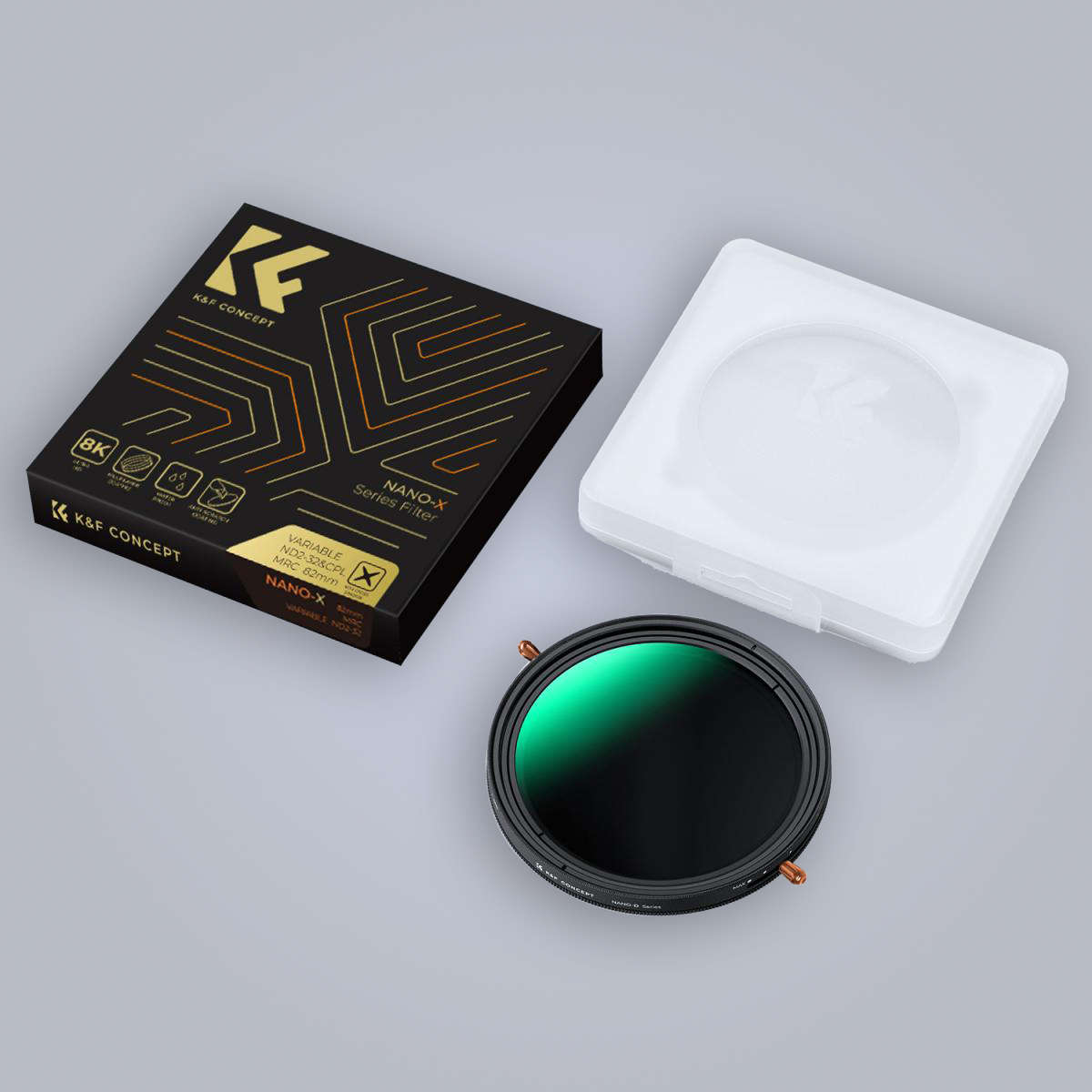
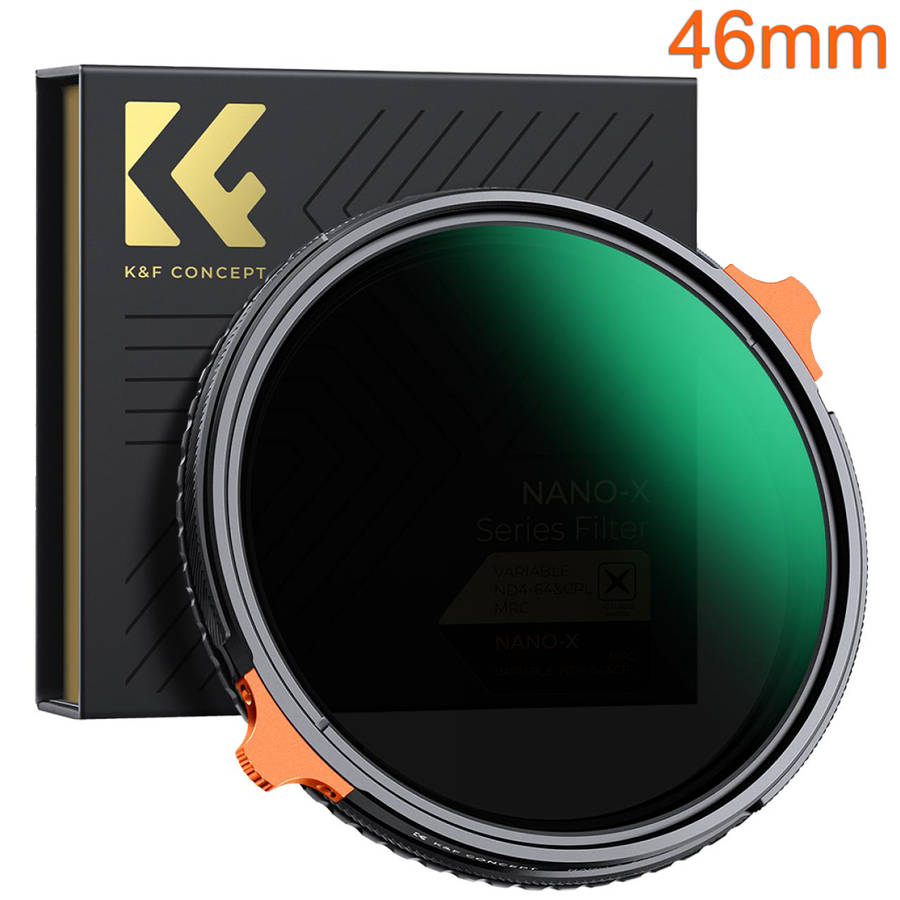
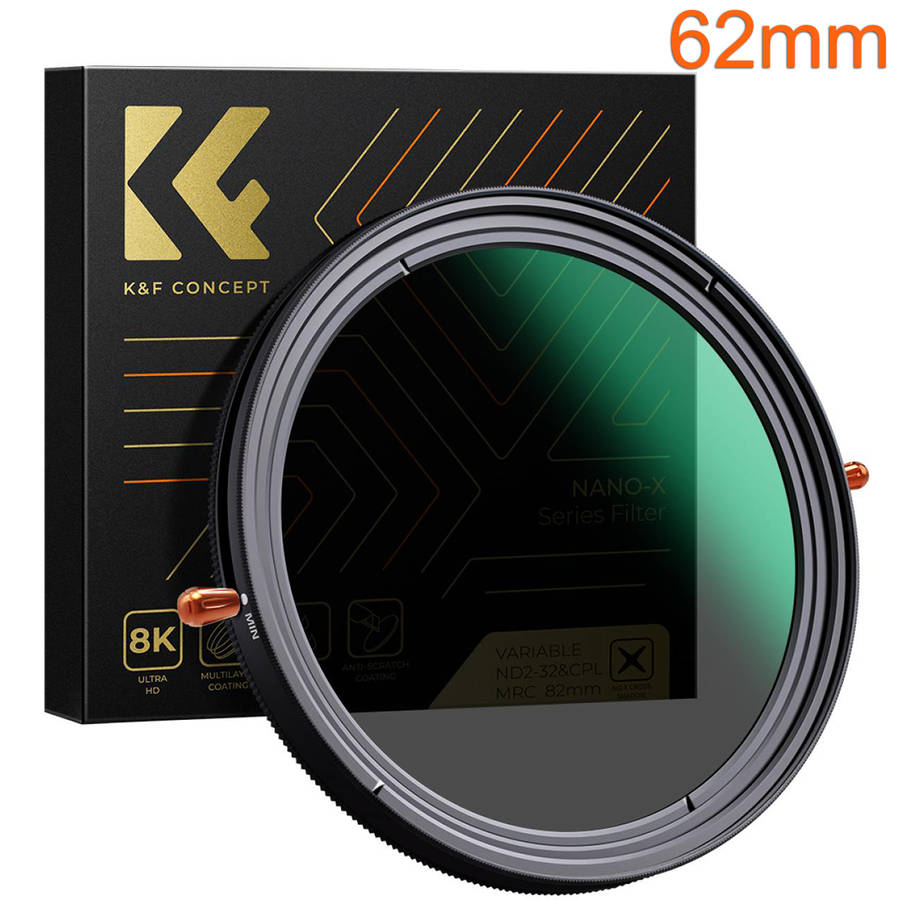
- 72mm Thread Diameter fits lenses with a matching filter thread for direct attachment without adapters
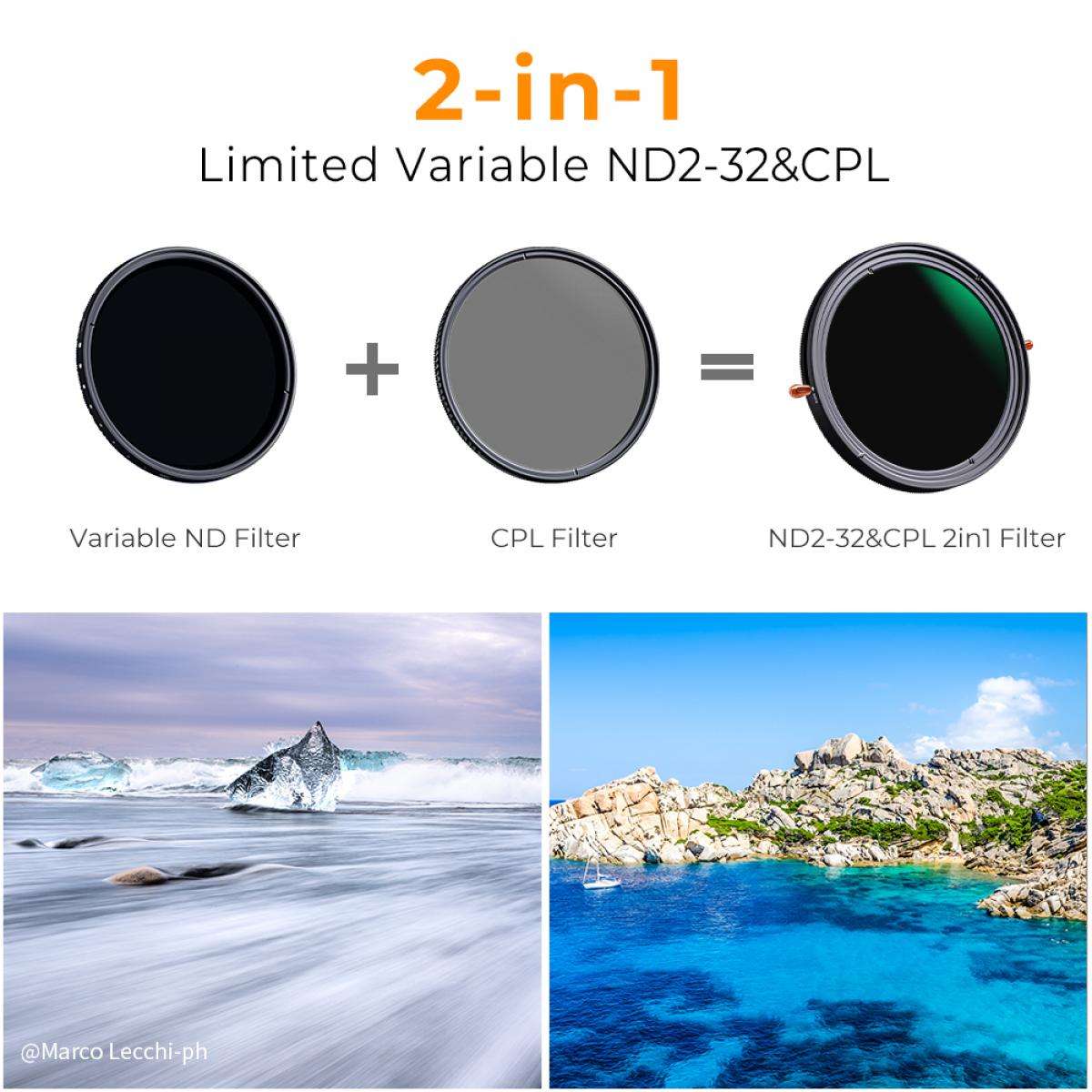
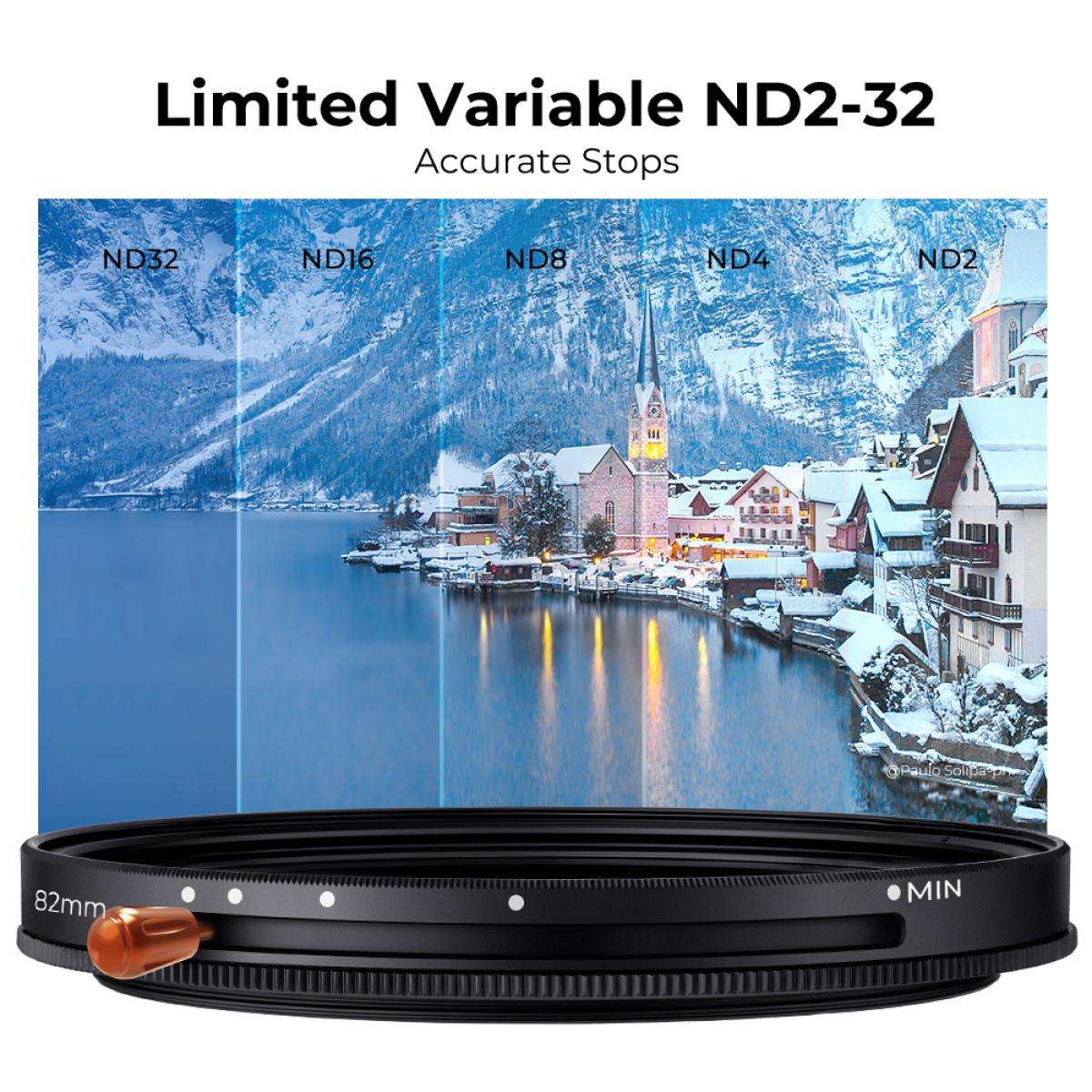
- 2-in-1 Design combining polarisation and variable neutral density in a single filter eliminates the need to stack multiple filters
- 1 to 5 F-Stop Range via ND2-ND32 density allows precise exposure control from subtle dimming to strong light reduction
- Rotating Front Ring adjusts both polarisation strength and ND intensity independently for flexible creative control
- No X-Pattern Vignetting across the variable range maintains clean corner-to-corner image quality
- Japanese AGC Optical Glass delivers high-resolution clarity for modern sensors without softness or colour shifts
- 28-Layer Multi-Coating resists water, oil and scratches while minimising flare and ghosting
- Circular Polariser Effect deepens blue skies, enriches foliage and cuts reflections from glass and water surfaces
- Aluminium Alloy Frame provides durability without excessive weight on the front element
- Nano-X Series Engineering optimised for high-megapixel cameras where optical precision matters
- Includes Protective Case for safe transport between locations
This 72mm dual-function filter merges circular polarisation and adjustable neutral density in a single optical element, giving you two fundamental exposure and colour tools without stacking glass or swapping mounts mid-shoot. The circular polariser cuts surface reflections and lifts colour saturation, think deeper blue skies, richer greens in foliage, and clean shots through water or glass where glare would otherwise wash out detail. The variable ND component dials from 1 to 5 stops of light reduction by rotating the outer ring, so you can open your aperture wide for shallow depth of field or slow your shutter for motion blur even when the sun is overhead. No dark cross pattern at maximum density, a common flaw in cheaper variable designs.
Built on Japanese optical glass with 28-layer nano coatings, the filter maintains edge-to-edge sharpness and contrast at resolutions modern sensors demand. Anti-reflection coatings suppress flare and ghosting when shooting into strong light; hydrophobic and oleophobic layers shed water and fingerprints with a single wipe. The glass itself is double-side polished to optical flatness, so it won't introduce softness or colour casts that force you into corrective post-processing.
Circular polarisers work by blocking light waves vibrating in certain planes. Rotate the filter and you control which reflections disappear and how much the sky darkens relative to clouds. This is especially useful in landscape work where a polariser can turn a washed-out midday sky into something with structure and drama, or eliminate the mirror-like sheen on a lake so you can see through to rocks and vegetation below the surface. The effect is not replicable in software, you either capture the polarised light at the moment of exposure or you lose it.
The variable ND side of the filter gives you a fourth exposure control beyond aperture, shutter speed and ISO. In bright conditions, beach sand, snow, open desert, cameras often max out their settings: you're already at your lens's minimum aperture, your shutter is at its fastest sync speed, and ISO is bottomed out. Adding neutral density reopens creative choices. You can shoot a portrait at f/1.4in full sun for creamy background separation, or use a multi-second shutter to turn choppy water into glass, techniques that would otherwise require waiting for dusk or rigging ND gels and hoping for cloud cover.
For video shooters, the variable ND functions as an aperture substitute. Most cinema and hybrid cameras need a 180-degree shutter angle to maintain natural motion cadence, at 24 frames per second that locks your shutter speed to 1/50th. If you're outdoors in daylight and your aperture is already stopped down to avoid overexposure, you have no room left to adjust. Dialling in ND gives you back control over depth of field and keeps your footage from looking either blown out or unnaturally sharp from a tiny aperture.
The 1-to-5-stop range covers the majority of field scenarios. One stop of reduction is already applied the moment you thread the filter onto your lens; rotating the outer ring takes you progressively darker. This range is wide enough to handle midday sun without being so extreme that you lose viewfinder brightness or autofocus reliability in marginal light. If you need more than five stops you're likely working in specialised long-exposure or solar photography where a fixed 10-stop ND is the better tool anyway.
Because both the polariser and the ND are integrated into one filter body, you avoid the vignetting and image-quality loss that comes from stacking two separate filters. Stacking adds more air-glass interfaces, more opportunities for internal reflections, and more physical bulk that can intrude into the frame corners on wide-angle lenses. A single element keeps the optical path short and the mechanical profile slim.
The nano-coating package is engineered for high-resolution capture. Modern sensors resolve detail that would have been invisible a decade ago, which means any flaw in the filter, a micro-scratch, a smudge, uneven coatings, shows up in the final file. The 28-layer treatment includes anti-reflection coatings that push light transmission above what uncoated glass achieves, so you're not losing a third of a stop to the filter itself. Waterproofing means you can shoot in mist or light rain without the filter fogging or trapping moisture between layers. Scratch resistance matters because filters live on the front of your lens where they take the hits that would otherwise damage your front element.
The filter's outer ring is knurled for grip even with gloves, and the rotation is smooth enough that you can fine-tune polarisation or ND strength while looking through the viewfinder. No clicking detents, this is a continuous adjustment, which is what you want when you're chasing a specific exposure or trying to eliminate a reflection at just the right angle. The front threads accept lens caps and step-up rings, so you can adapt the filter to larger lenses if your kit expands.
This filter is not a budget workaround; it's a field tool built to the standard working photographers expect when they're being paid for the shot. The optical quality supports 4K and 8K video, high-megapixel stills, and any scenario where you're cropping or enlarging in post. If you're shooting commercially or your work ends up in print, the difference between clean glass and mediocre glass is visible, and clients notice.
The 72mm thread diameter fits a wide range of mid-telephoto zooms, fast primes, and standard kit lenses. If you own multiple lenses with different filter sizes, step-up rings let you use one high-quality filter across your kit rather than buying separate filters for every lens. That's both a cost saving and a workflow simplification, you always know which filter is on which lens, and you're not carrying redundant glass.
The K&F Concept 72mm ND2-ND32 Variable ND Filter and CPL Circular Polarizing Filter, reference KF01.1086V2 when ordering, is in stock and ready to ship.