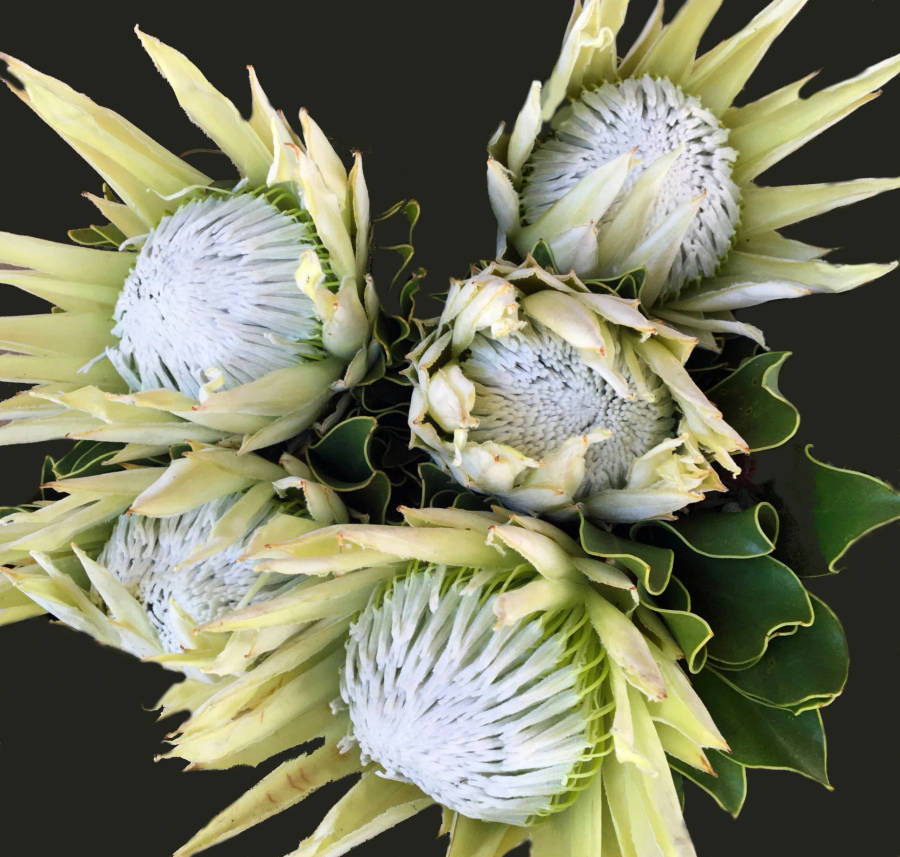
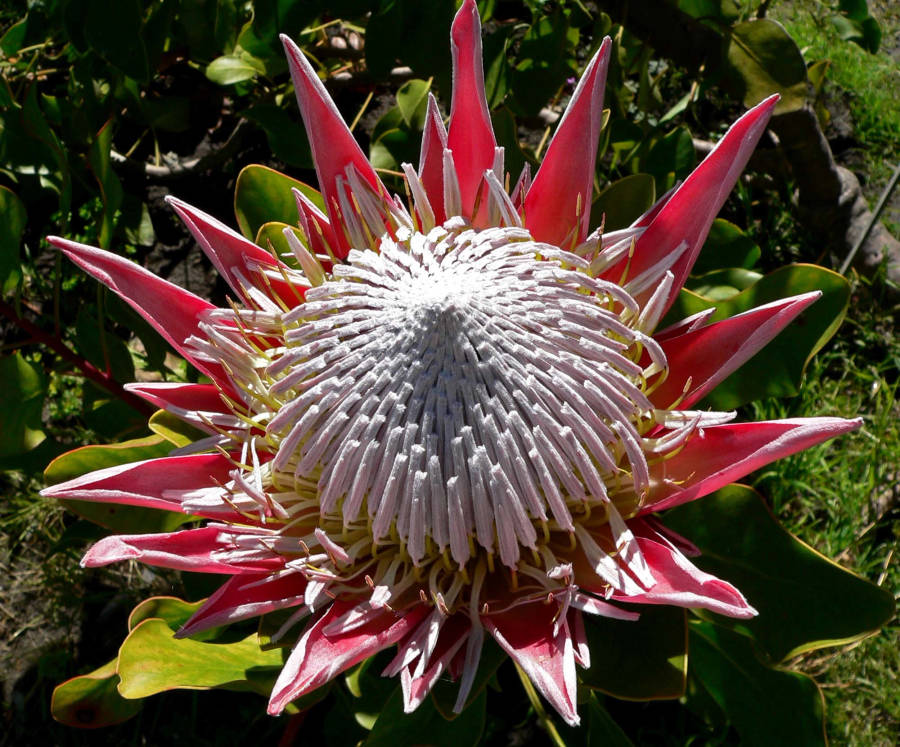
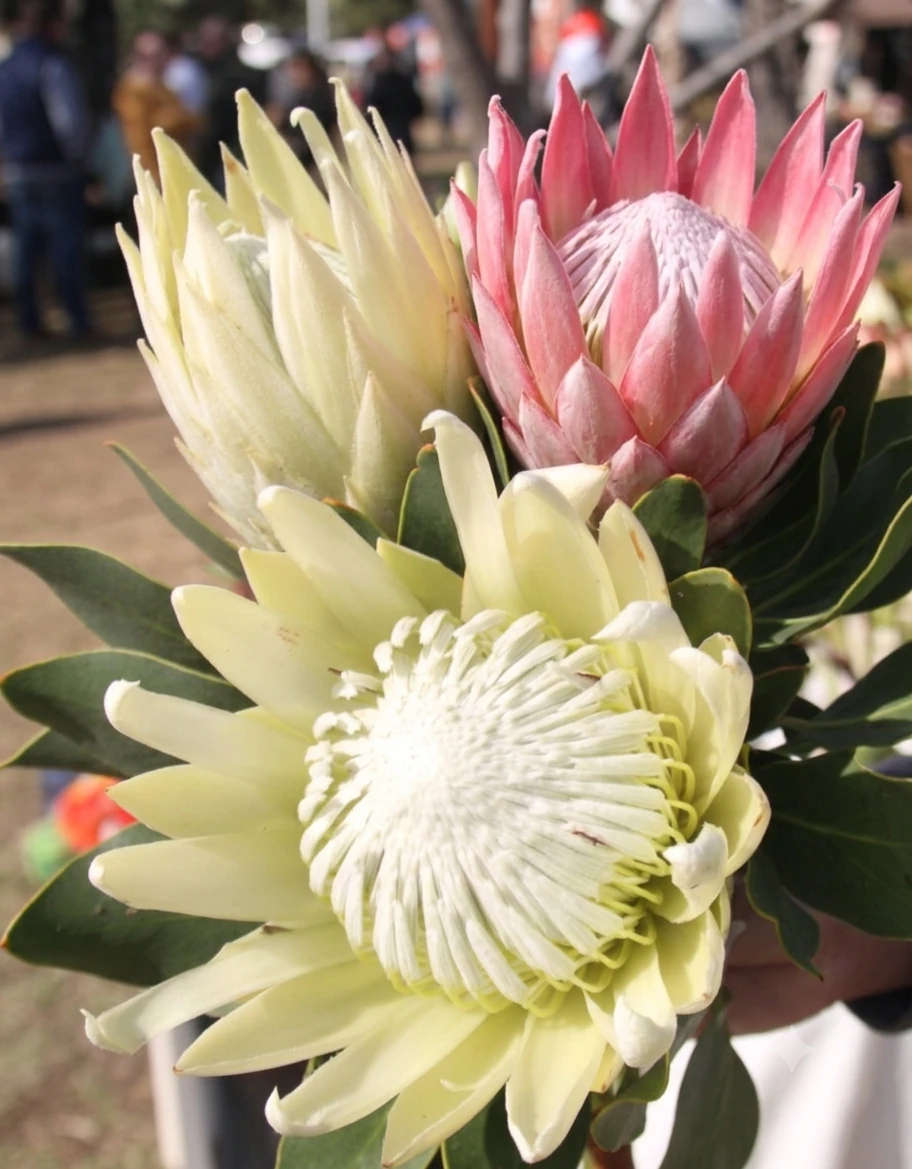
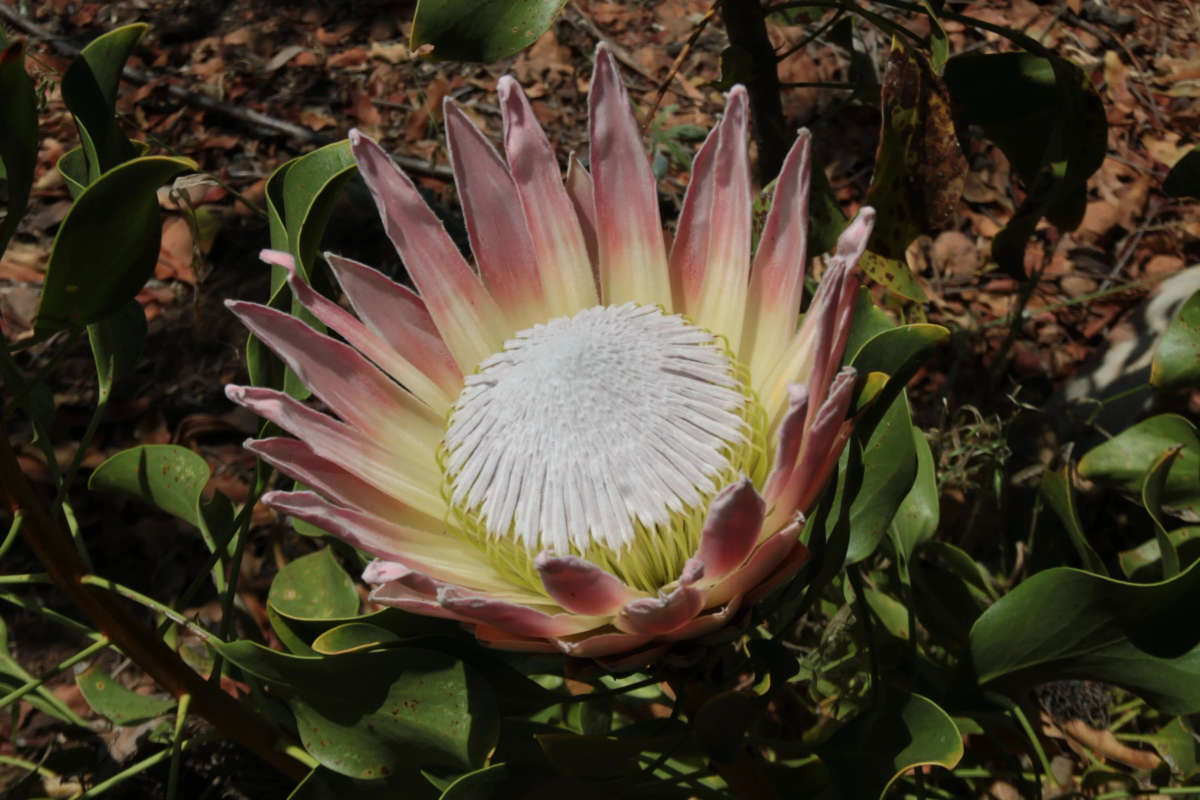
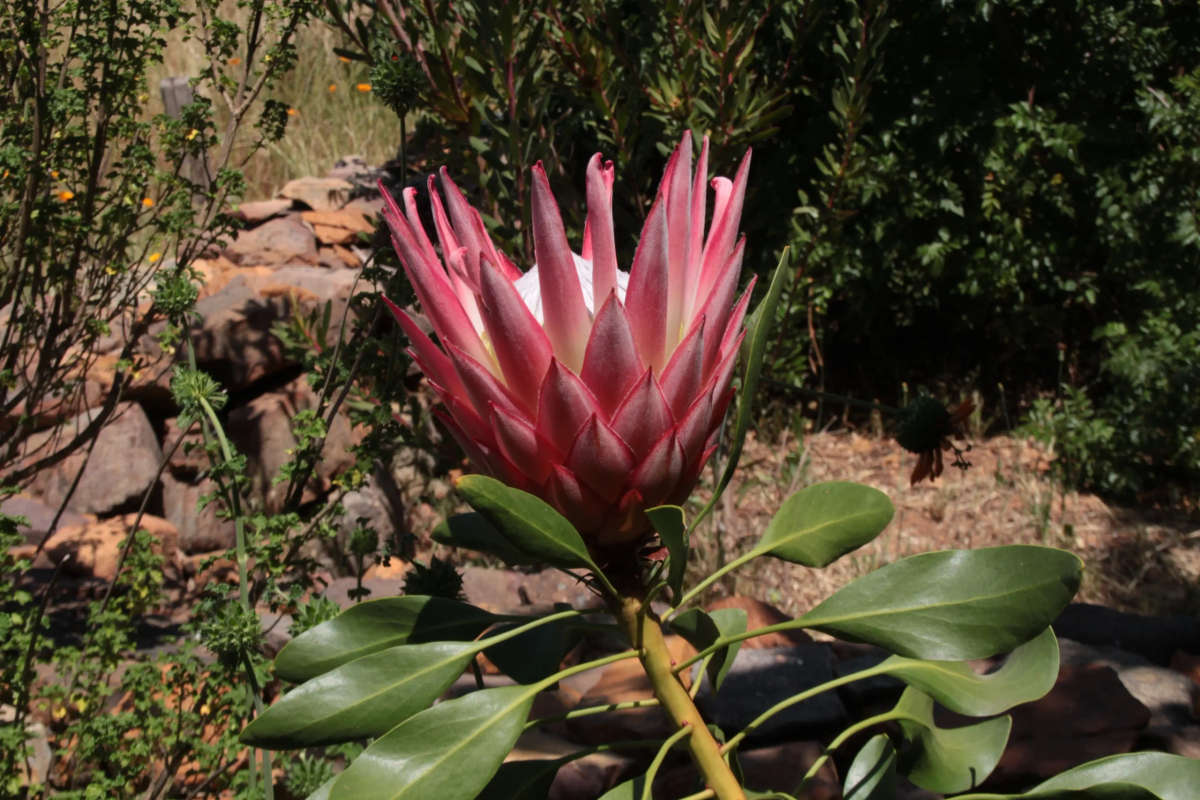
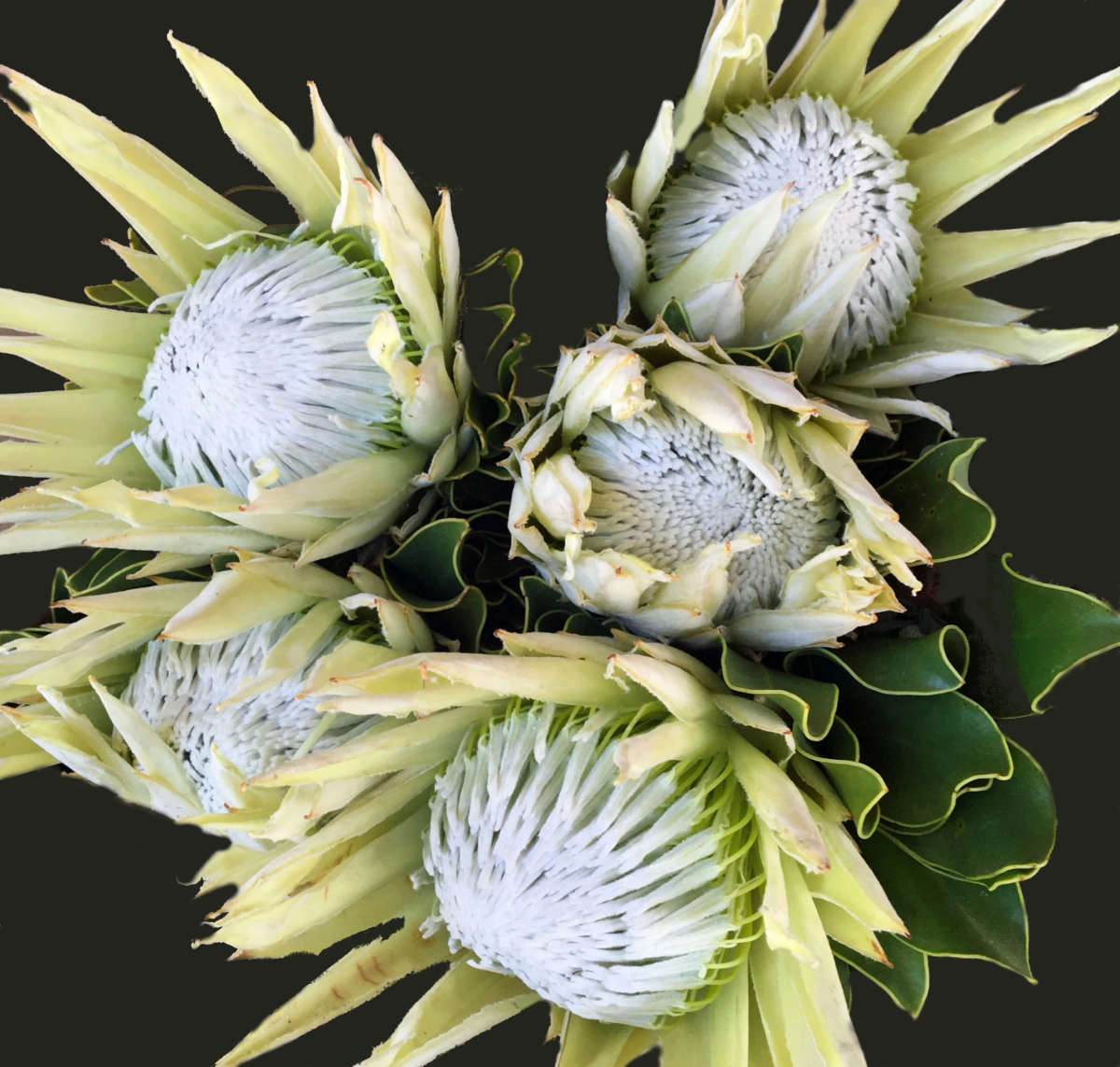
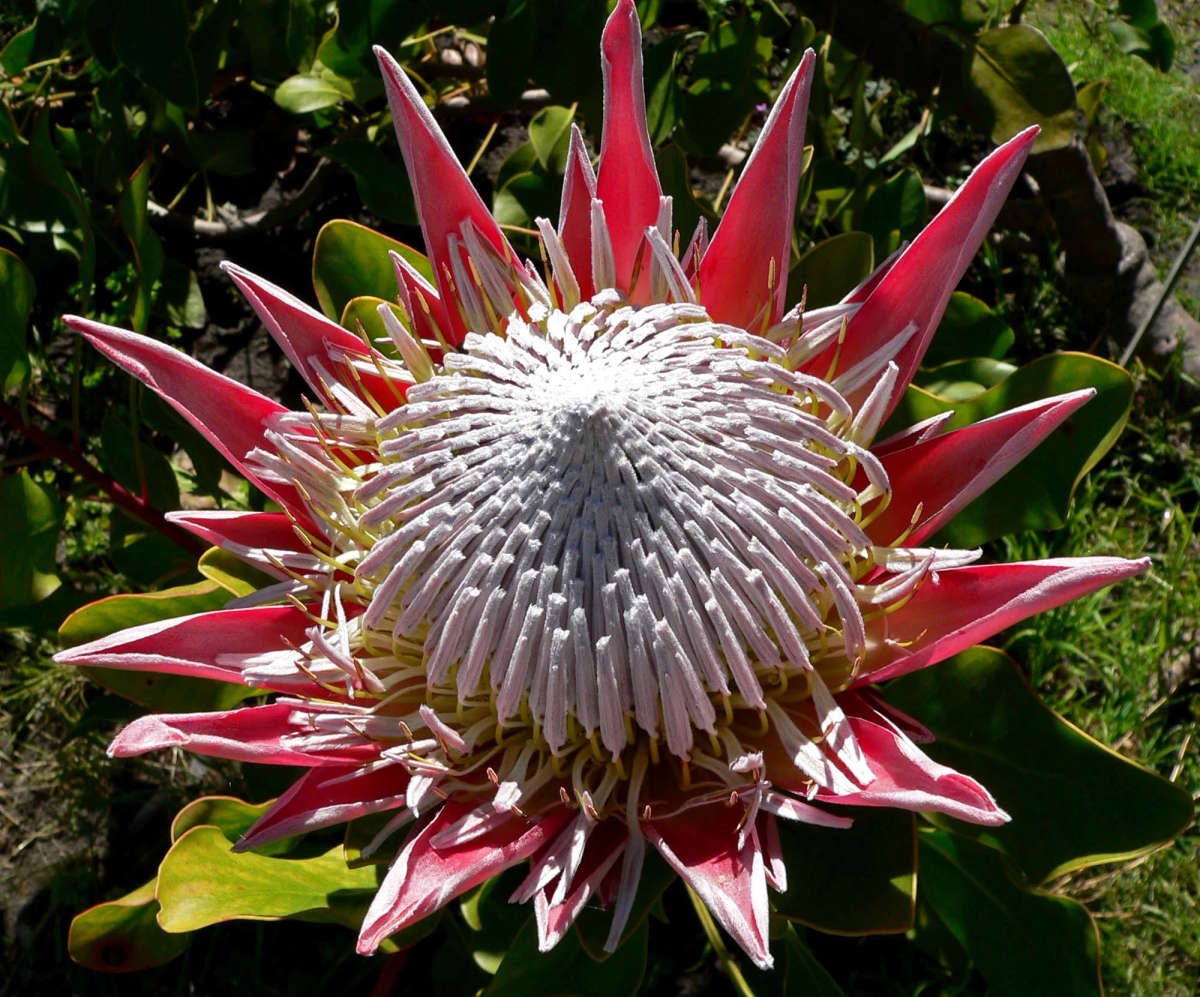
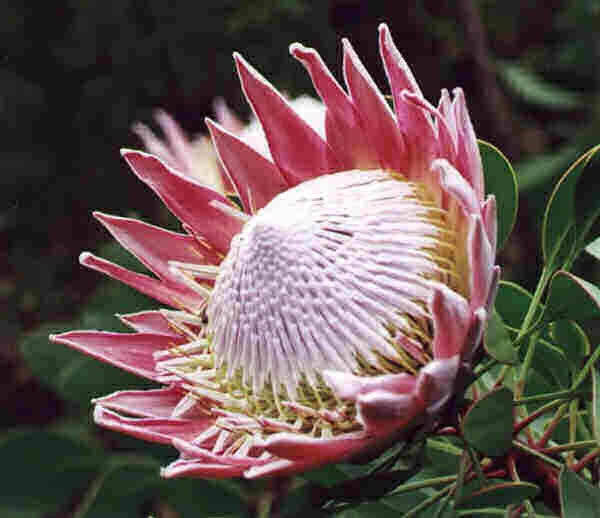
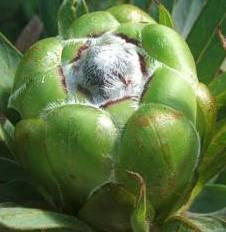
Pink/White King protea (Protea Cynaroides)
The most iconic member of the Protea family (Proteaceae) The King protea - Protea Cynaroides, is the national flower of South Africa and is part of the unique, indigenous fynbos group of South Africa. Also part of this group are the also famous Pincushions (Leucospermum), Cone bushes (Leucadendron) and also others like blushing brides (Serruria) and more.
Proteas are known for their spectacular, long lasting, bold blooms which are grown and exported all over the globe as cut flowers.
Besides adorning any household with a touch of class and wonder, in the garden protea species are evergreen and come in the most wondrous textures and colours. Allowing you to get really creative with creating a perfect landscaped haven and making sure the garden always stays impressive, even when not in bloom. There is simply nothing that can compare to that fine, richly textured fynbos look.
Probably the best part of the protea deal is that these plants are very low-maintenance and waterwise once established. That is about 6 months after planting and care. You can basically almost just sit back and enjoy them blooming. You can use a King Protea as a focal point or plant it along with other fynbos or waterwise species to create a true and unique South African theme. A hedge of varying pink and white KIngs makes for a truly spectacular show.
King Proteas are the ultimate affordable sustainable unisex gift.
Acquiring a King protea plant or a few and even in combination with other fynbos is truly actually an investment, ensuring you always have an abundance of very special and natural beautiful gifts. They make classy, but enduring unisex and sustainable gifts for teachers, bosses or just friends and family.
Also giving a Protea plant, a set of pink and white plants of a fynbos combo is a great gift idea that is really actually very affordable if you think about what you get for it. The receiver of this will be thinking of you for many years to come. All of this while you are subtly taking care of the planet and conserving a heritage. Of course we think that you deserve to get yourself this gift also. It's just a perfect gift for special occasions like housewarming, a birthday, mothers day or christmas.
Our gift packaging are special and unique
We've taken an extra special step by packing our King proteas and other plants in Beautiful gift boxes. To make sure it makes an entrance and creates a special moment. There is more. The packaging is sustainable also and even the safety marking is done in a beautiful way.
We pack secure for save arrival and see to our plants needs during transit
We go completely out of our way to ensure the plants are well protected and have all their needs served during transit. We do this by having windows for light and ventilation holes. Then we glue in brackets to hold the plants and soil in place, prevent soil spoilage and root shock.
You should get what you pay for and the plant must have what they need, to ensure they arrive happy and healthy and make that entrance. We want to make it special.
What you will receive
A healthy, well rooted 30 - 45 cm plant or plants, in a 500 ml - 1.5 l bag or container in a custom beautiful, sustainable giftbox. The boxes are ventilated and secure with proper safety marking and brackets.They also have a window for light. We deliver nationwide. We dispatch plants on Wednesdays, which means that the plants reach their destination either by the same Friday or early the next week.
King protea - Cynaroides Conditions
For more information see: a beginners guide to establishing proteas and the companion planting guide for fynbos gardens.
King Proteas and other protea species are resilient and prefer to grow in acid, nutrient poor soils. So they truly are very low maintenance. They do benefit from some feeding from time to time, but it is optional. They will most likely grow wonderful without it. Make sure the feeding is natural like worm tea as proteas are sensitive to phosphorus fertiliser.
They are adaptable to a wide variety of climates and can withstand harsh coastal conditions, strong winds, poor sandy soils, full sun, and are drought resistant once established.
Add a thick layer of mulch with bark, straw, leaves, around the base to suppress weeds, retain moisture and maintain consistent root temperature. However, be cautious about excessive mulch in poorly draining soil, as it may lead to root rot. Also keep the mulch away from the stem.
If you have clay or poor draining soil like clay, it's best to plant on a slope and to create more ideal circumstances, by digging out an area, adding rocks and riversand and then a good mix of riversand,compost and peat or coco coir or a special, protea mix.
The other option is to plant in a big container. Just ensure the container has big drainage holes. Put the container on bricks or rocks so that the water can run off. Adequate water drainage is the single most critical factor for proteas.
Generally they're hardy and can tolerate frost to around - 4 Celcius.
They will need a regular deep watering once a week until they have become sufficiently well established.
King protea - Cynaroides Pruning
They flower in late winter and spring, from June to October (Mid-winter to summer). They attract local pollinators.
Pruning the long flowering stems to use as cut flowers only benefits the plant by keeping the plant full, improving light penetration and increasing air circulation through the branches.
Only prune branches with flowers, as they carry flowers on 2 year old branches.
Pruning is best done during and after flowering. make cuts above at least four or five leaves from the beginning of a branch. Never cut into bare stems (no leaves). Always remove old flower heads.
King protea - Cynaroides Landscaping
A dynamic shrub that grows to approximately 2.4 x 2.4 m in size. Plant them further back in garden beds to prevent overshadowing other plants. Bold and Beautiful, this protea species will create a textured contrast alongside reed-like restios, fynbos textures and colours like Slangbos (Stoebe Plumosa), Pepperbush, Dietes and stately aloes. Combine this with lower growing and ground covering waterwise species like Twin leaves, low growing aloe species like Soap aloe and bulb species like Amaryllis Belladonna and Nerine. Cover with bright Oxalis, Romuleas or Cape Snowdrops. Or just plant them in a gravel bed or rock garden alongside smaller succulents for a low-maintenance and water-wise garden. They are ideal for screening or hedging or just singularly to enhance any compo...