



| Main centres: | 1-3 business days |
| Regional areas: | 3-4 business days |
| Remote areas: | 3-5 business days |
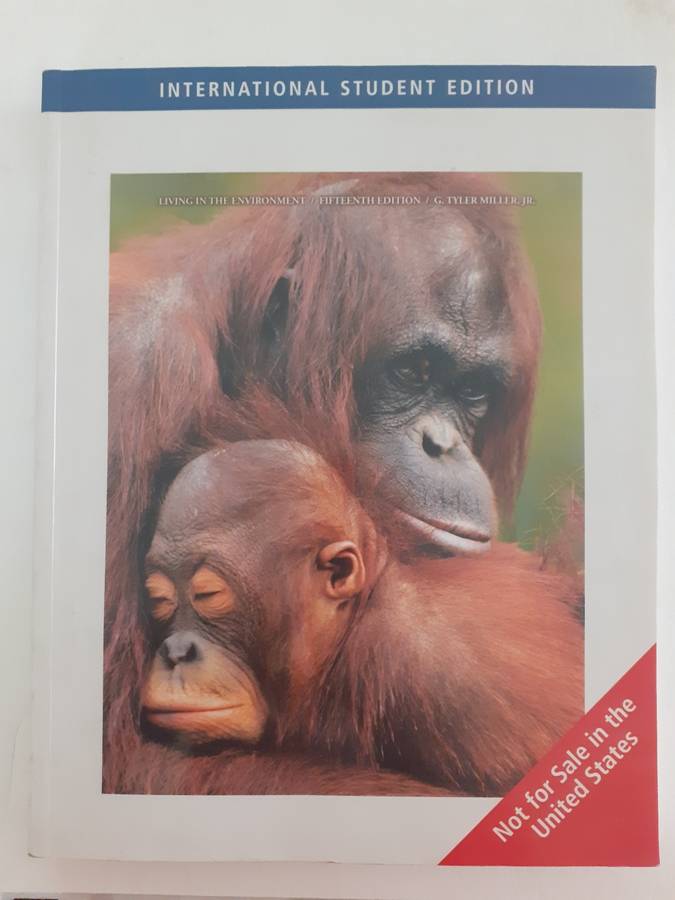
15th edition
Large (A4) soft cover
Very good condition
Living in the Environment by G. Tyler Miller and Scott Spoolman is a comprehensive textbook that explores the principles of environmental science. It covers a wide range of topics, including:
Environmental Problems and Sustainability: Discusses the causes of environmental problems and the concept of sustainability.
Natural Capital: Explains natural resources and services, such as air, water, soil, and biodiversity.
Ecological Footprint: Defines the amount of biologically productive land and water needed to support a population.
IPAT Model: Measures the impact of human activities on the environment using the formula: Impact = Population x Affluence x Technology.
Ecological Tipping Points: Describes the irreversible changes in natural systems.
Cultural Changes: Highlights the agricultural, industrial-medical, and information-globalization revolutions.
Environmental Worldviews: Explores different perspectives on how humans should interact with nature, including planetary management, stewardship, and environmental wisdom.
Sustainable Society: Defines an environmentally sustainable society as one that meets current and future resource needs without compromising the ability of future generations to meet their needs.
If you're interested in understanding the complex interactions between humans and the environment, this book provides a thorough and engaging overview.


