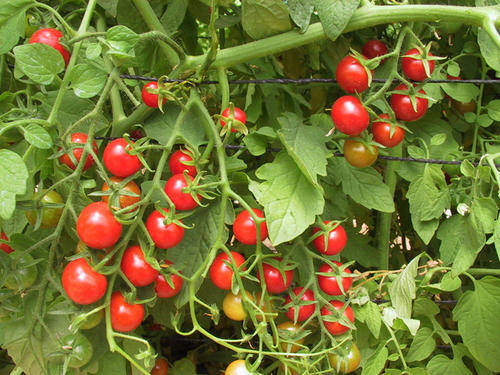
Matts Wild Cherry is a small, vigorous heirloom tomato believed to originate from wild tomato populations in Mexico. Its famous for producing huge numbers of tiny, intensely flavored fruits and for being one of the most reliable and resilient tomato varieties.
Key characteristics
Flavor: Bold, sweet-tart, classic tomatoey taste
Fruit size: Very small (pea to marble-sized, ~12 cm)
Color: Bright red
Growth habit: Indeterminate, vigorous (sprawling vine)
Days to maturity: ~6070 days from transplant
Yield: Extremely heavy producer (often hundreds to thousands of fruits per plant)
Use: Snacking, salads, natural garden grazing
Growing Instructions
1. Starting Seeds
Start indoors 68 weeks before last frost
Plant seeds ¼ inch (6 mm) deep
Ideal temperature: 2127°C (7080°F)
Germination: typically 510 days
2. Transplanting
Move outdoors after frost danger has passed
Space at least 60 cm (24 inches) apart (they spread aggressively)
Plant deeply to promote strong root systems
3. Sun & Soil
Needs full sun (68+ hours daily)
Prefers well-draining, fertile soil rich in organic matter
Ideal pH: 6.06.8
4. Watering
Keep soil consistently moist, but not soggy
About 2.54 cm (11.5 inches) of water per week
Water at soil level to prevent leaf diseases
5. Support (Important)
Plants can become large, sprawling, and wild (2 m / 6+ ft or more)
Use strong cages, trellises, or allow to ramble if space permits
Minimal support can still work, but expect a wild growth habit
6. Fertilizing
Use balanced fertilizer at planting
Avoid excess nitrogen (leads to more leaves, fewer fruits)
Light feeding during growth is usually sufficient due to vigor
7. Pruning
Generally not necessary
Many growers leave it unpruned to maximize yield
Light thinning can improve airflow if plants get too dense
Harvesting Tips
Fruits are ready when fully red and slightly soft
Harvest frequentlyplants produce continuously
Fruits may drop when ripe, so check ground if needed
Common Issues
Sprawling growth can overtake nearby plants
Splitting rare, but possible with irregular watering
Volunteer plants seeds easily self-sow the following season
What Makes It Special
One of the closest cultivated relatives to wild tomatoes
Exceptionally disease-tolerant and adaptable
Produces in conditions where other tomatoes struggle
Often considered one of the best-flavored small tomatoes.