| Main centres: | 1-3 business days |
| Regional areas: | 3-4 business days |
| Remote areas: | 3-5 business days |
 Edward of Caernarfon, was king of England from 1307 until (oops!!) he was deposed by his wife, Isabella, in 1327. Son of Edward I, he was considered a 'play boy' having fathered five (known) children by two women. He was the sixth Plantagenet king and the first 'Prince of Wales'.Not interested in the rule of the Government, nor the mechanics of warfare, he was totally unambitious and preferred dabbling with boats and crafts. As a family speaking French and not English, he was disliked by the English, the Welsh and the Scots. He attempted to create an alliance with France by marrying Isabella, but, them virtually dumped her on his return to England. He tried, on a number of times, all unsuccessful, to curb Robert the Bruce, who was gaining land in Scotland with each successive battle failure by the English.
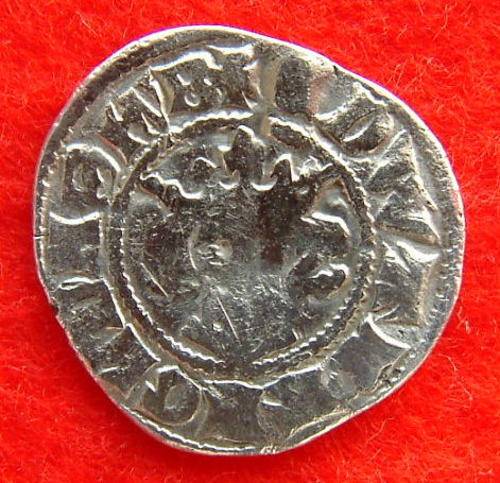
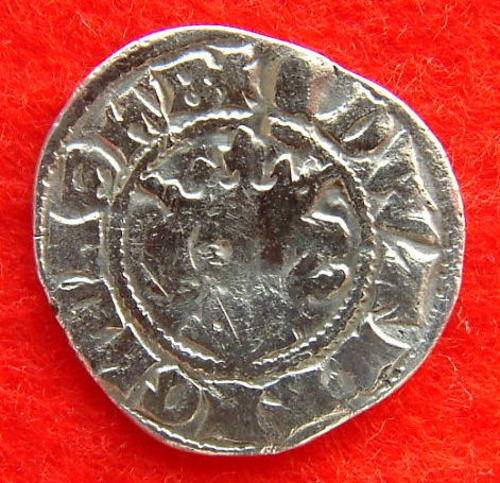
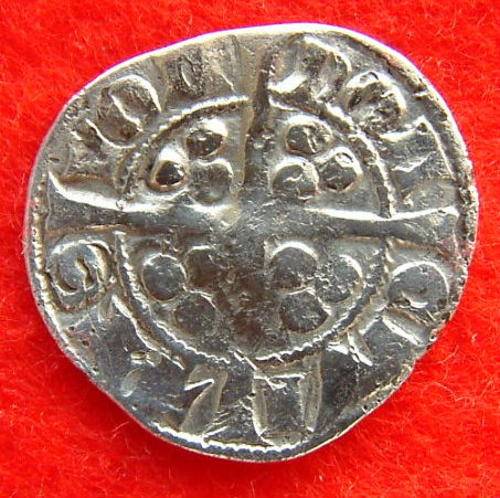 Eventually, in 1314, Edward tried to defeat Robert for good, by launching an army of 20,000 foot soldiers and 3,000 cavalry at him. Robert the Bruce was not only a great leader - and cunning - and defeated Edward at theBattle of Bannockburn, where, with just a small army and farmers, they inflicted the worst defeat that England has ever had. Due to a dispute between England and France, Edward sent Isabella back to France to negotiate peace terms. Isabella was delighted to get home and away from Edward whom she detested, and struck up an alliance with Roger Mortimer in Paris. In 1326, Mortimer and Isabella invaded England with what was a small army. Edward counteracted with a large force, most of whom refused to fight Mortimer. If fact, it was close on a rebellion. This forced Edward to abdicate and his son, Edward III was eventually proclaimed king. However, in the interim period, Isabella had Edward II interred at Berkeley Castle where he (mysteriously) died. On the bright side, Edward did establish Oriel College at Oxford and King's Hall (now Trinity College) at Cambridge! The above coin is a 'hammered' silver coin of 18mm in diameter and weighs 1.28 grams. Hammered coins were produced by placing a thin sheet of metal, either gold, silver or copper, between two dies, and striking the top die as to create an image on each side. Because of this method, it was difficult to produce coins of a regular diameter, and, often coins were 'cut' i.e. slivers of the coins were removed by unscrupulous traders and the metal, (silver or gold), and the thin slivers eventually re-sold. In the case of the above coin, it appears to be intact and escaped the 'cutting'.