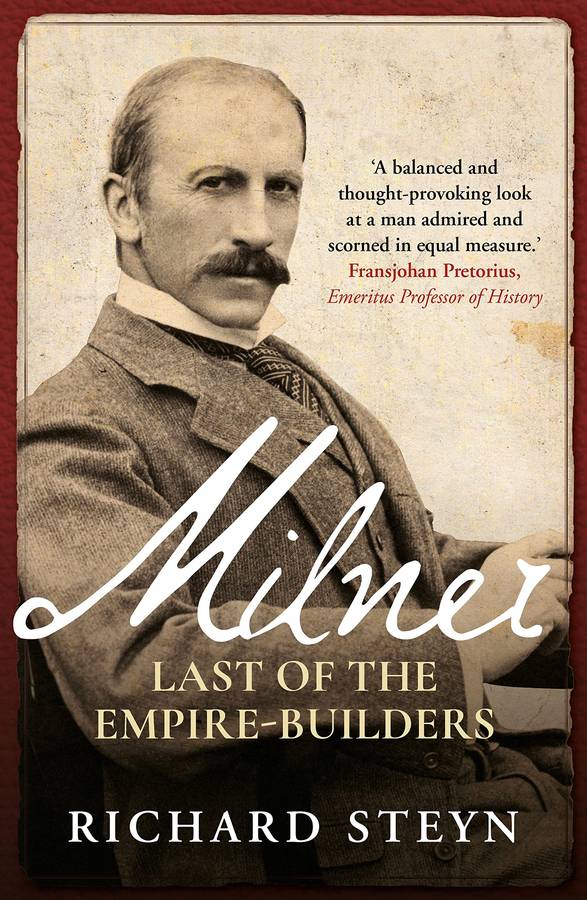
Jonathan Ball Publishers SA, 2022, softcover, illustrated, index, 380 pages, some underlining in pencil otherwise condition: very good.
"Engagingly written, as unputdownable as a biography gets" Financial Mail From the acclaimed biographer of Jan Smuts, a revealing new account of Empire-builder and First World War Cabinet minister Lord Alfred Milner. Alfred Milner was one of Britain's most famous empire builders who both contributed to the Allied victory in the First World War and left an indelible imprint on the history of South Africa. Yet his legacy is contested and little understood. Largely responsible for the Boer War - a conflict marking the beginning of the end of the British Empire - afterwards Milner helped to unify South Africa, but brewed resentment among Afrikaners. In Britain, from 1916 Milner was part of Lloyd George' five-man War Cabinet, and the driving force behind the Imperial War Cabinet which increased the status of Britain's Dominions. In this comprehensively researched, first full-length biography by a South African, Richard Steyn argues that Milner's reputation should not be solely defined by his eight years' service in South Africa. If he was the wrong man to send to that country, he was the right person in a far greater international conflict.
Another recent superb book from Richard Steyn on one of South Africas most loved and hated historical figures. Surely a man of great intellect, selflessness, and a huge capacity for work, Steyns writing nevertheless makes it clear that Milner almost single-handedly provoked the second Boer War, although he did ensure that the colonies he governed in the peace afterwards were built on solid administrative foundations, and put on the road towards a united self rule. Steyn also points out how Milners appointment to David Lloyd Jones war cabinet in the Great War helped bring about a speedy end to hostilities. In addition to all this, he fills his book with fascinating insight into many of the characters and issues over the lifetime of Alfred Lord Milner: certainly a colossus of his time, however unpopular he may have been amongst many. Richard Steyn further establishes his reputation as a consummate biographer in this book after equally superb books on Jan Smuts, Louis Botha, and Churchills friendship with Smuts.