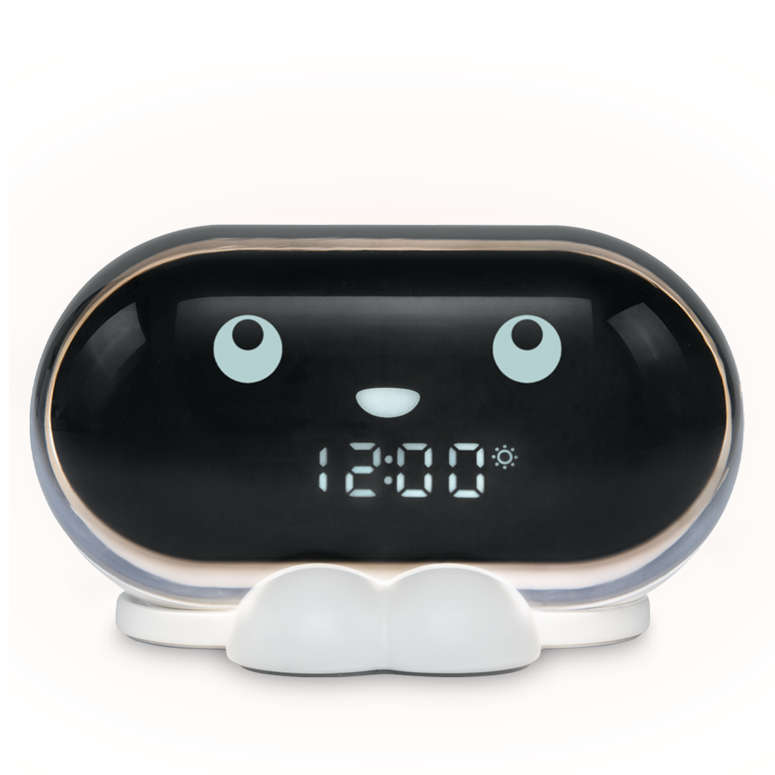
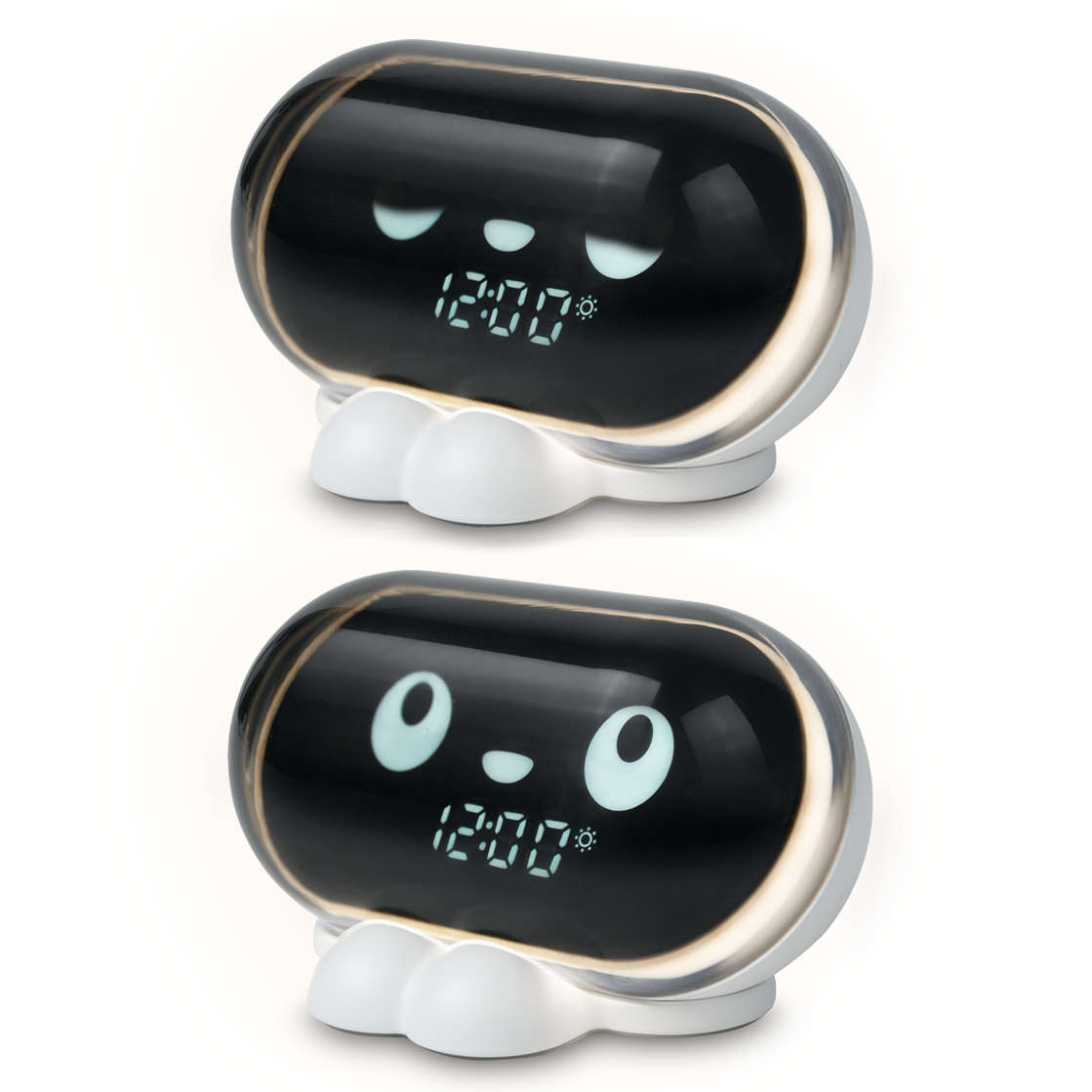
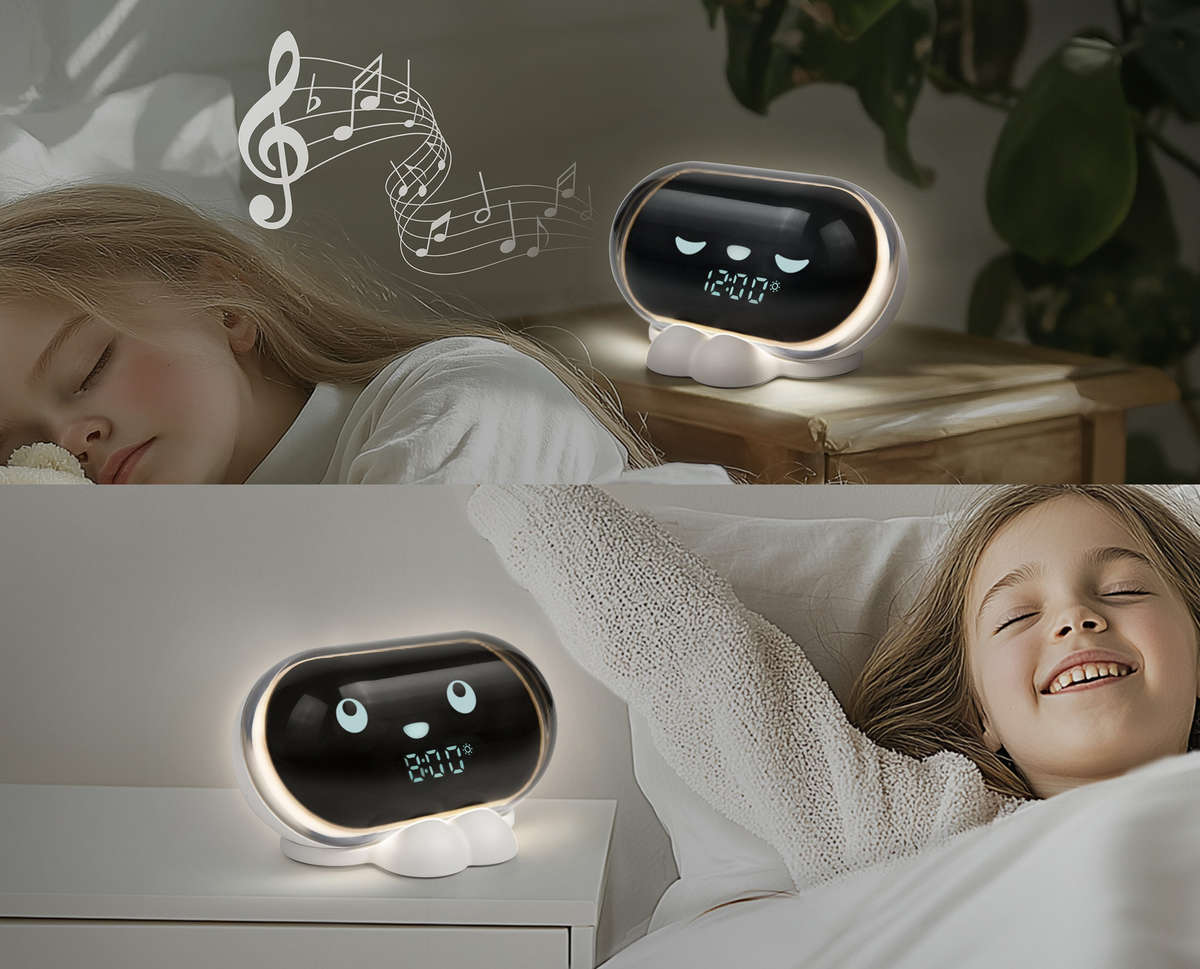
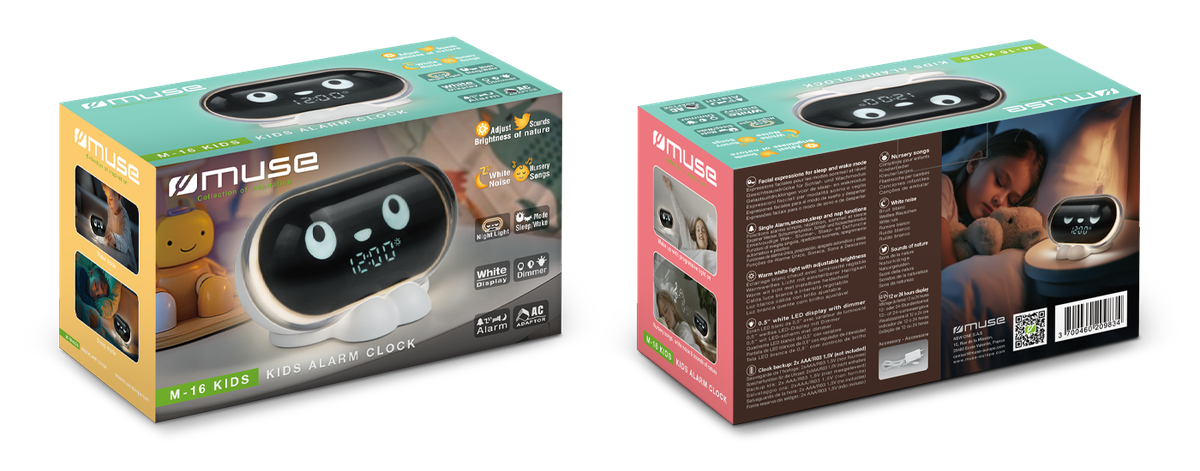
- Expressive face animations show children whether it's still sleep time or morning, removing clock-reading from the equation
- Sunrise simulation wakes your child gradually with increasing light instead of a jarring alarm sound
- Quiet-time countdown with fading glow marks the end of naptime without startling them awake
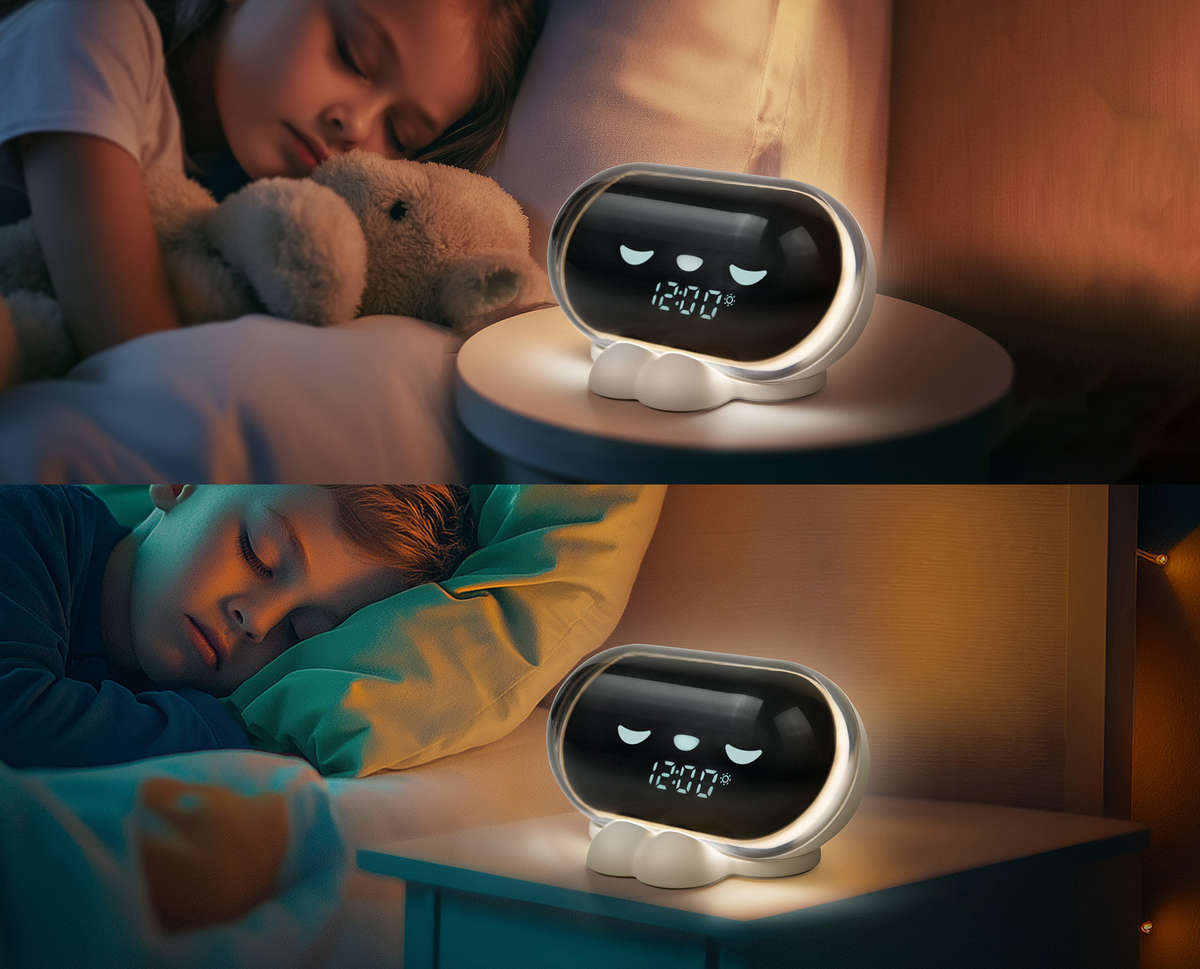
- Bedtime fade-out creates a settling routine you can start and leave, the light dims itself as your child drifts off
- 12 calming audio options let you rotate through nature sounds, white noise or lullabies to find what soothes best
- Dimmable clock face means total darkness for sleep while you can still read the time from across the room
- Adjustable halo glow works as a reassuring nightlight at a brightness that won't disrupt rest
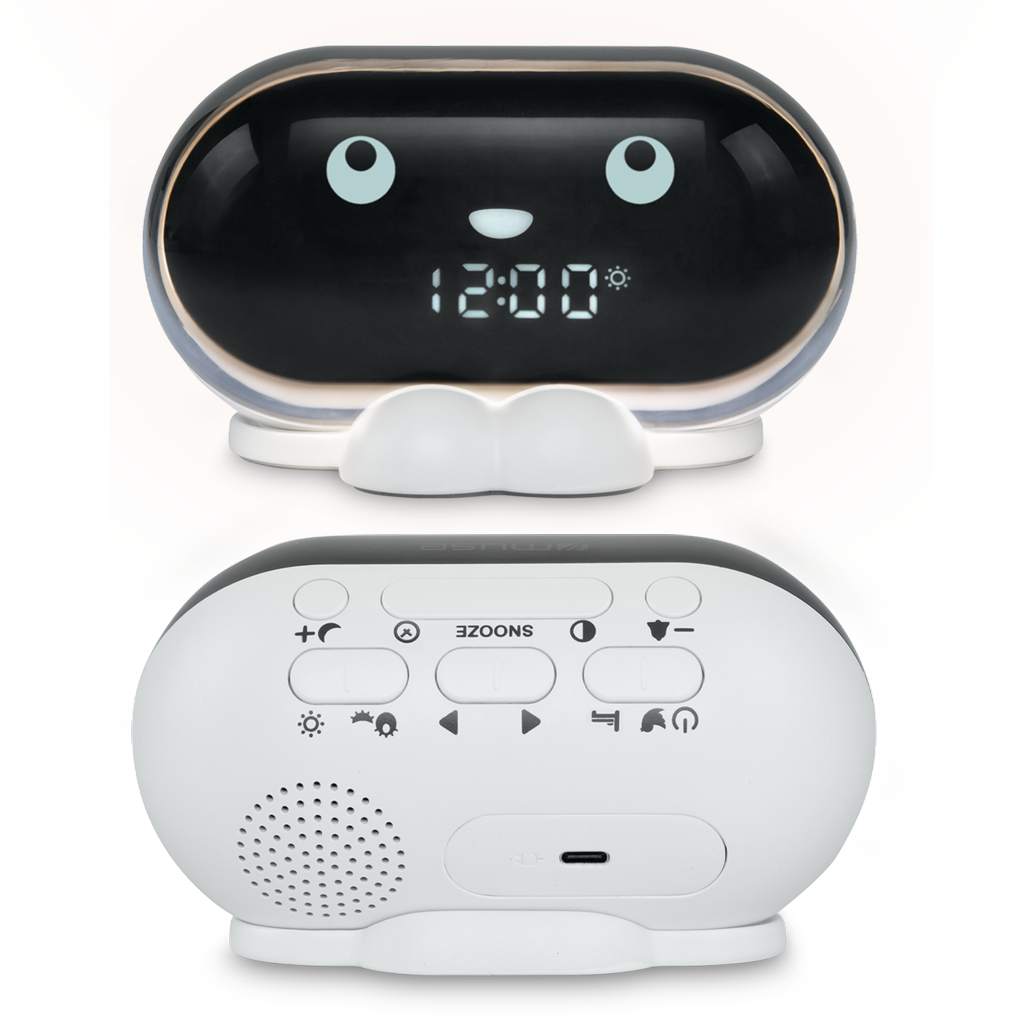
- Single-purpose buttons allow independent operation once you've walked them through which does what
- Stable rounded base with anti-slip feet stays put if knocked during the night
- 2-year warranty backs a build designed to survive the early childhood years
- 340g compact form fits a small bedside table without dominating the space
- Mains-powered via included USB-C adaptor with battery backup to hold settings through brief outages
- 24-hour or 12-hour display format selectable during initial setup
- Suitable for children aged 3 and up as a functional sleep-training and timekeeping aid under parental guidance
Young children learning to read a clock face or manage their own morning routine need more than a standard alarm. They need a visual system that makes sense before they can fully grasp numbers, and a wake-up experience that doesn't jolt them into the day. The Muse Snoozy Kids Alarm Clock delivers both through expressive animated eyes that open at wake time and close at bedtime, progressive sunrise lighting that brightens gradually as morning approaches, and a collection of calming sounds that settle restless minds during wind-down. It's built for the household with a child aged roughly three to ten who's outgrowing parental wake-up calls, learning what the numbers on a clock mean in the context of their own day, or establishing boundaries around when it's acceptable to leave their room in the early hours.
The animated emoji face sits at the centre of the clock and cycles through three states: eyes open to signal it's time to be awake, eyes closed to indicate sleep or rest time, and an animated transition between the two. A pre-reading child grasps this instantly. There's no negotiation over whether it's morning yet, no need to explain what the hands on a clock mean before they're developmentally ready. The eyes are open, so it's okay to get up. The eyes are closed, so it's still sleep time. This non-verbal boundary reduces early-morning bedroom visits and bedtime resistance, giving parents a tool that works even when verbal reasoning doesn't. You can lock the eyes open, lock them closed, or let them animate according to the programmed schedule. If the animation becomes a distraction at lights-out, simply set the eyes to stay shut until the programmed wake time.
The progressive wake-up light mimics natural dawn by increasing brightness slowly over the minutes leading up to the alarm, so your child wakes to a brightening room rather than a sudden noise. This gentler transition into consciousness sets a calmer tone for the morning and reduces the grogginess that comes from being startled awake. You control whether the light activates with the alarm and how bright it gets at full intensity, tailoring the experience to your child's sensitivity and the ambient light in their bedroom. For children who wake easily, a low setting may be enough. For deeper sleepers, a brighter final intensity ensures they actually notice the change.
Two timer functions handle the bookends of rest periods. The nap timer runs from five minutes to two hours and wakes your child after a daytime rest with optional sounds and progressive light, useful for maintaining a consistent nap schedule without you needing to watch the clock. The sleep timer does the opposite: it plays soothing sounds and dims the light gradually over a period you set, then switches everything off automatically once your child has drifted off. This supports independent settling, letting you leave the room while your child winds down to gentle audio and fading light instead of lying awake in silence or needing you to stay until they're asleep.
Twelve sounds cover a range of settling preferences. Six nursery songs provide familiar, melodic options for children who respond to music. Five nature sounds and white noise offer non-melodic alternatives that mask household noise, settle restless minds, or provide consistent audio for children who find silence unsettling. You can pair any of these sounds with the sleep timer for bedtime wind-down or the nap timer for daytime rest, and the variety means you're not locked into a single audio option as your child's preferences evolve.
The white LED time display adjusts across three brightness levels or switches off entirely, so the clock face doesn't flood the room with light during sleep hours. A dim setting lets you check the time from the doorway without waking your child. The off setting creates complete darkness for children sensitive to any ambient glow. The adjustable white light ring around the clock face functions as a standalone nightlight, providing just enough illumination for a child who needs a small amount of light to feel secure without the brightness that interferes with melatonin production and deep sleep.
Each button on the clock performs one clearly defined task, which matters when your goal is to hand control over to a child who's still developing fine motor skills and working memory. There's no multi-press sequence to remember, no hidden menu to navigate. Once you've walked your child through which button does what, they can manage their own wake-up routine, adjust the nightlight, or start the sleep timer without needing to call you in. This one-function-per-button design builds confidence and reinforces the connection between the clock and their daily rhythm, supporting time awareness in a context that's personally relevant rather than abstract.
The clock runs on mains power via the included AC adaptor, so you're not replacing batteries every few weeks or waking to a dead clock. Two AAA batteries (not supplied) sit in a backup compartment and preserve your programmed settings during power cuts, meaning you don't lose the wake time, sleep time, or brightness preferences you've configured. When power returns, the clock picks up where it left off. You select either 24-hour or 12-hour time format during initial setup, eliminating AM/PM confusion and preparing your child for the time format used in most educational settings.
This clock addresses the gap between a child's need for structure and their limited ability to interpret abstract time concepts. The animated eyes translate schedule into something a young mind grasps without explanation. The progressive lighting and sound library turn wake-up and wind-down into predictable, gentle experiences rather than jarring transitions. The simple controls let a child take...