

| Main centres: | 1-3 business days |
| Regional areas: | 3-4 business days |
| Remote areas: | 3-5 business days |
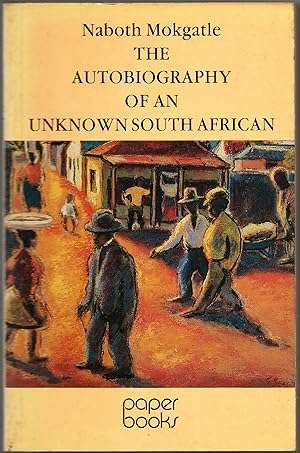
Published by AD Donker, 1990, softcover, m350 pages, condition: new.
Published in 1970, this is an insightful work at the nexus of autobiography and political - economic history. Mokgatle's work traverses his life's journey from his beginnings in Phokeng to the ranks of the African General Workers' Union. He artfully explains the transition from pre-colonial modes of production and social relations and the missionary and colonial imprint on his community. This book gives expression to ideas like Bernard Magubane'e notion of Colonial Capitalist Modes of Production. He traces the journey of his Batswana forebears from Molepole to present day South Africa, their ways of life from initiation, ensuring food security, marriage and other facets of life. He also details how these were surrendered with the advent of proselytization. Their interaction with the Lutheran Church and the physical and social changes that follow mirror the experiences of many communities across Africa. This is a useful companion to the work of the Comaroffs on missionaries and colonial subjectivities. His departure from Phokeng to Pretoria (via Rustenburg) provides insight into the labour migration system and the systematic dispossession which many South Africans endured. He offers a refreshing account, centering Africans and their agentic power in the quest for freedom. This work epitomizes the Freirian idea that "the oppressed must be their own example in the struggle for their freedom ." (Freire 1970: 54)