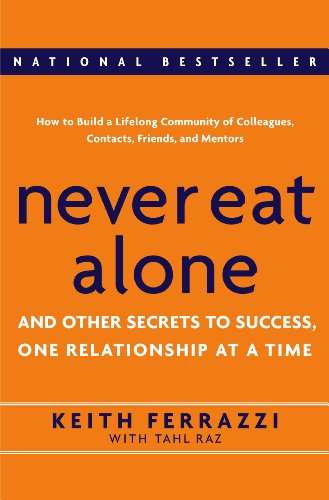
Published by Crown Business, 2005, hardcover, index, 309 pages, condition: new.
Do you want to get ahead in life? Climb the ladder to personal success? The secret, master networker Keith Ferrazzi claims, is in reaching out to other people. As Ferrazzi discovered in early life, what distinguishes highly successful people from everyone else is the way they use the power of relationships - so that everyone wins.
In Never Eat Alone, Ferrazzi lays out the specific steps - and inner mindset - he uses to reach out to connect with the thousands of colleagues, friends, and associates on his contacts list, people he has helped and who have helped him. And in the time since Never Eat Alone was published in 2005, the rise of social media and new, collaborative management styles have only made Ferrazzis advice more essential for anyone hoping to get ahead in business.
I've been attending more local workshops, lectures, and networking events. After hearing a few people recommend this book for networking advice, I decided it'd be worth my time to check out.
It's too early to tell whether this book will improve my networking skills, but I'm definitely optimistic. Ferrazzi packs the book full of advice, tips, and anecdotes from his personal life. To add credibility, he also references a few studies and statistics.
The book's title comes from Ferrazzi's recommendation that you never eat alone; he uses sharing meals as an example of one way to include others in whatever you're doing. Ferrazzi's main idea is that instead of cold, calculating, traditional networking, you should make genuine friends. First make friends, he says, then make them clients. The more people you know, the more opportunities will come your way, and the more help you'll get. Your circle of influence will widen naturally.
Early on, he says you must find your "blue flame": the intersection of your passion and talent. This is where you can be most successful. Then, share your passions; invite people into your personal life by sharing meals, hobbies, and events. This will lead to the friendships required for his form of networking.
Another point he hits several times is reciprocity; again, not in the traditional "I'll scratch your back if you'll scratch mine" way, but giving without keeping score, then benefiting from the inevitable return of favors. He says to give generously and ask for generosity from others.
I agreed with most of Ferrazzi's ideas, but not with one he presents at the very end. He proposes that there's no such thing as a work/life balance, because if you like the people you work with and the work you do, there's no need to distinguish between work and personal life. I don't buy this, because although you can become friends with colleagues and business partners, it's not always possible to work with your family and friends, the people that we most enjoy spending our time with.