

| Main centres: | 1-3 business days |
| Regional areas: | 3-4 business days |
| Remote areas: | 3-5 business days |
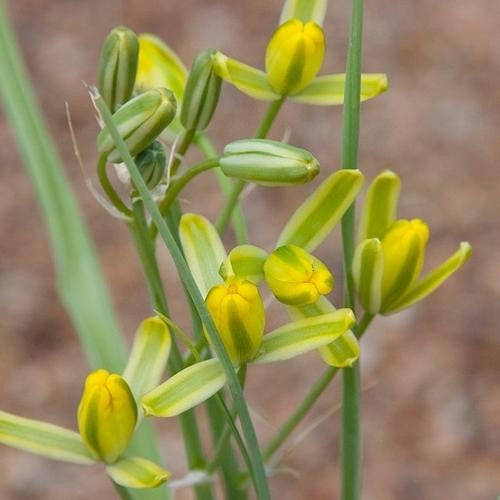
The pregnant onion, Albuca bracteata, is a large bulbous plant native to southern Africa, including South Africa. It is commonly found in woodland and grassland regions, where it grows in well-drained soils and experiences seasonal rainfall. Despite its common name, it is not a true onion, but a member of the asparagus family.
This species is easily recognised by its very large, partially exposed green bulb, which often protrudes above the soil surface and produces numerous small bulblets around its base. The leaves are long, strap-like, and bright green, arching outward in a lush rosette. During its flowering season, the plant sends up tall flower spikes bearing many small white flowers with green central stripes. These blooms are lightly fragrant and can remain attractive for an extended period.
Albuca bracteata is valued for both its unusual appearance and its resilience. The exposed bulb and prolific production of offsets give it a distinctive ornamental quality, while its hardy nature allows it to tolerate periods of drought and neglect. Over time, mature plants can form impressive clumps through the production of daughter bulbs.
Growing Albuca bracteata is relatively easy in mild to warm climates. It prefers full sun to partial shade and well-drained soil rich in organic matter. Regular watering during active growth encourages lush foliage, though the plant can tolerate dry spells once established. Care should be taken not to overwater in poorly drained conditions, as this can cause bulb rot. It can handle light frost but should be protected from severe cold. With minimal maintenance, it becomes a long-lived and striking container or garden specimen
Plant the bulblets by placing them on the surface of a small pot. I recommend a 9cm square pot. Ideally use half garden soil mixed with half compost, although potting soil can be used too. If you do use something like Culterra potting soil then make sure to add bonemeal into it and mix well (1 tablespoon of bonemeal per litre of potting soil ). Ideally place the pointy side up but if you cannot locate the pointy side then just place it on its side. Place the pot in a place with no direct sun. Sun can cook the little bulbs especially since they are at the surface. It can take its time and is somewhat erratic, so have patience and do not water it until the leaves and roots appear. keep out of the sun for a few more months then transition it to a spot with semi-shade