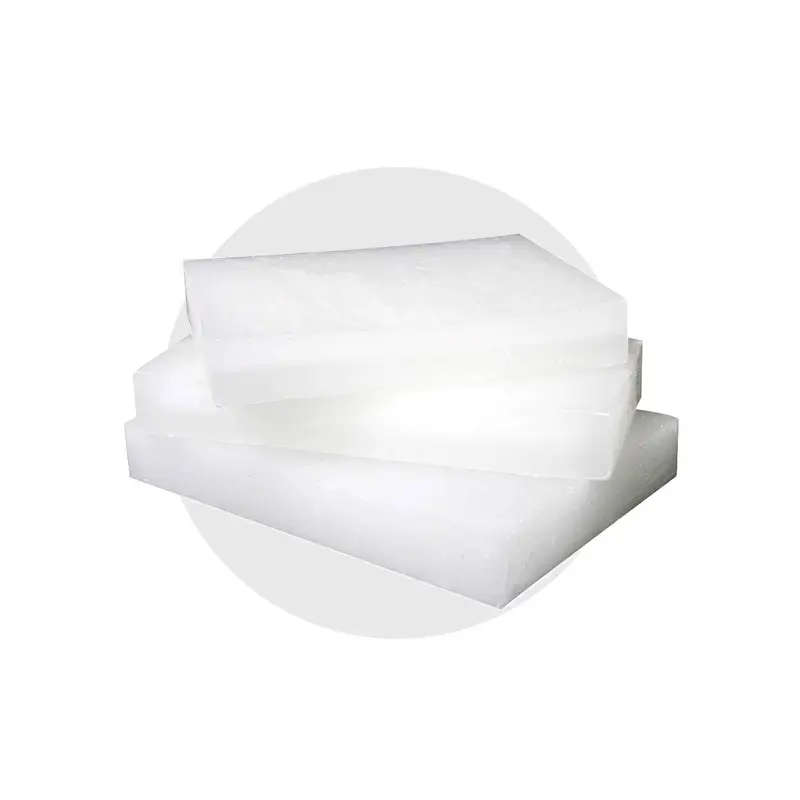
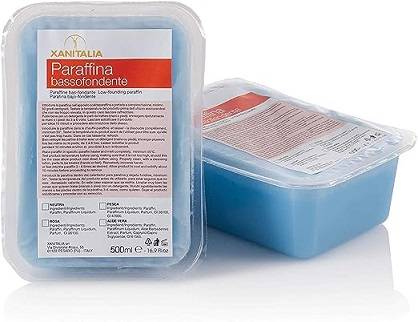
Semi refined paraffin wax is a petroleum-derived by-product produced during crude oil refining. It is a white solid, typically molded into slabs of about 5 kg, and is the most widely used wax for candle manufacturing.
This semi-refined paraffin wax is a petroleum-based hydrocarbon blend that is only partially purified rather than fully refined. As a result, it offers a practical balance between performance and cost for large-scale manufacturing.
Oil Content: Typically 3%5%. Having a 3% to 5% residual oil content places this material firmly in the "semi-refined" category. This makes the wax slightly softer and considerably more flexible than fully refined alternatives (which usually have under 0.5% oil content)
Melting Point: Usually between 58°C and 60°C, depending on climate and performance requirements. This indicates a medium-to-high melting range. It provides excellent stability at room temperature and allows products to retain their shape well without premature softening or distortion when exposed to mild environmental heat
Physical Appearance: A hard white to slightly off-white crystalline solid at room temperature, typically supplied in slab form.
Solubility: Insoluble in water and alcohol, but readily soluble in organic solvents such as ether and benzene.
Color: White (<1.0)This score confirms high aesthetic quality for a semi-refined grade. It indicates a solid white appearance when hardened and a clear appearance when melted, with very low levels of yellowing or trace impurities
Primary Uses and Applications
Candle Manufacturing
This is the most common use of semi-refined paraffin wax. Its 3%5% oil content supports strong fragrance retention and good color dispersion. It is widely used in household, decorative, and container candles because it helps minimize shrinkage, reduces surface cracking during cooling, and promotes an even burn.
Rubber and Tire Industry
In the rubber and tire industry, it is used as a processing aid and softener. It rises to the surface of rubber products to form a protective film that helps resist ozone damage, weathering, and cracking.
Packaging and Paper Coatings
For packaging and paper coatings, it is applied as a waterproof barrier on cardboard, wax paper, and food wrappers. This coating helps keep goods dry during transport and can extend shelf life.
Polishes and Anti-Corrosion Products
It is also used in polishes and anti-corrosion products, including shoe, floor, and car polishes, where it adds gloss and surface protection. In industrial formulations, it helps protect metal parts from moisture and air exposure.
Industrial Lubricants and PVC Processing
In industrial lubricants and PVC processing, it functions as an external lubricant in extrusion and plastic molding. It improves material flow through machinery and also serves as a release agent.
Cosmetics and Pharmaceuticals
In cosmetics and pharmaceutical products, it is used as a texturizer, thickener, and moisture barrier in items such as lotions, barrier creams, lip balms, and medicated ointments.
Match and Stationery Industries
In the match and stationery industries, it is added to wooden matchsticks as a readily vaporized fuel that helps ignition and supports a smoother burn. It is also used as a binder in the production of crayons, pencils, and carbon paper.
Tips for Using Paraffin Wax
- Melt paraffin wax slowly using indirect heat to reduce the risk of overheating and discoloration.
- Use a thermometer to monitor temperature and pour within the recommended range for the wax type and candle application.
- Test fragrance load and dye concentration in small batches before full production to optimize burn quality and appearance.
- Select the correct wick size based on candle diameter, wax blend, fragrance load, and container type.
- Allow candles to cool gradually and cure properly before burning to improve surface finish, scent throw, and performance.
- Store wax in a cool, dry place away from direct sunlight, dust, and strong odors.
Advantages of Semi Refine Paraffin Wax:
- Highly Cost-Effective: Substantially cheaper than fully refined alternatives, offering high-volume economic value
- Excellent Flexibility: The residual oil keeps the solid wax from becoming too brittle, reducing cracks or chips during handling
- Good Mold Release: Shrinks slightly but uniformly upon cooling, making it easy to pop out of manufacturing molds
- High Water Resistance: Provides a durable protective barrier that naturally repels water and environmental moisture.