


| Main centres: | 1-3 business days |
| Regional areas: | 3-4 business days |
| Remote areas: | 3-5 business days |
About the book:
Hermann Hesses timeless spiritual novel following a young Brahmins quest for enlightenment in ancient India. Siddhartha leaves behind wealth and comfort to pursue wisdom through asceticism, love, suffering, and ultimately, simple existence.
Written with poetic clarity and profound insight, this is one of the great 20th-century explorations of self-discovery and the search for meaning.
A beautiful, contemplative classic that continues to resonate across generations.
Condition:
Great secondhand condition.
Wear to cover.
Age related tanning of pages.
Follow the link below to view our other listings:
https://www.bobshop.co.za/seller/5375758/Orphan_Books
About the author:
Herman Hesse (18771962)
Born in Calw, in the Black Forest region of southern Germany, to a family of Protestant missionaries, Hesse spent most of his adult life in Switzerland, where he eventually settled and took citizenship. He wrote across the first half of the twentieth century, winning the Nobel Prize in Literature in 1946.
His work sits at the intersection of German Romanticism and Eastern philosophy he made a formative trip to India and Southeast Asia in 1911, and Buddhist and Hindu thought runs through his fiction as deeply as Goethe does. Nietzsche shaped his preoccupation with individualism; Carl Jung, whose analysis Hesse underwent, shaped his interest in the psyche's shadow work. The result is a body of fiction obsessed with the tension between the inner life and the outer world, between self-dissolution and self-discovery.
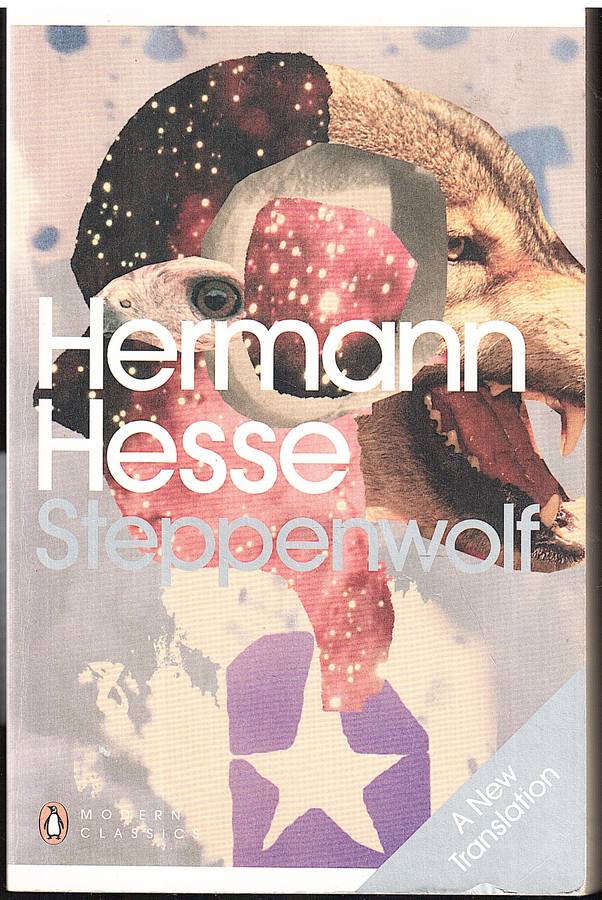
His most enduring works include Siddhartha, Steppenwolf, Demian, Narcissus and Goldmund, and The Glass Bead Game. He also wrote poetry and painted throughout his life.
His influence moved in an interesting direction: largely overlooked mid-century, he was rediscovered by the American counterculture in the 1960s Kerouac, Ginsberg, and the broader Beat and hippie movements claimed him enthusiastically, to his own somewhat ambivalent reaction. He remains a touchstone for readers drawn to spiritual restlessness, the examined life, and prose that takes interiority seriously.