


| Main centres: | 1-3 business days |
| Regional areas: | 3-4 business days |
| Remote areas: | 3-5 business days |
About the book:
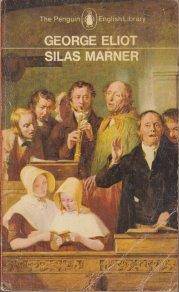
Shorter and more schematic than Middlemarch, it works in a mythic register miser remade by love, a man of wealth undone by buried cowardice, a village community doing the quiet human work that institutions fail to do.
The ending is more radical than it first appears.
Condition: Good secondhand condition.
Follow the link below to view our other listings:
https://www.bobshop.co.za/seller/5375758/Orphan_Books
About the author:
George Eliot (18191880)
Mary Anne Evans was born in Warwickshire, in the English Midlands, the daughter of a land agent whose work gave her an early and intimate education in the class structures of provincial life that would become her primary subject. She took the pen name George Eliot partly to be taken seriously in a literary culture that dismissed women novelists, and partly to separate her fiction from the scandal of her personal life: she lived openly with the philosopher and critic George Henry Lewes for twenty-four years, despite his being legally unable to divorce. Victorian society was not forgiving. The novels were.
Before fiction she was a formidable intellectual: she edited the Westminster Review, the leading radical journal of the age, and translated two of the most significant philosophical texts of the nineteenth century Feuerbach's The Essence of Christianity and Spinoza's Ethics. These weren't academic exercises. Feuerbach's argument that religious feeling is essentially human feeling projected outward became the philosophical foundation of everything she wrote: she abandoned Christianity but kept its ethical architecture, replacing God with sympathy as the central moral value. Her narrators are among the most humane presences in all of literature.
Her major novels Adam Bede, The Mill on the Floss, Silas Marner, Middlemarch, Daniel Deronda are built on the conviction that fiction's highest purpose is to expand the reader's capacity for sympathy with lives unlike their own. Middlemarch in particular, which Virginia Woolf called "one of the few English novels written for grown-up people," is widely considered the greatest novel in the English language, a judgment that is not obviously wrong.
Her influences include Wordsworth's belief in the moral weight of ordinary experience, Goethe she was extraordinarily fluent in German philosophy when most English writers weren't Walter Scott's social realism, and Darwin's evolutionary thinking, filtered through her friendship with Herbert Spencer.
Her influence forward is enormous and direct: Henry James knew her, revered her, and built much of his psychological method on her foundations. Thomas Hardy, Virginia Woolf, D.H. Lawrence, A.S. Byatt, and Marilynne Robinson all carry her. Anyone writing seriously about consciousness, moral choice, and the weight of ordinary life is working in her shadow.


