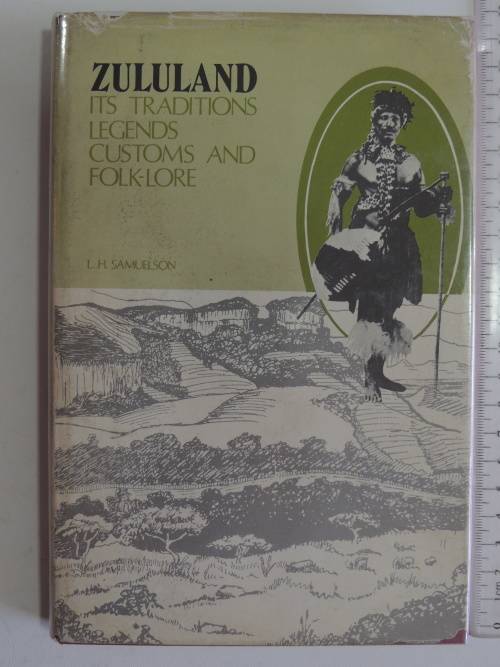
Some Zulu Customs and Folk-Lore is a significant 1920 ethnographic work by L.H. Samuelson, offering one of the early English-language attempts to document the traditions, beliefs, and social structures of Zulu society. Compiled during a time of rapid cultural change, the book preserves observations gathered from community elders, oral histories, and first-hand interaction. Samuelson approaches his subject with an evident respect for Zulu knowledge systems, presenting material that balances descriptive detail with cultural interpretation. The result is a text that provides readers with an informed view of ritual practice, customary law, and the symbolic framework that shaped Zulu life in the early twentieth century.
Within Some Zulu Customs and Folk-Lore, Samuelson records accounts of marriage customs, initiation rites, ancestral reverence, healing practices, and the everyday moral codes that governed family and communal behaviour. He also examines the rich folklore traditiontales of tricksters, heroic figures, animal stories, and moral parablesplacing them within the broader context of Zulu cosmology. The narrative reflects the author's attempt to translate oral tradition into written form without diluting its cultural resonance. Even a century after its publication, the text remains valuable for its careful documentation and for the insight it provides into precolonial and early colonial-era life.
For collectors and researchers, this 1920 edition of Some Zulu Customs and Folk-Lore is prized for its historical authenticity and its role in preserving early ethnographic records. The Church Printing Company's edition is now scarce, adding to its desirability among those interested in indigenous knowledge, cultural anthropology, and southern African heritage studies. Its thoughtful presentation and enduring relevance make it a noteworthy addition to any collection focused on early ethnographic literature.