


| Main centres: | 1-3 business days |
| Regional areas: | 3-4 business days |
| Remote areas: | 3-5 business days |
Published by cORGI, softcover, illustrated, index, glossary, 360 pages,condition: new.
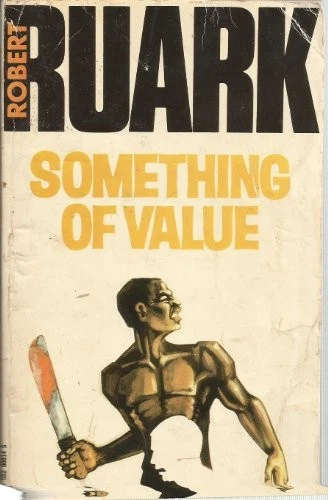
I was recommended this book by somebody and thought it was going to be a politically incorrect (honest) account of the communist funded Mau Mau revolution in Kenya. What it actually is, is a historical fiction account of it. I was truly blown away by this book. Even though it doesn't always portray the whites in a very good light idiots would say this book is racist because it shows the utter brutality and ignorant superstations of the blacks. These days you are only allowed to show the bad side of whites. As great as this book is I doubt that it could get published now. Personally I believe it just shows in an honest way how both the whites and blacks thought and like I said the whites aren't always portrayed in the best light either.
It was amazing how tough and self sufficient the English settlers had to be. With all due respect to them, the American settlers in the old west had nothing on these people. Their big weakness was they were greedy and had to have black servants and workers on their farms. I actually thinks its possible the British upper class who felt threatened by the self made wealth, power and strength of the settlers, may have even covertly had a hand in supporting the Mau Maus. Another interesting fact is Barack Obamas Father worked for the genocidal Jomo Kenyatta in Kenya after he returned to Kenya. This is something blacks all over the world who idolize Obama and the Mau Maus need to be aware of more than anyone because the Mau Maus of course killed many whites but they were responsible for tens if not hundreds of thousands of dead Africans..
Robert Ruark was an author and syndicated columnist.
Born Robert Chester Ruark, Jr., to Charlotte A. Ruark and Robert C. Ruark, a bookkeeper for a wholesale grocery, young Ruark attended local schools and graduated from New Hanover High School in Wilmington, North Carolina. He graduated from high school at age 12 and entered the University of North Carolina at age 15. The Ruark family was deeply affected by the Depression, but despite his families' financial travails, he earned a journalism degree from the University of North 'Carolina at Chapel Hill.
During World War II Ruark was commissioned an ensign in the United States Navy. Ruark served ten months as a gunnery officer on Atlantic and Mediterranean convoys.After the war Ruark joined the Scripps-Howard Newspaper Alliance. As the New York Times said, Ruark was "sometimes glad, sometimes sad, and often mad--but almost always provocative." Some of his columns were eventually collected into two books, I Didn't Know It Was Loaded (1948) and One for the Road (1949).As he grew in notoriety, Ruark began to write fiction; first for literary magazines, and then his first novel, Grenadine Etching in 1947.
After he began to gain success as a writer, Ruark decided that it was time to fulfill a lifelong dream to go on safari to Africa. Ruark took an entire year off and began a love affair with Africa.As a result of his first safari, Ruark wrote Horn of the Hunter, in which he detailed his hunt.
In 1953, Ruark began writing a column for Field & Stream magazine entitled ''The Old Man and the Boy''. Considered largely autobiographical (although technically fiction), this heartwarming series ran until late 1961.
Ruark's first bestselling novel was published in 1955. It was entitled Something of Value and was about the Mau Mau Uprising in Kenya.
Sometimes belittled as the poor mans Hemingway, Ruark has nevertheless retained a loyal following among fans of nature writing. Bland Simpson wrote that he produced some of the best portraiture in words of hunting, fishing and life in the field that we have.
Ruark died in London on July 1, 1965 most likely as a result of alcoholism.
Robert Ruark is buried in Palamos, Spain.