

| Main centres: | 1-3 business days |
| Regional areas: | 3-4 business days |
| Remote areas: | 3-5 business days |
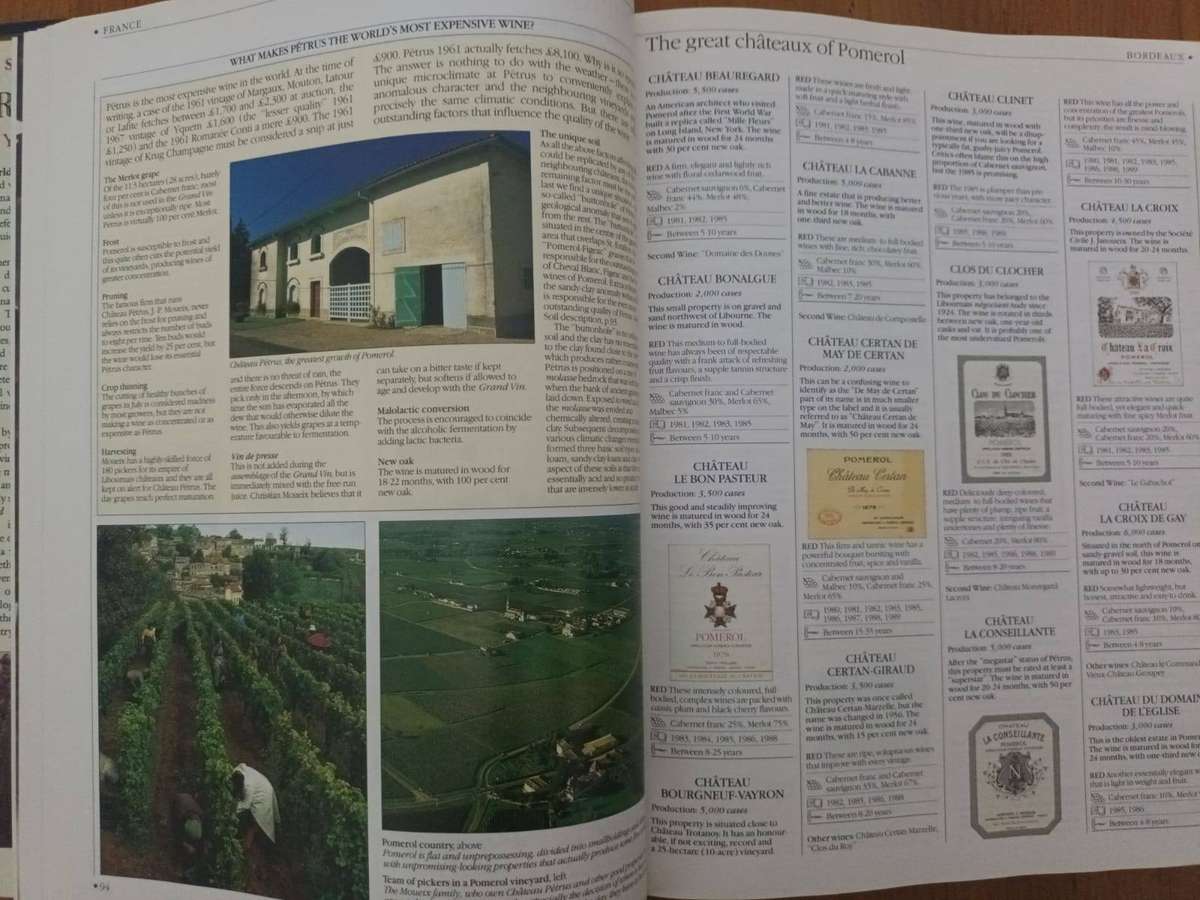
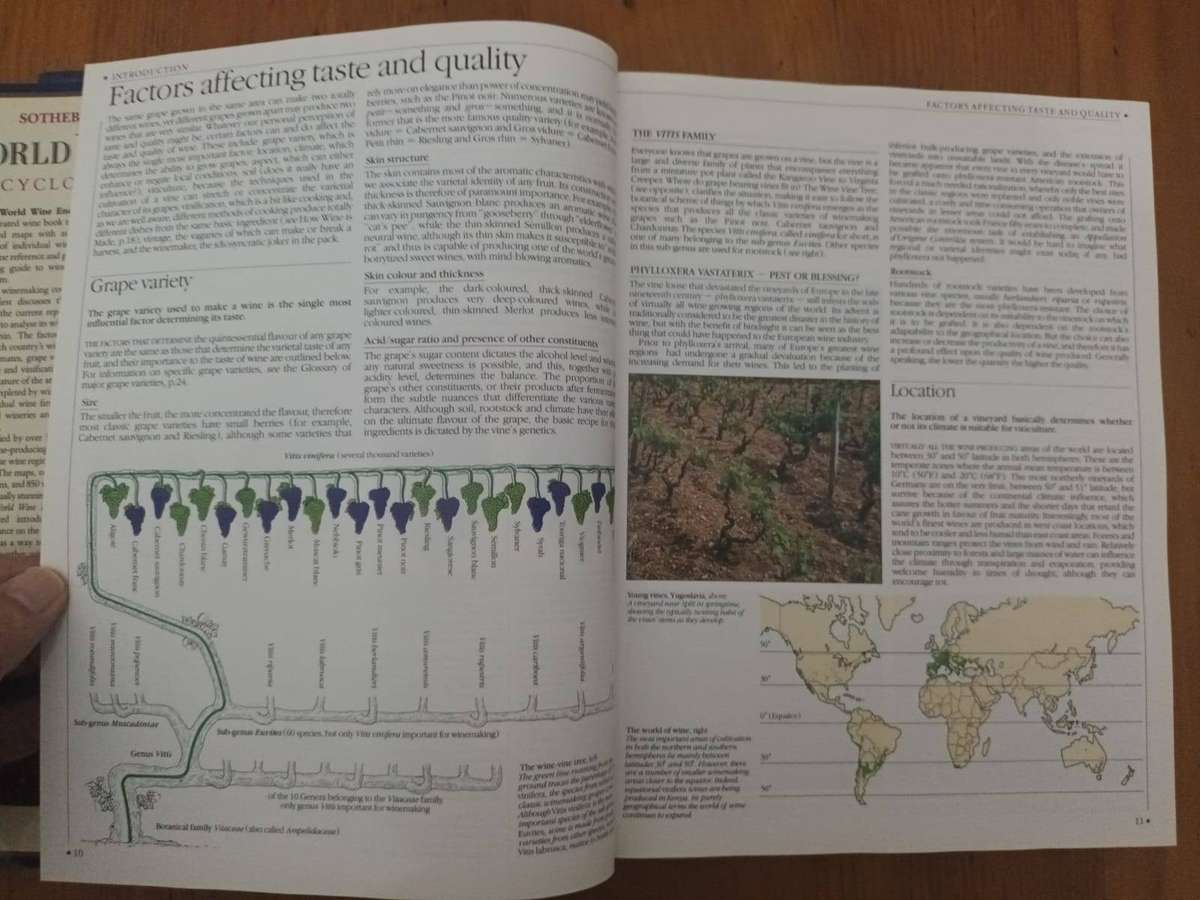
Tom Stevenson, Sotheby's World Wine Encyclopedia: A Comprehensive Reference Guide to the Wines of the World. London: Dorling Kindersley, 1991.
Large format (28 x 22 cm), hard cover, dust wrapper, 480 pages, illustrated throughout, maps of the world's wine-growing districts.
Near fine condition.
Sotheby's World Wine Encyclopedia by Tom Stevenson is a large, illustrated reference work designed to provide a comprehensive, global overview of winefrom how it is made to where it is produced and how it should be evaluated.
Heres a clear, structured summary of its main ideas and content:
Core Purpose
The book aims to be an all-in-one encyclopedia of wine, combining:
Practical guidance (tasting, choosing, storing wine)
Technical knowledge (viticulture and winemaking)
Regional surveys of wine production worldwide
It is intended for both beginners and serious enthusiasts, functioning as a reference rather than a narrative text.
Structure and Major Sections
1. Understanding Wine
The opening sections explain:
How wine is made (fermentation, maturation, bottling)
The vine lifecycle and vineyard management
Key influences on wine quality:
Climate
Soil
Grape variety
Winemaking techniques
It also introduces tasting methods, helping readers identify aromas, flavors, and structure.
2. Taste, Quality, and Evaluation
A major theme is how to assess wine quality:
Use of taste charts to decode flavors and styles
Explanation of terms like acidity, tannin, body, and finish
Guidance on when wines should be drunk (aging potential)
The book includes rating systems and recommendations, highlighting top producers and best-value wines.
3. The World of Wine (Geographical Survey)
The largest portion is a region-by-region guide to global wine production:
Covers both Old World regions (France, Italy, Germany, etc.)
And New World regions (USA, Australia, South Africa, etc.)
For each country/region, Stevenson:
Describes history and reputation
Maps wine regions and appellations
Analyzes local grape varieties and styles
Evaluates notable producers and vineyards
This makes the book essentially a global atlas plus critique of wine regions.
4. Reference Tools and Data
The encyclopedia includes extensive reference features:
Maps of wine regions
Glossary of grape varieties
Vintage charts
Lists of top producers (authors choice)
Thousands of recommended wines and wineries
These elements make it a technical and professional resource, not just a casual guide.
Key Themes
Wine as a product of terroir
The book emphasizes how environment (soil, climate, geography) shapes wine character.
Global diversity of wine
It presents wine as a worldwide cultural product, comparing traditions and innovations across regions.
Balance of science and appreciation
Stevenson combines:
Scientific explanation (viticulture, chemistry)
Sensory appreciation (tasting, enjoyment)
Authority and classification
A strong focus on ranking producers, classifying regions, and identifying quality benchmarks.
Overall Takeaway
The encyclopedia is best understood as a comprehensive reference manual on wine that:
Explains how wine works
Maps where wine comes from
Guides how to evaluate and choose it
Rather than telling a single argument, it organizes the entire world of wine into a structured, accessible system, making it a foundational text for wine education.
If you want, I can condense this further into a one-paragraph summary or compare it to other classic wine books like The World Atlas of Wine.
(This content description was AI-assisted.)