

| Main centres: | 1-3 business days |
| Regional areas: | 3-4 business days |
| Remote areas: | 3-5 business days |
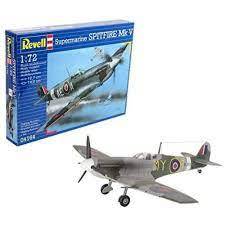
| 1:72 Scale | Length | Width | ||
|---|---|---|---|---|
| Supermarine Spitfire Mk IVIII | 5.25" | 6.25" |
“Eddie”, as he was known during World War II, was born in Nokomis, Saskatchewan in June of 1921. He attended school in Battleford like another well known Canadian WW2 Ace, “ Buck” McNair. He enlisted in the Royal Canadian Air Force in October of 1940 and completed flight training in early 1941 as a Sergeant Pilot. By July he found himself at No.55 OTU near Newcastle in the North of England undergoing fighter pilot training. In January 1940 Eddie was posted to 94 Squadron in Egypt as a Flight Sergeant. The squadron was working up on Kittyhawks and became operational in March. On his first operational mission, escorting Boston’s to the well defended Mar tuba airfield, Eddie made his mark with the destruction of a Bf 109F of Jagdgeschwader 27. 233 Wing Commander Beresford dubbed Eddie the “Hawk of Martuba” shortly afterwards in recognition of his quick reflexes, flying abilities and shooting instincts. It was only the beginning and Eddie’s score continued to mount over the coming months. By May, 94 Squadron had suffered heavy losses and was withdrawn from front line activity. F/Sgt Edwards was posted to 260 Squadron. On his first mission with 260 he damaged a Me 109 and on his second mission he destroyed another. On paper Edwards was promoted to Warrant Officer in July and to Pilot Officer in August. In practice he went directly from the rank of Flight Sergeant to that of Flying Officer in December and he had already led the squadron on several occasions even though he was only an NCO. After being rested as a gunnery instructor with 203 Group at El Ballah, Edwards was promoted to Squadron Leader and joined 417 Squadron I Italy in November flying Spitfire Mk VIIIs. He was transferred to 92 Squadron in December as a flight commander also flying the Spitfire VIII. Eddie continued to add to his score with this unit in early 1944. By March he was posted to take command of 247 Squadron in England which was just re-equipping Spitfire Mk. IXs. Operations began in May and included patrols over the Normandy beaches and bomber conversion to Tempests for “anti-diver” (V1) sorties. Shortly afterwards, Squadron Leader Edward’s second tour ended and he returned to Canada on leave.
The Corgi "Aviation Archive" presents highly-detailed, ready-made diecast models of military and civilian aircraft. The vast Aviation Archive range has become the standard by which all other diecast airplane ranges are judged. Each Corgi model is based on a specific aircraft from an important historical or modern era of flight, and has been authentically detailed from original documents and archival library material. Famous airplanes and aviators from both military and commercial airline aviation are all honored.
Corgi "Aviation Archive" diecast airplanes feature:
Designed by R.J.Michell to meet a British Air Ministry specification, the Spitfire first was flown for the first time on March 5th, 1936.
The Collectors View
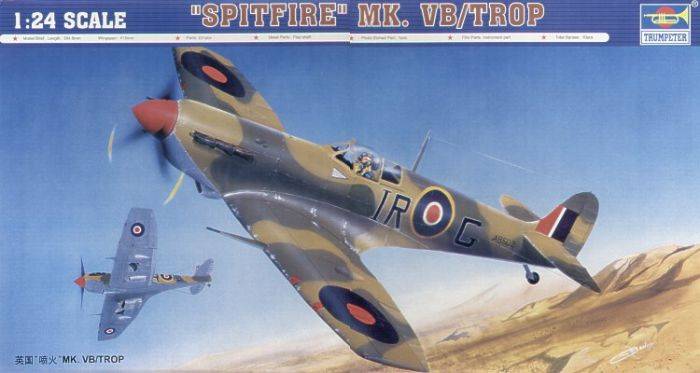
One of my favourite Spitfire is the Mk. VIII. It's identifiable by the retracting tail wheel. Some say it should have the pointed Mk. IX tail but in fact early Mk. VIIIs did have the smaller Mk. V tail. Also nice on this model is the desert scheme.