Free shipping is available from Spirit77 for all orders above R2,500.00, using one of our trusted couriers. Check my rate
The seller has indicated that they will usually have this item
ready to ship within 3 business days.
Shipping time depends on your delivery address.
The most accurate delivery time will be calculated at checkout,
but in general, the following shipping times apply:
Warranty Type: Dealer
We do our best to take accurate images but due to photographic lighting,background and different devices used to view the displayed product,the colour,tone and lustre of the item you receive may vary slightly from the actual item shown.The images shown are of the exact item (s) you will receive.
Money-Back Guarantee:
7 Days: I offer a 100% 7-day money back guarantee on the sales price (You pay return shipping).If you are unhappy with your item (s) you agree that you will send it back to me for the above money back guarantee without rating me neutral or negative.If you don't agree,please don't buy.
Get it now, pay later
Product details
Condition
Secondhand
Location
South Africa
Product code
Ch77
Bob Shop ID
676009512
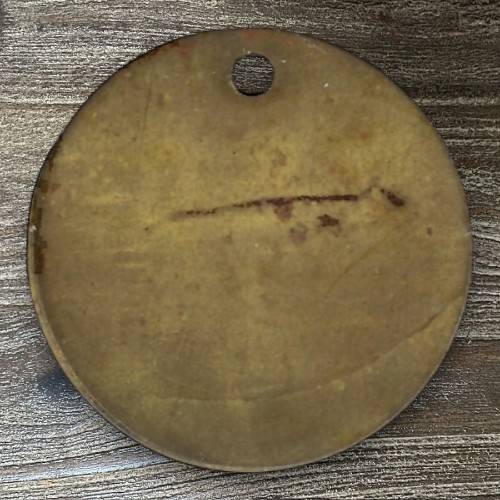
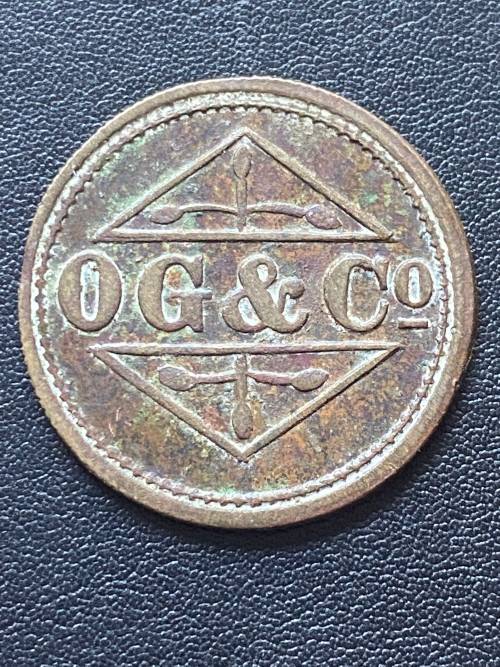
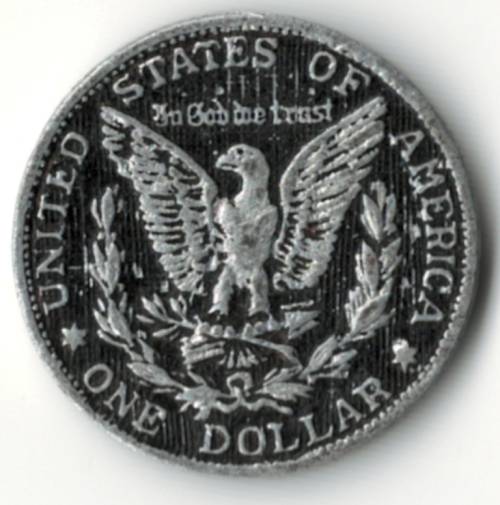
Strachan & Co (Uniface) set of 3 tokens as per images.Includes the 2 Shillings,sixpence and threepence.
History records that the region of Nomansland, south of the Umzimkulu river and Natal and bound to the west by the mighty Drakensberg or Quathlamba (Zulu for The Barrier of Spears) got its unflattering name after being cleared of African tribes fleeing Chaka's mighty Zulu impis in the 1820s. For over 40 years it became a refuge for small groups of unruly natives and outcasts who survived by stealing cattle from each other and killing... in short it was a no man's land. Into this hell-hole came the Griquas in 1862. The small white population of traders and farmers grew rapidly from this time on drawing Africans from bordering tribal areas such as Pondoland and Nomansland was renamed East Griqualand by the Griquas not long after they settled there.
In the highly sought after book "Kence, the trade tokens of Strachan and Co" (1978) by Scott Balson and Dr Clive Graham the authors describe how South Africa's first indigenous coinage, the Strachan and Co coins had been named "kence" (pronounced kenghle) by the Africans with the onomatopoeic origin being the sound of two of these coins striking each other while they were strung around their necks. Just like the origin of the name of the small southern Natal town of "Ixopo" (eechopo - representing the sound of a cow's hoof going in and out of soft mud) much of the African language in this area was based around sounds. This interesting bit of trivia is our first clue into the important role that these trade token coins played as bona-fide currency in the early development of an area the size of Ireland (north and south) where many thousands of Griquas, a few thousand white settlers and tens of thousands of Africans lived.
The Strachan and Co "S&Co" was the first coinage in South Africa deliberately holed to facilitate their safe keeping by the majority of the local population - natives and some Griquas who did not have western clothing or pockets. The background to their success as South Africa's first widely circulating currency is detailed below. In Robert Ross' highly regarded study "Adam Kok's Griquas", he notes on page 113, In 1872 some twelve trading licenses were issued... this tally excluded the most powerful of the trading interests, namely the firm of Strachan and Co, which, as it included the Secretary to the Government (Brisley) and the Magistrate of Umzimkulu District (Strachan) among its partners, was evidently immune from such indignities as licences. Milner Snell's comprehensive research on the firm and Margaret Rainier's book on Donald Strachan both reflect a different founding date namely the 13th January 1874 - the same year the S&Co trade tokens were first launched. These books follow the earlier similar findings of Balson and Graham's pioneering work, "Kence, the trade tokens of Strachan and Co". Ross was wrong in his assumption over the date the firm was established but correct in his perception of Brisley and Strachan's power in and hold over East Griqualand. Their first trading store at Umzimkulu Drift was forced, because of a shortage of currency, to barter with the locals, but this soon changed.
Donald Strachan's son, Douglas, who took over the running of the business in 1917 noted that the first set of S&Co tokens were issued in the early 1870s (ie January 1874). Yes, for nearly sixty years (1874 - 1932) the Strachan & Co coins, the kence, South Africa's first indigenous currency, played a major role in the evolving commercial development of a vast and isolated region covering Nomansland, Pondoland , the north eastern Cape and the southern part of Natal. It is not hard to demonstrate that the first two S&Co sets (the S&Co and S&Co MH) went much further than that of a traditional trading store token and that these sets, in particular, were accepted as bona-fide currency over an entire region extending as far north as Pietermaritzburg, the capital of Natal and as far south as Port St Johns in the Cape. The first S&Co set released in 1874 were followed about thirty years later by the "MH" set - neither were restricted to "In Goods" the label missing from the coins. As Douglas Strachan said, "These tokens were accepted everywhere including church collections..." In fact the first set circulated in the same year as the Burgerspond - but outlived, by generations, the currency and purpose of this highly sought after gold coin. While the Burgerspond rarely, if ever, circulated the S&Co circulated widely in the region between Umzimkhulu to Kokstad and beyond from the mid 1870s.
The company confirmed in 1907, over 30 years after their introduction, that its tokens could be accepted by a third party.This was nearly thirty years after the Standard Bank had opened in Kokstad and accepted these coins and banks like Barclays Bank DCO had subsequently opened in Ixopo. Balson's book "The Griquas of South Africa and their money" clearly demonstrates that the first two S&Co sets were in fact South Africa's first widely circulating indigenous currency - the book exposing the fallacy that the Griqua Town coins minted in 1815 were ever used by the Griquas.
In fact, the Strachan and Co trade tokens broke across the great political divide. Their acceptance as currency preceded the famous Kruger coins of the Zuid Afrikaansche Republiek (1892 to 1899) by nearly 20 years. The S&Co were unlike the exclusive Burgerspond (1874) with its tiny mintage and keep sake rather than tradable value from the date it was released.
Origin of the native name "Kence" The many thousands of S&Co coins were designed to be used by all races, ages, poor and rich alike - thus the hole in each coin to allow for all levels of society - including for handy storing with the beads commonly worn around African's necks. It was from this practical storage capability that origin of the native name for the S&Co, "KENCE" (pronounced "kenghle" ) can be traced. Its onomatopoeic origin reflects on the unique sound that two S&Co coins made when knocking together as they were worn around the neck. By 1920 the Strachan and Co empire had stores spread right across the region as can be seen in this detailed map of East Griqualand. The S&Co continued to be accepted as circulating coin until 1932 when legislation finally caught up with the loopholes that had allowed them to coexist with official currency. It was at this time, on the 28th December 1932, the convertibility of notes into gold was abolished in South Africa.



.jpg)


