- PLEASE VIEW THE PICTURES CAREFULLY AS THEY FORM PART OF THE DESCRIPTION
Based on the structure of the German Red Cross (Deutsches Rotes Kreuz) supply system in 1936, your kit was formally classified as a:
"Reise-Apotheke für Übersee" (Travel Pharmacy for Overseas)
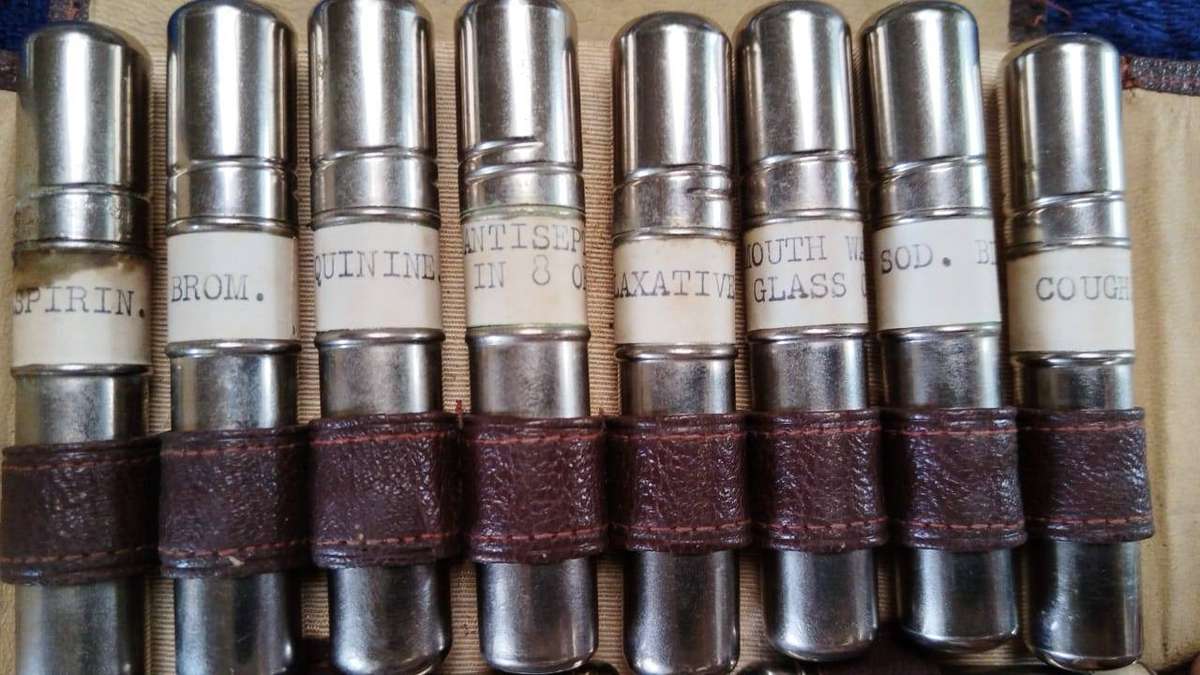
The Assignment: These high-end, 16-vial systems were not standard issue for regular infantry. Instead, they were assigned to the "Kolonialärztlicher Dienst" (Colonial Medical Service) and the "Sanitätsamt der Marine" (Navy Medical Office) for officers, explorers, and colonial officials traveling to Africa and South America.
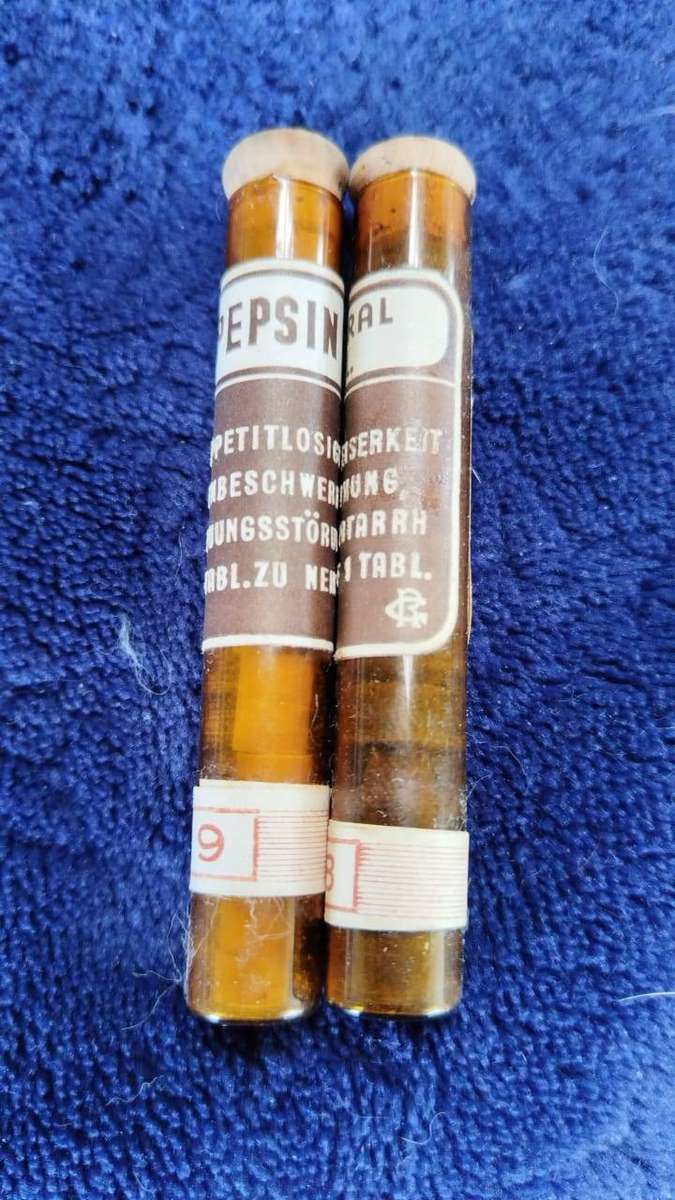
The "Specialpackung" Contract: The DRK contracted private high-end laboratories like Dr. R. Glan (Meersburg) to produce these "special pack" systems. Because they were intended for export or use in international waters/colonies, the DRK required the metal sleeves to be labeled in the local languagewhich is why your German-made kit has English markings.
The "6103" Batch History
In 1936, the DRK underwent a massive reorganization under the "Gleichschaltung" (standardization) laws. The number 6103 likely corresponds to:A Specific Supply Depot: The DRK-Zentraldepot (Central Depot) or a regional station in Southwest Germany (given the proximity of the Meersburg lab)
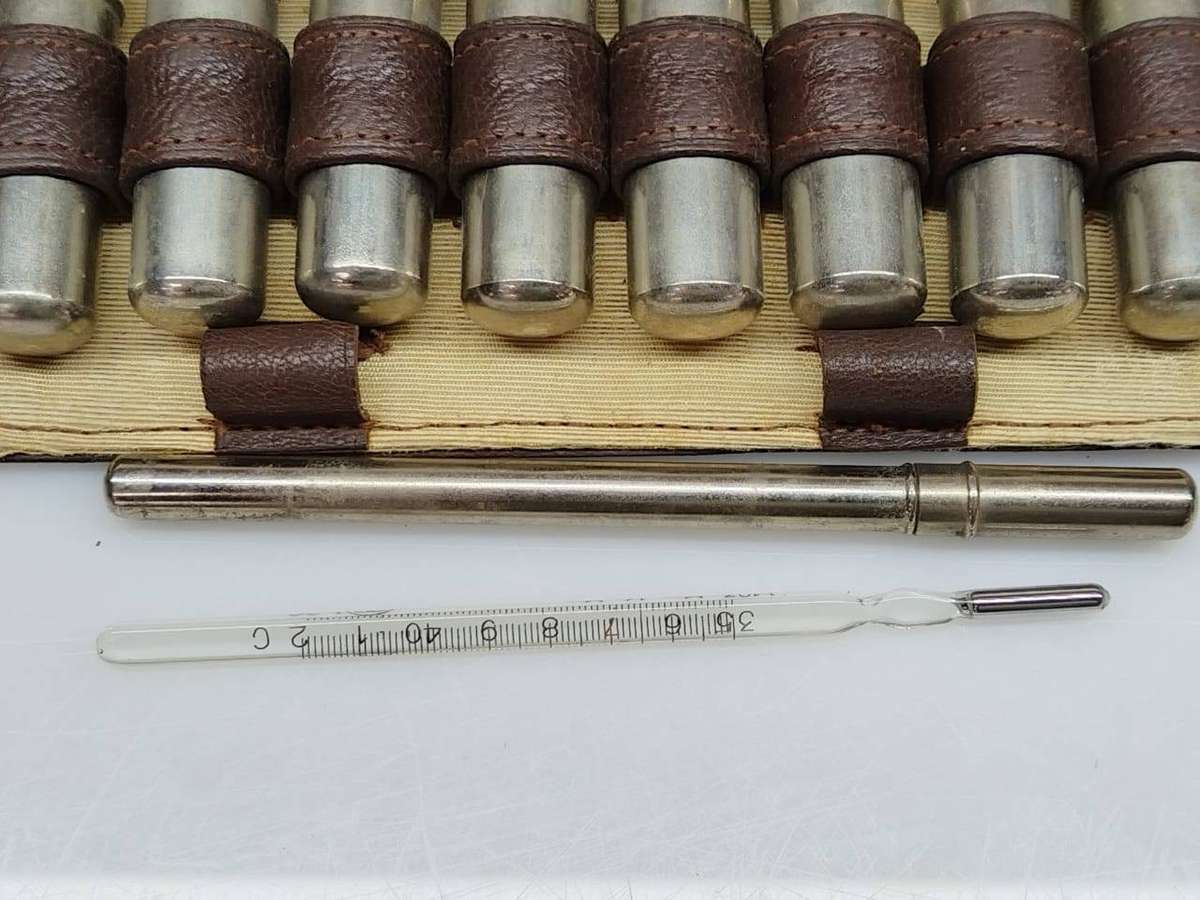
The Inspection Cycle: The "b 36" and the serial number on the thermometer indicate this kit was part of a specific "Batch B" certified for a major expedition or diplomatic assignment in early 1936.
Historical Significance of the "1936" Date
1936 was a critical year for the DRK. It was the year of the
Berlin Olympics, and the organization was under intense pressure to showcase German medical superiority to the world. Your kit represents the "Gold Standard" of that eraa perfectly integrated, multilingual, and highly portable pharmacy designed to demonstrate that a German traveler was the best-equipped in the world.


.jpg)