

| Main centres: | 1-3 business days |
| Regional areas: | 3-4 business days |
| Remote areas: | 3-5 business days |
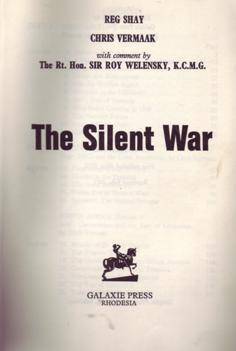
The Silent War Peter Stiff
The Silent War was conceived in 1987 when the author was invited by the then Chief SADF to write a history of the Recces. The author was unwilling to involve himself in a propaganda exercise, so it was agreed he would be given what amounted to an unprecedented access to official documents relating to operations and allowed to interview operators of all ranks for research purposes. The cost of research, except for flights on routine SAAF milk runs, would be at the authors expense.
Effectively he was given a carte blanche, but on the understanding that an outline would be prepared when the research was completed. He agreed to reconsider and delete anything considered as likely to affect the security of the state after a round table conference.
The author found himself in a unique position. On a need-to-know basis Recce operations were compartmentalised, with only those involved and a few senior officers knowing anything about them. Little was committed to paper. Peter Stiff was an outsider, but from his research and contact with operators, he gained an unprecedented overview shared by few others. The outsider became an insider.
After two years of research an outline was submitted to the SADF. There was no response to this, only silence. No round table meeting ever took place. It seems he had discovered far more about secret operations than had been the intention. Specifically, he heard on the grapevine, the National Intelligence Service was furious he had discovered how in 1971 a hundred Zambian dissidents under training by the Recces in the Caprivi under the code name Operation Dingo, had been hurriedly forced across the Zambezi River by BOSS, their predecessor organisation headed by General Hendrik van den Bergh.
The 5th Zambian Rifles, who were awaiting the dissidents on the Zambian bank, annihilated them without mercy. This was apparently in the name of Prime Minister John Vorsters détente exercise with Zambia. The impression was that the NIS had not known about it, but having heard of it they demanded it be re-hushed up. The book project was not suspended officially, but nothing was said, presumably in the hope the whole thing would just go away.
After the 1994 elections the author contacted the then Chief SANDF, through the Commander Special Forces, and advised him the book was going ahead. He was told the Chief SANDF, wished it was not, but realised that with changing times there was nothing he could do to prevent it. In the intervening years, through established contacts, the author continued his research into South African secret operations, including several months spent with Koevoet in 1989, the police counter-insurgency unit in Namibia, until he had gathered sufficient material for three books.
There will never be anything better researched and definitive on South African secret operations than this forthcoming trilogy by Peter Stiff. The Silent War is the first.
Softcover in good conditions, 608 pages