| Main centres: | 1-3 business days |
| Regional areas: | 3-4 business days |
| Remote areas: | 3-5 business days |
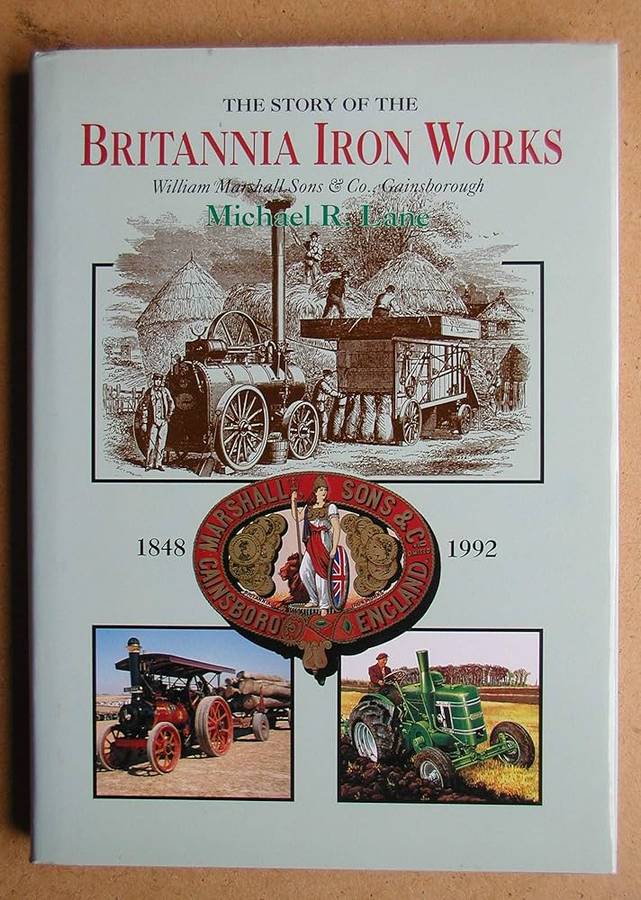
Marshall, Sons & Co. was a British agricultural machinery manufacturer founded in 1848. The company was based in the Britannia Iron Works, Gainsborough, Lincolnshire. Early production was of steam engines and agricultural machinery. Later production included diesel tractors such as the Field Marshall, Track Marshall and former Leyland wheeled tractors.
In 1842 William Marshall bought the defunct engineering works of William Garland and Son at Back Street Foundry in Gainsborough. In 1849 he renamed it the Britannia Ironworks and began to produce road steam engines. Before WW1 the workforce was over 4000.
Marshall's produced large numbers of steam traction engines, steam rollers, portable engines and agricultural machinery of all types. Among British manufactures, Marshall were second only to Aveling and Porter in terms of the number of steam rollers they produced. In 1923 the company started selling tandem rollers.
In 1900 they started designing internal combustion-engined tractors to be called the Colonials, with a power of 16 to 32 hp (not comparable to modern hp) for the export market to replace steam engines, selling 300+ by 1914. In 1928 they started to develop a tractor similar to the Lanz Bulldog from Germany. They launched the 15/30 (Model E) in 1930, followed by the 12/20 which became the Model M in 1938; this then developed into the Field-Marshall in 1944. Production of the Field Marshall continued until 1957.
In 1917 the company started to build aircraft at a new works built for the purpose on Lea Road in Gainsborough.[15] The works became known as the Carr House works and the company built 150 Bristol F2B two-seat biplane fighters.
A LARGE COFFEE TABLE BOOK.