



| Main centres: | 1-3 business days |
| Regional areas: | 3-4 business days |
| Remote areas: | 3-5 business days |
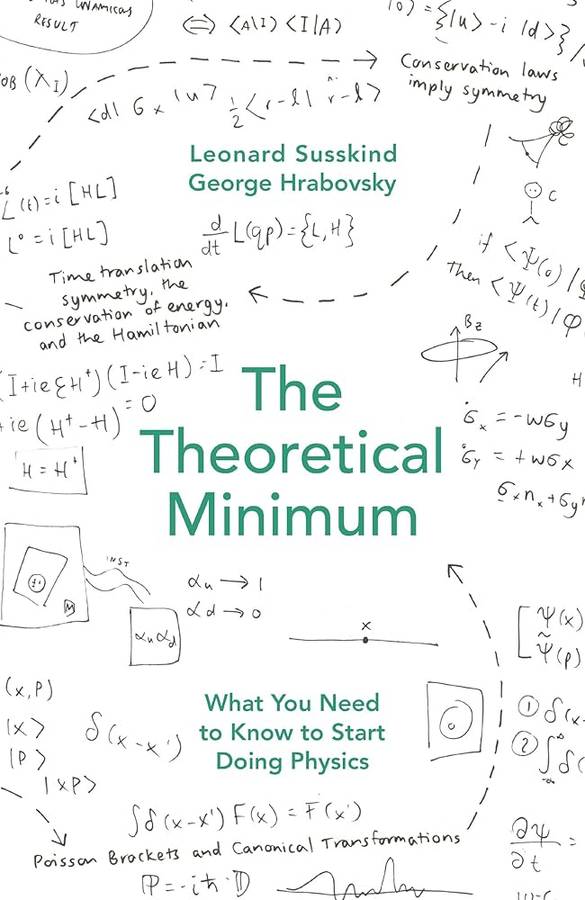
Published by Allen Lane, 2013, hardcover, illustrated, index, 237 pages, condition: new.
A world-class physicist and a citizen scientist combine forces to teach Physics 101the DIY way
The Theoretical Minimum is a book for anyone who has ever regretted not taking physics in collegeor who simply wants to know how to think like a physicist. In this unconventional introduction, physicist Leonard Susskind and hacker-scientist George Hrabovsky offer a first course in physics and associated math for the ardent amateur. Unlike most popular physics bookswhich give readers a taste of what physicists know but shy away from equations or mathSusskind and Hrabovsky actually teach the skills you need to do physics, beginning with classical mechanics, yourself. Based on Susskind's enormously popular Stanford University-based (and YouTube-featured) continuing-education course, the authors cover the minimumthe theoretical minimum of the titlethat readers need to master to study more advanced topics.
An alternative to the conventional go-to-college method, The Theoretical Minimum provides a tool kit for amateur scientists to learn physics at their own pace.
'For anyone who is determined to learn physics for real, looking beyond conventional popularizations, this is the ideal place to start. It gets directly to the important points, with nuggets of deep insight scattered along the way' Sean Carroll, physicist and author of The Particle at the End of the Universe
In this stimulating primer, world-class physicist and father of string theory Leonard Susskind and citizen-scientist George Hrabovsky combine forces to provide the ultimate master class in modern physics. Unlike most popular physics books - which give readers a taste of what physicists know but not what they actually do - Susskind and Hrabovsky teach the skills you need to do physics yourself. Combining crystal-clear explanations of the laws of the universe with basic exercises, the authors cover the minimum - the theoretical minimum of the title - that readers need to master in order to move on to more advanced topics.
In a lucid, engaging style, Susskind and Hrabovsky introduce the key concepts of modern physics, from classical mechanics to general relativity to quantum theory. Instead of shying away from the equations and maths that are essential to any understanding of physics, they provide a practical toolkit that you won't find in any other popular science book.
The Theoretical Minimum is a book for anyone who has ever regretted not taking physics at university, who knows a little but is keen to know more-or who simply wants to learn how to think like a physicist.
