| Main centres: | 1-3 business days |
| Regional areas: | 3-4 business days |
| Remote areas: | 3-5 business days |
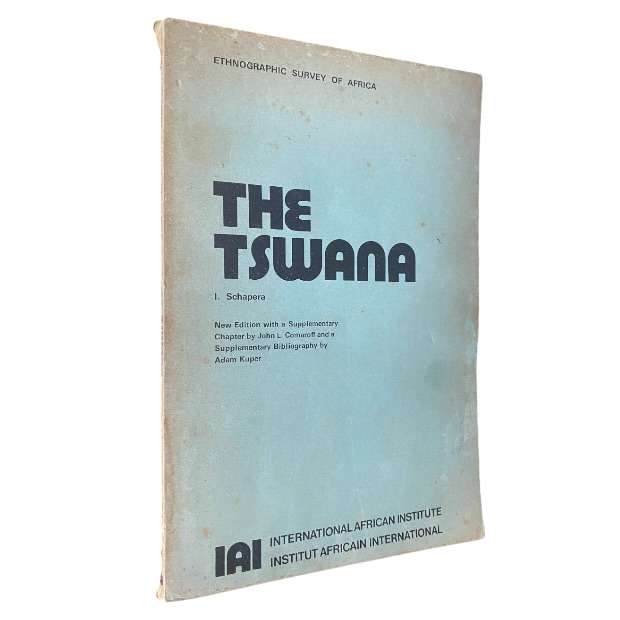
The Tswana by I. Schapera is a foundational ethnographic study of the Tswana people of southern Africa, originally published in 1953 by the International African Institute as part of its Ethnographic Survey of Africa series. This authoritative volume, later reprinted in subsequent decades (including editions in the 1960s), spans approximately 80100 pages of detailed sociocultural analysis and remains a pivotal reference for students and scholars of African anthropology, history, and cultural studies.
In The Tswana, Schapera delivers a meticulously researched portrait of Tswana society, exploring groupings, demography, language, literature, economy, social organization, government, law, and religious practices. Written at a time when ethnographic scholarship was expanding its geographical and thematic reach, the work situates the Tswana not as a static "tribal" entity but as a dynamic society shaped by internal structures and external historical forces. Schapera's fieldwork in Bechuanaland (modern-day Botswana) and his thorough engagement with indigenous practices and oral histories provide readers with both the breadth and depth of Tswana life in the mid-twentieth century.
Published under the auspices of the International African Institute, an organisation dedicated to advancing the study of African society, history, and culture, The Tswana exemplifies the Institute's mission to produce rigorous, respectful scholarship grounded in local contexts. The book's clear organization and precise ethnographic detail have made it a trusted resource in university curricula and research libraries, valued for its contribution to understanding the complexities of African social systems, political structures, and cultural resilience during the colonial era and beyond.
For collectors and researchers alike, this edition of The Tswana offers an indispensable glimpse into the lived experience of one of southern Africa's most significant cultural communities. Its blend of historical narrative, sociological observation, and anthropological insight ensures that it remains relevant not only as a historical record but also as a lens through which contemporary developments among Tswana peoples can be understood.