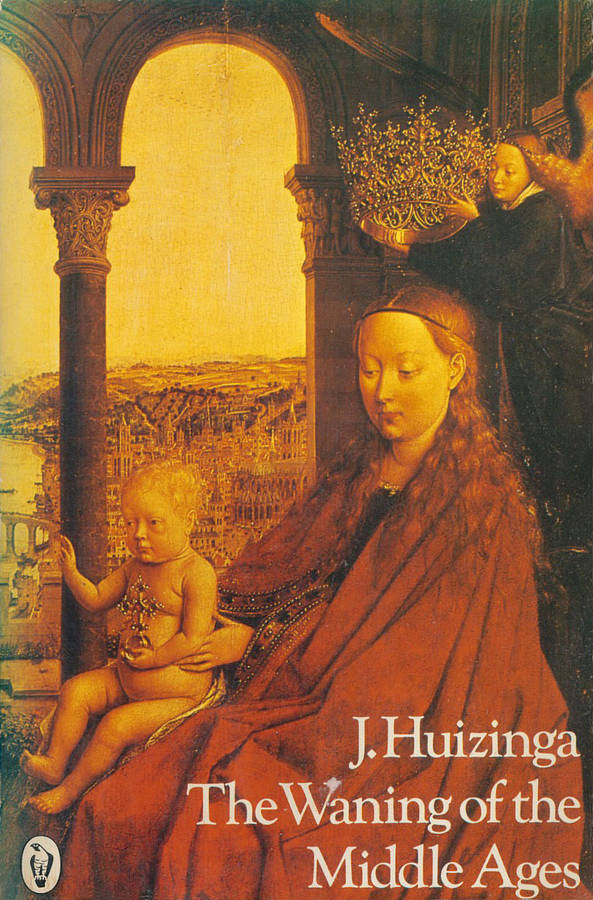
The Waning of the Middle Ages: A Study of the Forms of Life, Thought,And Art in France And the Netherlands in the Fourteenth And Fifteenth Centuries
Published by Penguin / Peregrine, 1985, softcover, index, 343 pages, condition: new.
In 1919, Johan Huizinga revealed in the original version of this book that the ideals, aspirations, and behaviors of humanity in history were dramatically different from those in present day. In Herfsttjj der Middeleeuwen, he recalled the waning years of the Middle Ages--the low countries in northern Europe in the 14th and 15th centuries--and argued against those who claimed that human belief systems remain the same even if contexts change. His account rested not on historical fact, but on the emotions and ambitions of the people as expressed through the art and literature of their culture. Many people treated the book as groundbreaking work, and it was translated into English in 1924. This new translation is a complete, more direct version of the original and allows modern readers a full appreciation of life in an era rarely revisited.
Such a fascinating view of an extremely dramatic period of history. Anyone who makes a film about the Middle Ages in which the all of characters are not obsessed with God is just making things up! A colorful, charmed, extravagant, genteel world if you were part of the nobility. If not, diminishing levels of hardship, disease, and squalor. Really emphasizes the horrors of a rigid class system. Rampant misogyny that somehow reeks of today; it's when the foundations of thought about women's inferiority became baked into language and law, and yet it was also the age of courtly love, in which women were objects of worship and enjoyed a certain amount of sexual freedom. An era riddled by plague and obsessed with death. Violence ran rampant among the upper classes; if you were a noble, you could basically get away with anything. I'm reading Proust at the same time, and it's interesting to see how the 14th century class system in France, with all of its exquisite tastes and rituals, still remained mostly intact in the late 19th century. Indeed, the late medieval period in Europe was the beginning of the modern era; and although it's so foreign and strange to read about, it also feels oddly familiar. An erudite and penetrating book.