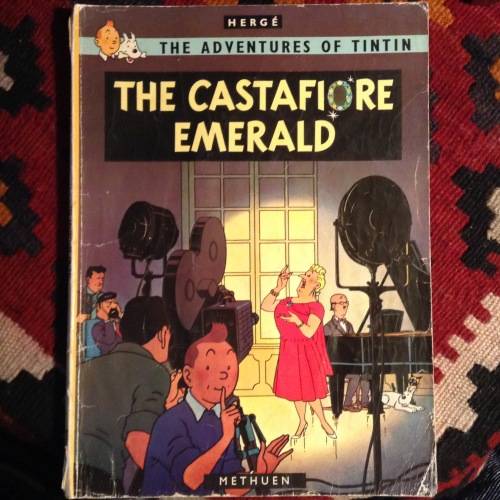
This text explains the sources in reality of all the Tintin stories, which still sell four million copies a year worldwide. Politics, people, events and objects are all covered,;Tintin, the extraordinary reporter with his immediately recognizable coif and his dog Snowy, has been a publishing phenomenon since he first appeared in 1928. Herge, Tintin's creator, based the stories on actual events in his world, reflecting the political tensions of the 1930s and postwar events. The Anschluss and the Japanese invasion of Manchuria, the race to the moon, our Western fascination with the Abominable Snowman, the spying activities of Buster Crabbe, the revolutionary activities of Regis Bebray in South America, are just a few of the people, events and phenomena to crop up, inimitably satirized, in Herge's stories. He also drew on real objects: the aircraft, ships, guns, cars, clothes, buildings and so forth, that appear in his stories are scrupulously correct, and were often updated in subsequent editions.;This book explains the sources, of whatever kind, of all the stories.It also shows how Herge subtly adjusted the stories in new editions, adapting them to changing times and ideas, and downplaying their originally local, Belgian origins.
Michael Farr is a lifelong Tintin fan and probably the leading expert on all aspects of the stories. For this book was given full access to Herge's archives. He is the translator of all the previous books to have appeared on Herge and Tintin, all of which were first published in French.
Michael Farrs Tintin: The Complete Companion is not just a collectors treasure but also a scholarly map through the adventures of one of the 20th centurys most beloved fictional journalists. Farr, a seasoned Tintinologist and journalist himself, takes us on a guided tour through each of Hergés 24 canonical Tintin albums, unpacking the inspirations, references, and historical contexts behind the stories.The book shines in its capacity to bridge Hergés real world with Tintins fictional one. From Tintin in the Congo to Tintin and the Picaros, Farr explains the social, political, and cultural references that informed the plots and character designs. As a bilingual researcher with access to Hergés archives, Farr augments the text with behind-the-scenes insights, original sketches, and fascinating anecdotes about the creative process.
What makes the book predominantly compelling is its layout: crisp reproductions of panels sit alongside their source materialphotographs, news clippings, and design draftsallowing readers to witness Hergés meticulous ligne claire style evolve in context. Tgh the tone remains reverent, it doesn't shy away from addressing controversieslike colonial depictions or wartime publicationsplacing them within Hergés own evolving moral compass. It treats Tintin not merely as entertainment, but as a cultural mirror reflecting Europes anxieties and dreams. For any serious Tintin fanor student of comics as art and artifactthis companion is essential, illuminating, and endlessly browsable