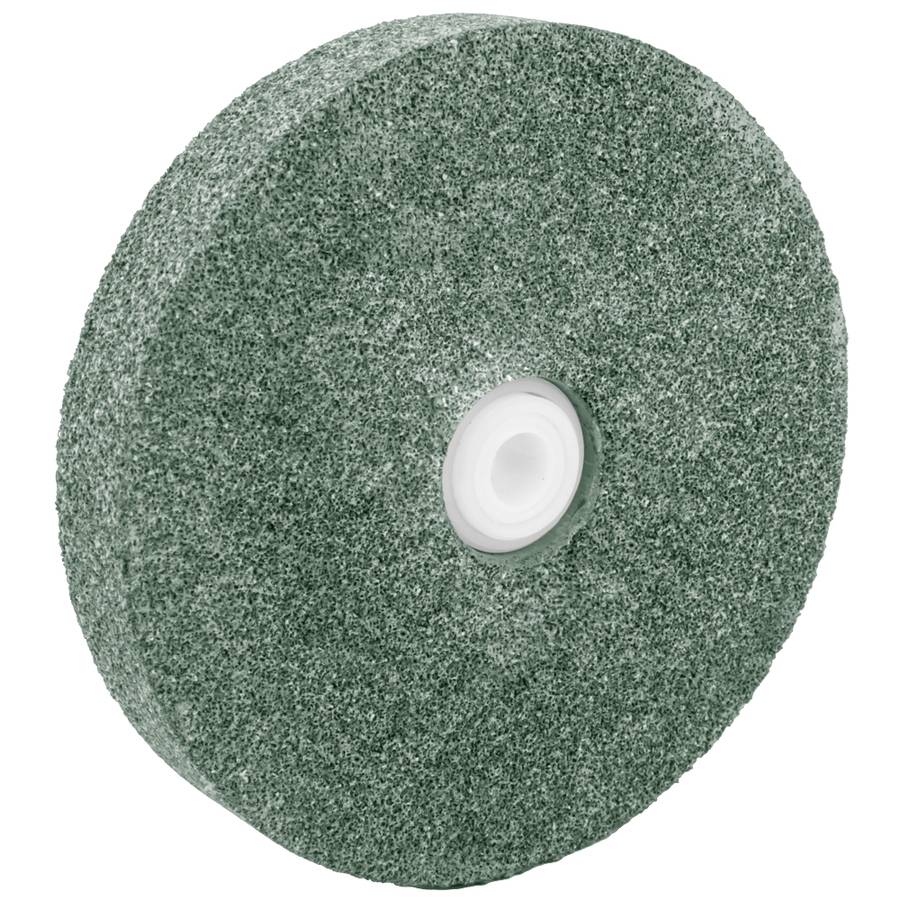
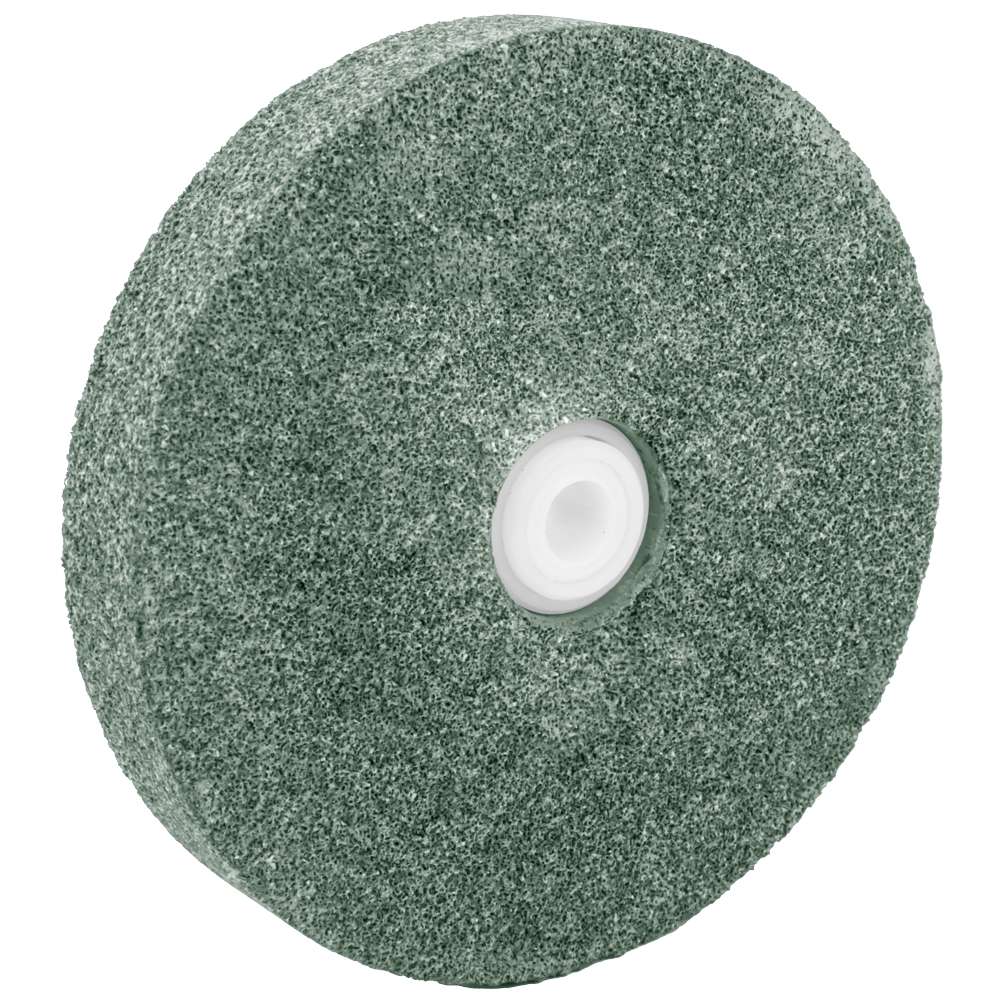
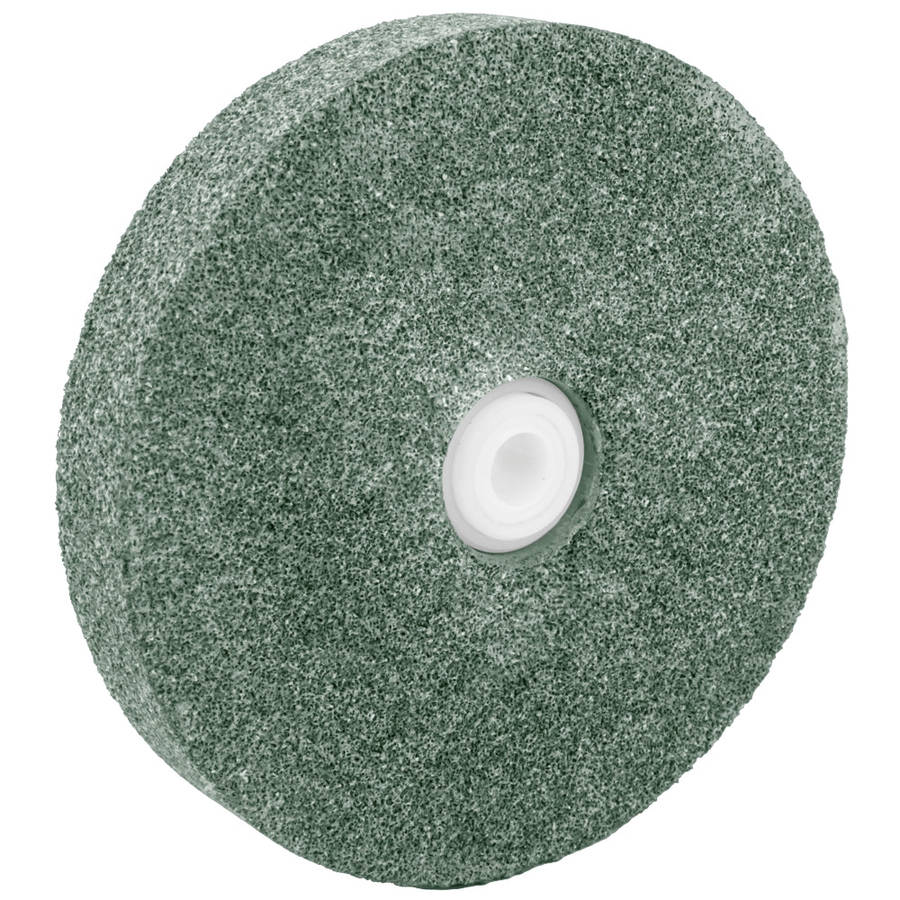
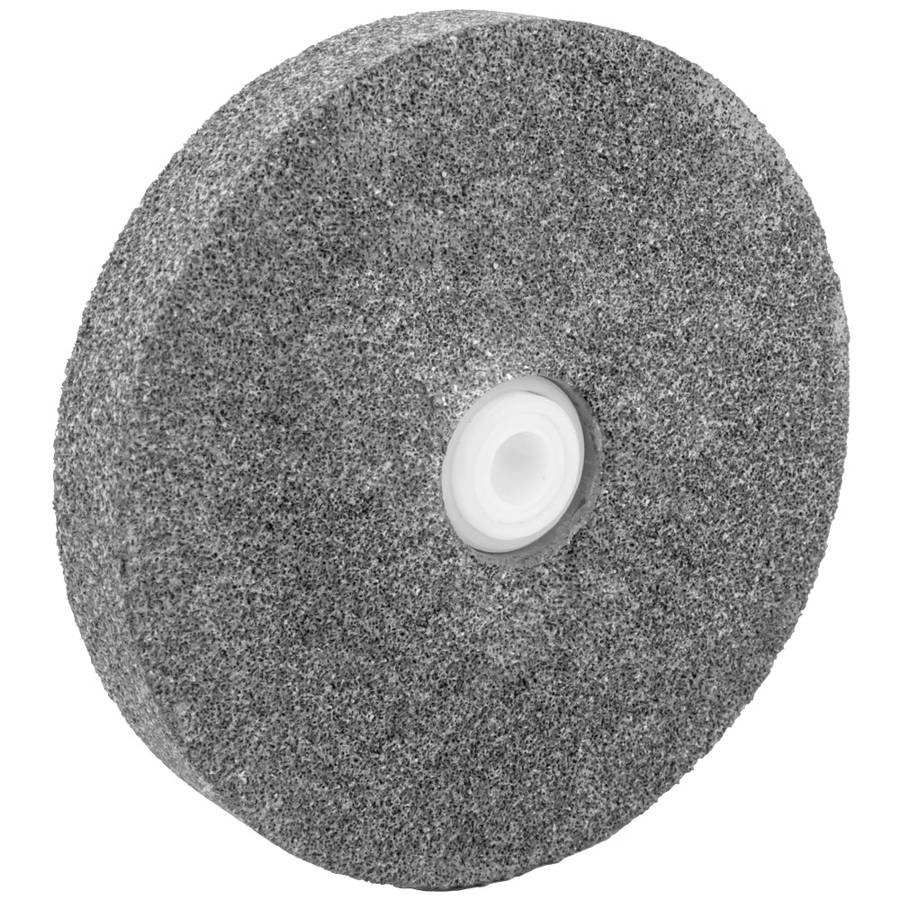
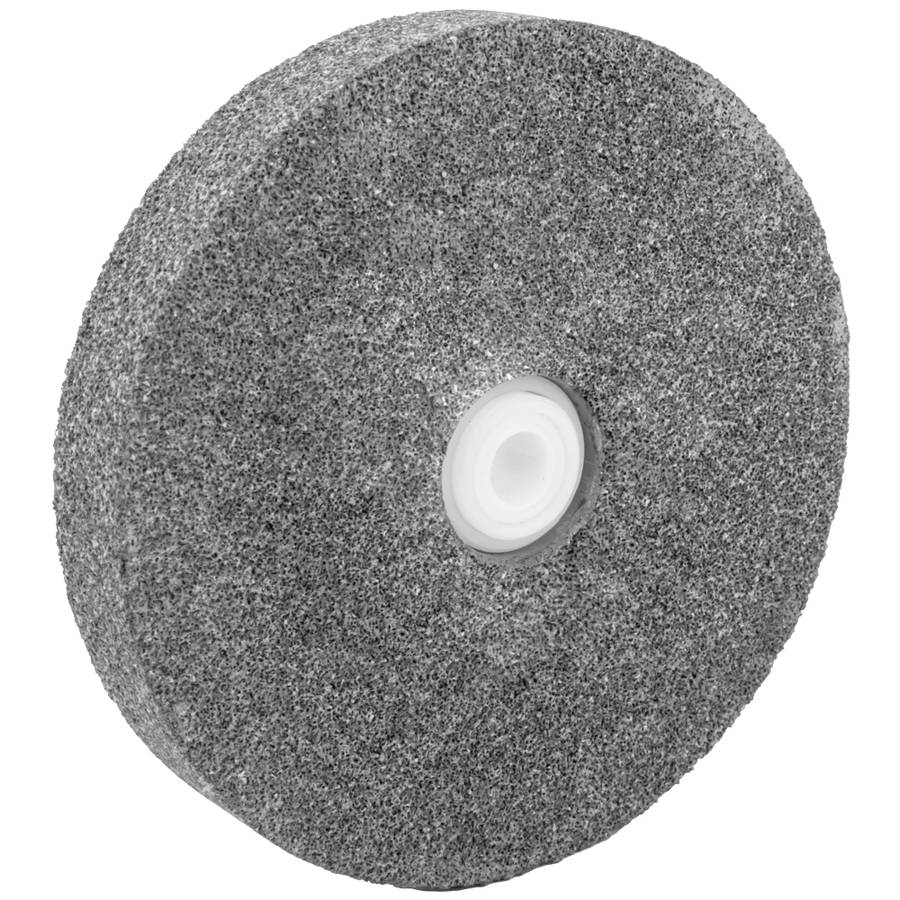
For use with bench grinders to grind steel
DIAMETER: ø125mm
WIDTH: 20mm
BORE: Ø32mm
GRIT: 60
ABRASIVE: Silicon Carbide
MAX RPM: 5300
Application:
Ideal for workshops â" re-sharpening of tools e.g. chisels etc. Maximised cut rate, wheel life and finish on High-Speed Steel (HSS), High Carbon Steel (HCS), cast iron and chilled steel
Deburring steel and thread rods.
Shaping of ferrous metals (carbon steel, steel, iron, tungsten, forgings, etc.)
Grinding wheel supplied with bushes to accommodate other bench
grinder shaft diameters.
 A bench grinder is a machine that is attached to a bench. It usually has two grinding wheels, both of them normally of different grits. For example a 60 grit and a 36 grit. One for stock removal and the other made for touching up tools.
Although a bench grinder is generally a shop tool, there are some designed for home use. These machines are not normally used for precision grinding. The outcome is usually coarse, even with a wheel considered for fine grinding.
Further grinding may be necessary with a different type of grinding machine.

Bench grinding wheels are mostly made of aluminium oxide that consistently renews itself when in use. It also has a reduced chance of overheating and clogs less frequently. The disadvantage is that these wheels may need to be replaced more often.

Differences between machines: Some bench grinders are smoother and quieter
running than others. Some machines might have adjustable speed to prevent
overheating. The tool rests might also vary from having a V-grooved to an angled
toolrest to allow the grinding of drill bits etc.
Grinding wheel stone grit

Grinding stone wheels are usually available in various grades, which refers to
the grit size of the particles in the stone. Generally, the finer the grit, the
denser the material, which leads to a finer finish of the surface of the tool. Finer
grits cut more slowly because they remove less material. Grits are often given as
a number, which indicates the density of the particles with a higher number denoting
higher density and therefore smaller particles.
Grinding Stones
The stones also are made of different abrasives:
- Aluminium oxide - most commonly found on bench grinders.
- Silicon carbide - mostly used for work on stone material.
- Zirconia aluminia - used for more aggressive grinding needs.
The grinding wheels are also available in different
diameters to correspond to different machine sizes.
Please note the maximum rotation speed of each disc before use!