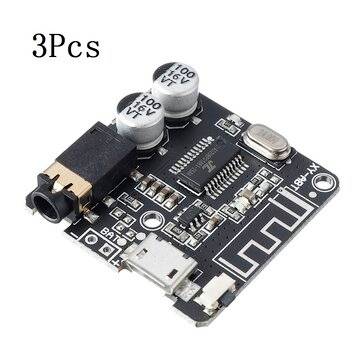
Here is a powerful, high-converting product description for a 5x7 cm Universal Prototype PCB Board designed for your e-commerce website:
Universal DIY Prototype PCB Circuit Board (5x7 cm, 2.54mm Pitch)
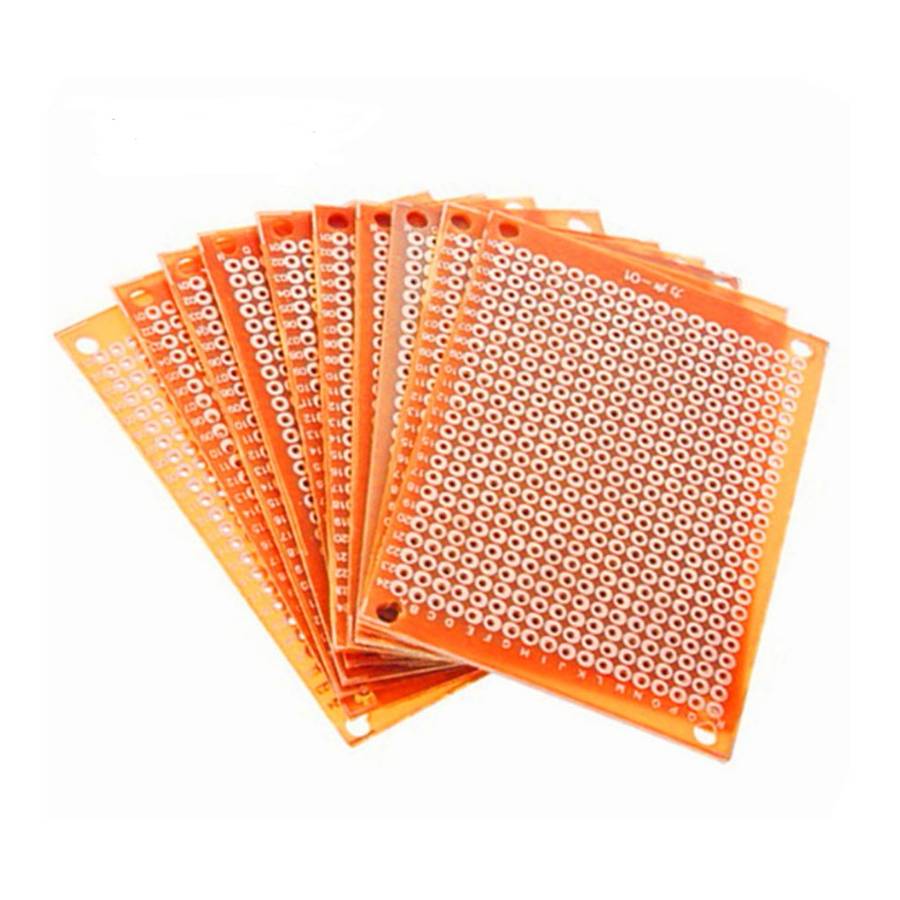
Bring your circuit designs to life quickly and cleanly with this Universal 5x7 cm DIY Prototype PCB Board. An absolute staple for every electronics hobbyist, maker, and engineer, this high-quality prototyping board provides the perfect canvas for soldering custom circuits, testing components, and building permanent DIY electronic projects.
Featuring a standard 2.54mm matrix pitch, it offers seamless compatibility with standard headers, IC sockets, resistors, capacitors, and microcontrollers like Arduinos or ESP modules.
Key Features
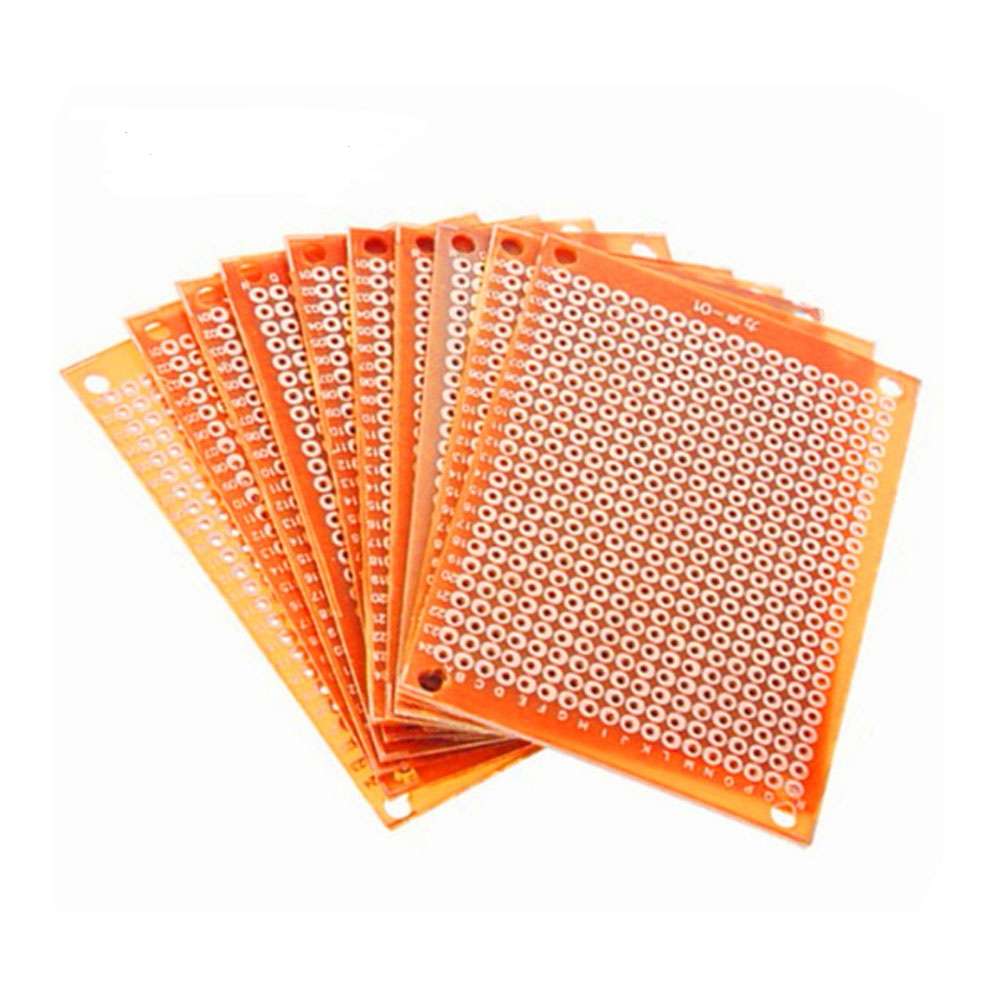
Perfect Prototyping Size: The 5x7 cm footprint strikes the ideal balance—compact enough for neat project enclosures, yet spacious enough to accommodate complex circuits and multiple components.
Standard 2.54mm (0.1") Pitch: Built to industry-standard grid specifications, ensuring that your breadboard-compatible components, sensors, and dual-in-line (DIP) integrated circuits drop perfectly into place.
Pre-Coppered Matrix Holes: Every single hole features a clean, pre-tinned copper pad that grabs solder easily and holds tight, preventing pads from lifting or overheating during assembly.
Grid Aligned for Accuracy: Features clear matrix markings to help you keep track of rows and columns while routing wires, significantly reducing layout mistakes.
Easy to Cut & Shape: Made from durable yet workable paper-based laminate (FR-1/94V-0 style), this board can easily be cut, trimmed, or drilled down to match custom shapes or tighter enclosure dimensions.
Technical Specifications
Dimensions: 50mm x 70mm (5x7 cm)
Hole Pitch: 2.54mm / 0.1 inch
Hole Diameter: Approx. 1.0mm
Thickness: Approx. 1.2mm
Material: High-quality single-sided paper-printed circuit board
Mounting Holes: 4 corner mechanical mounting holes for easy installation into project boxes.
Common Applications
Transferring temporary breadboard prototypes into permanent, vibration-resistant soldered projects.
Building custom shield expansions for Arduino, Raspberry Pi, or ESP32 modules.
DIY audio amplifiers, LED matrices, sensor arrays, and power supply modules.
Rapid engineering prototyping and university lab experiments.