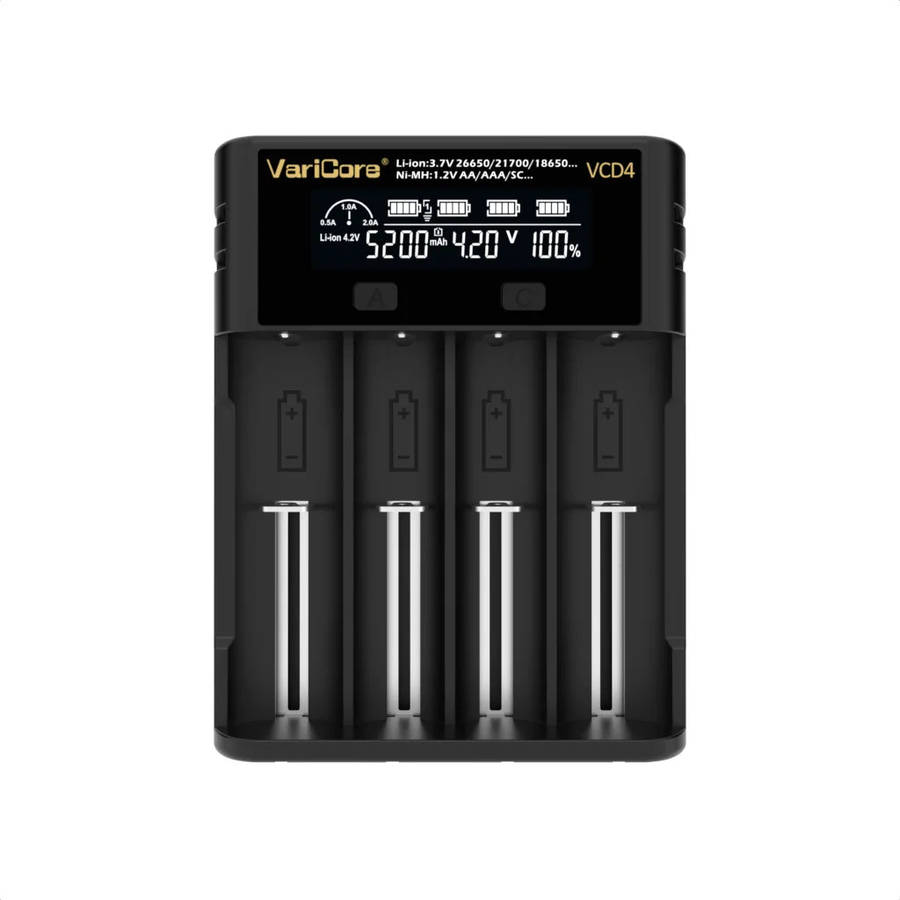
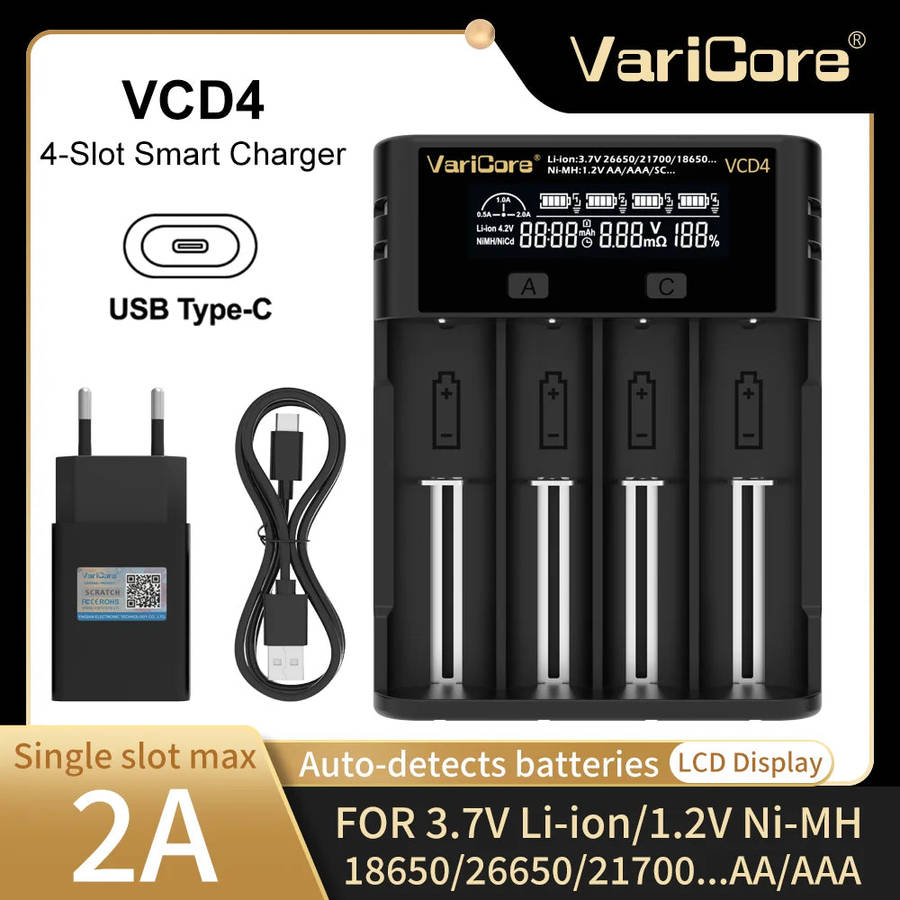
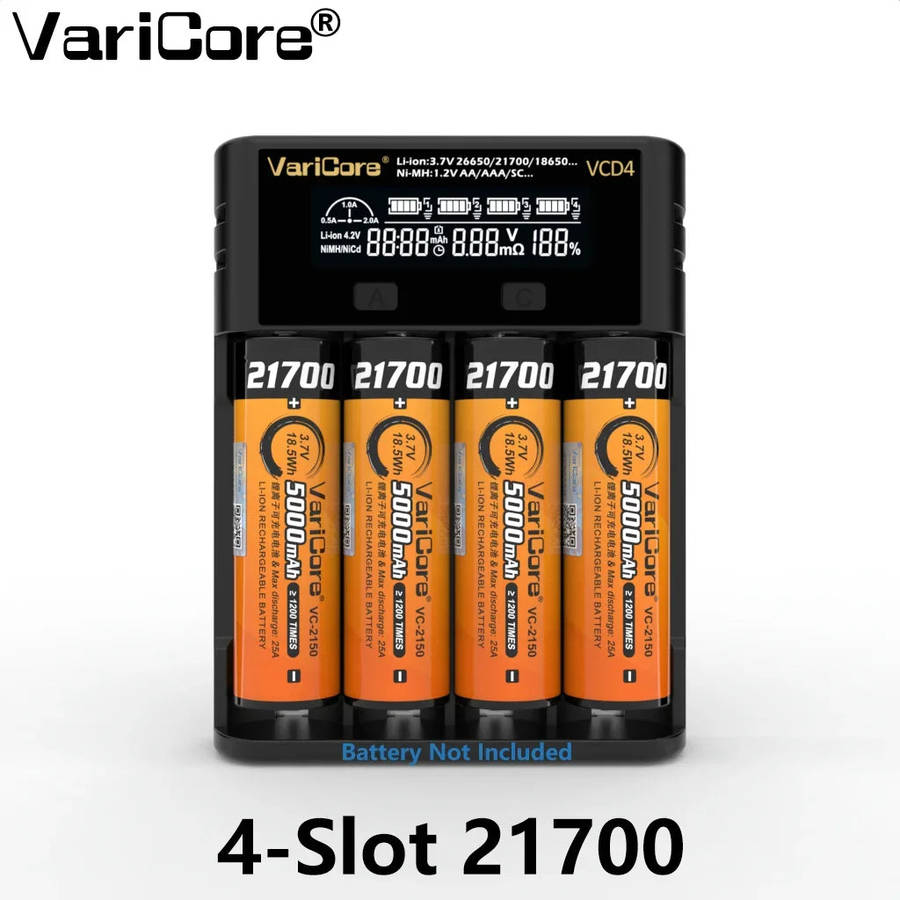
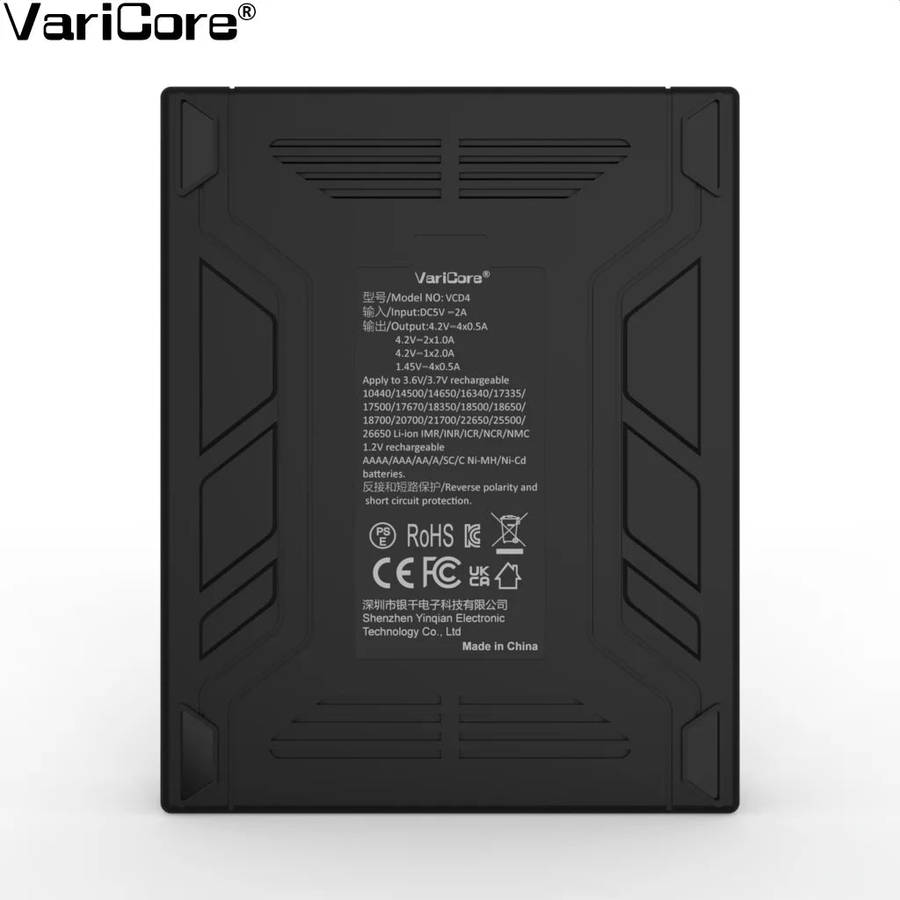
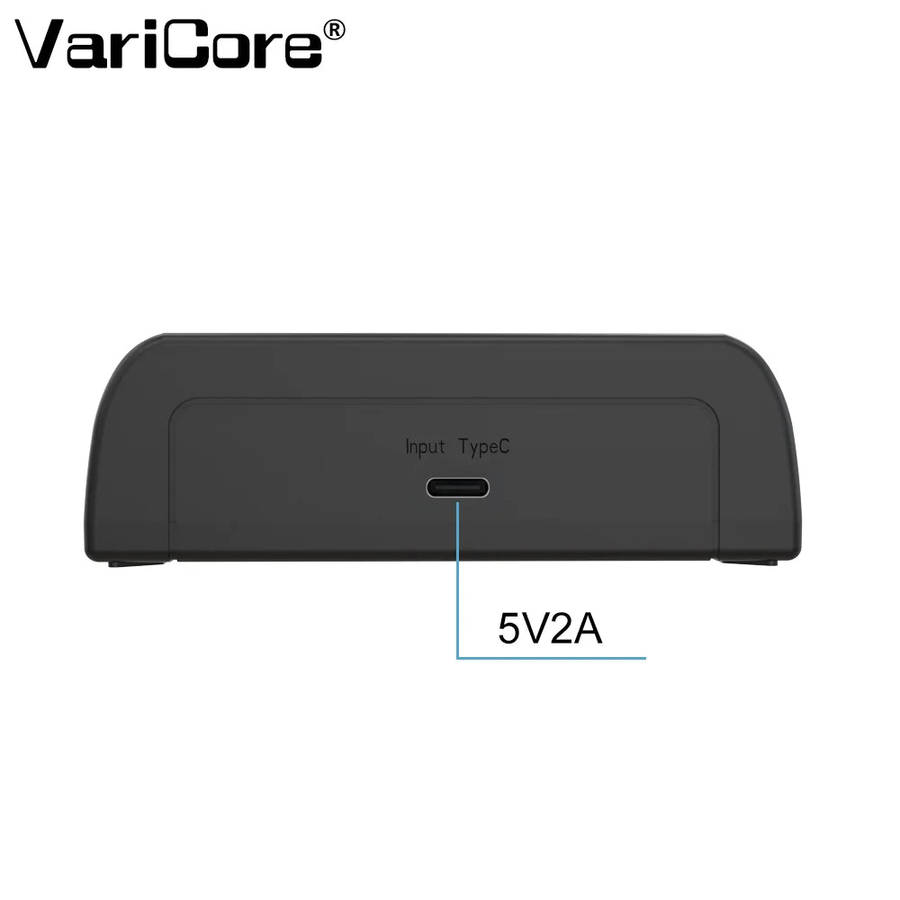
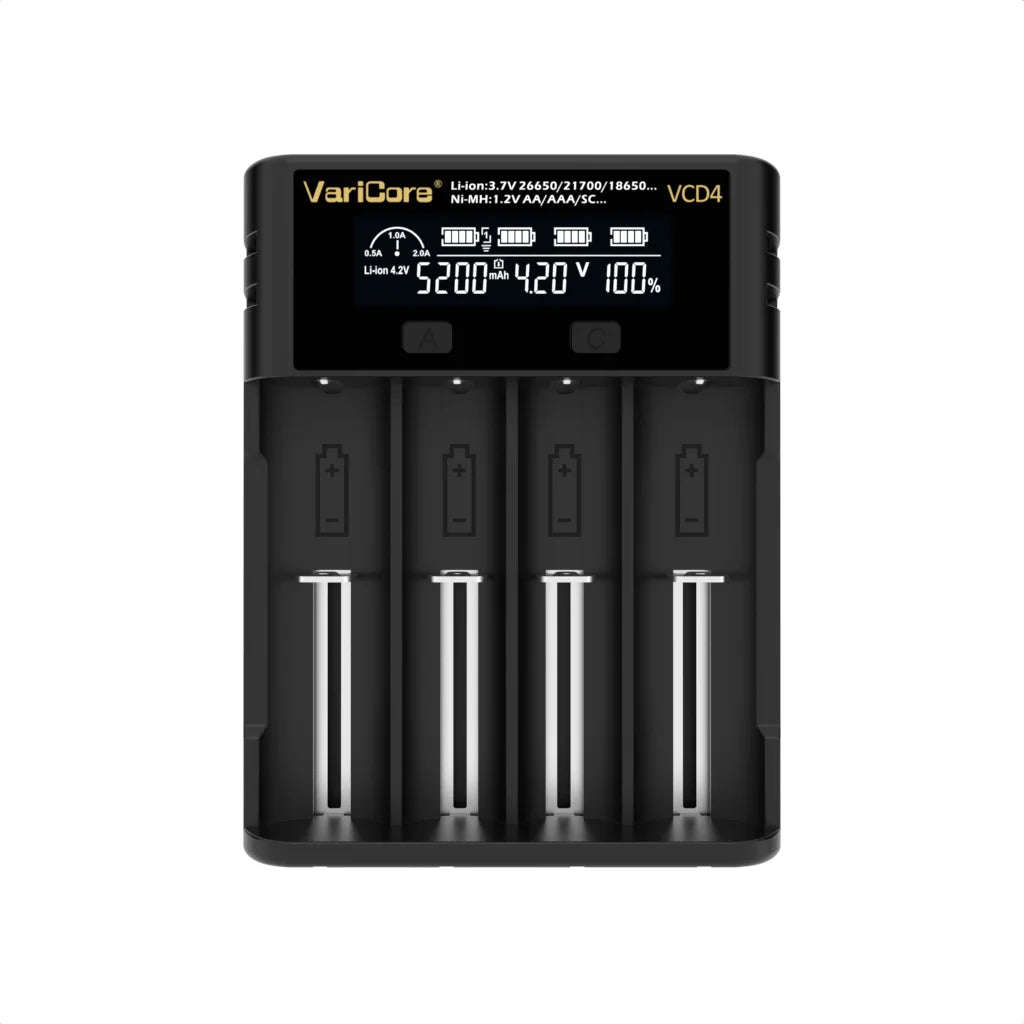
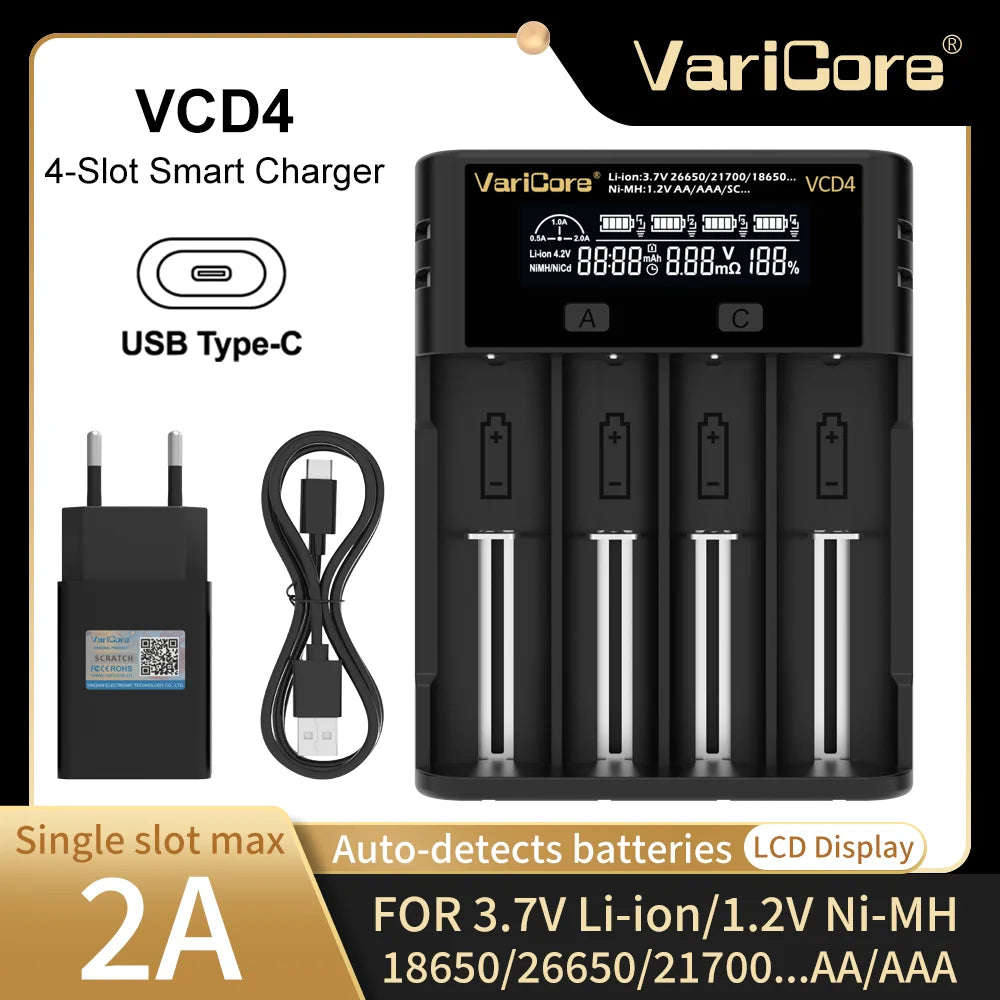
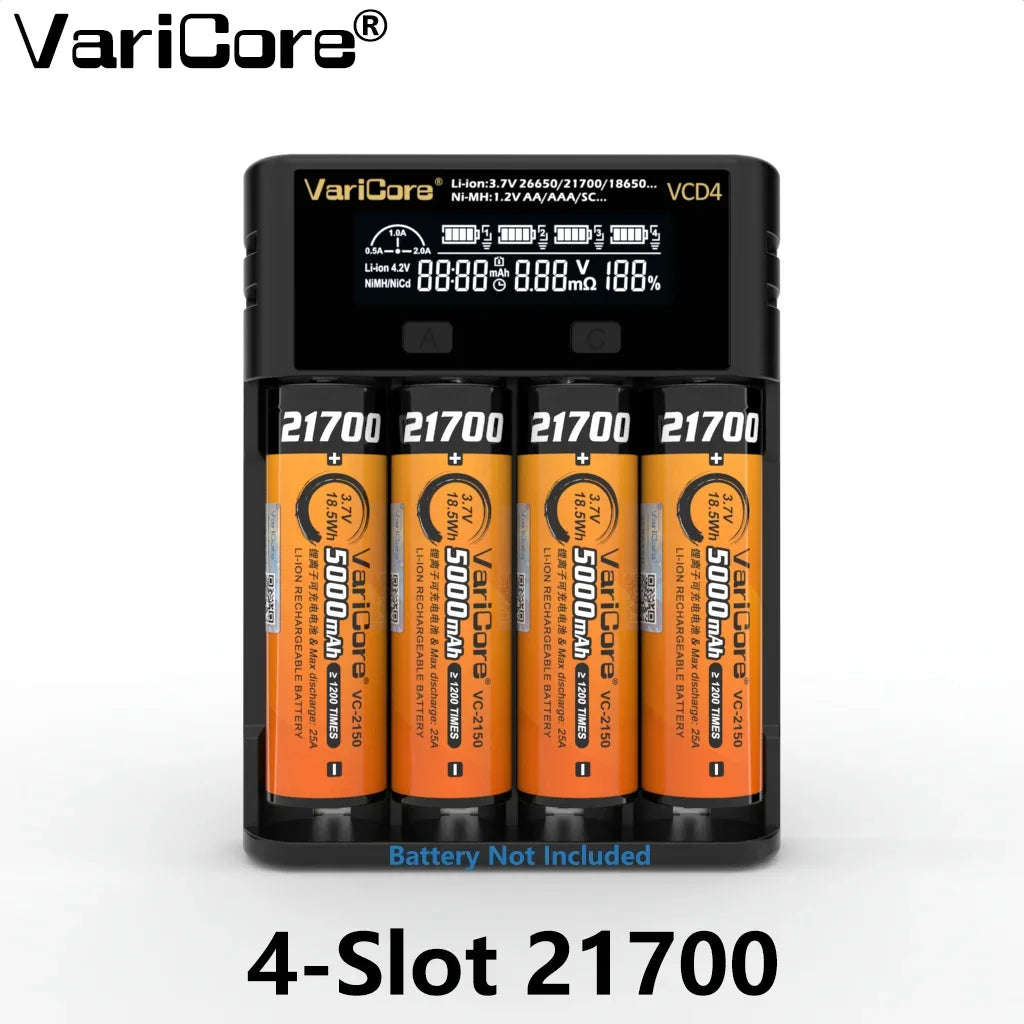
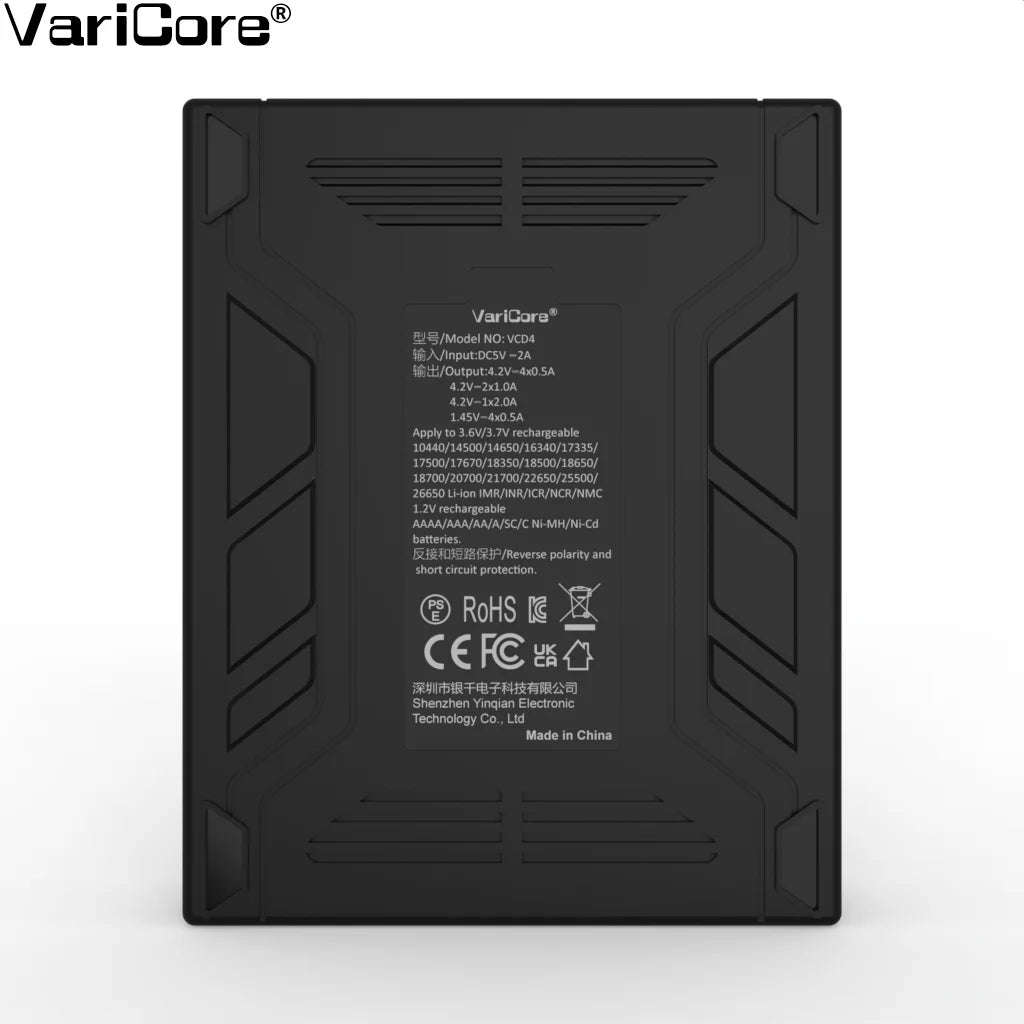
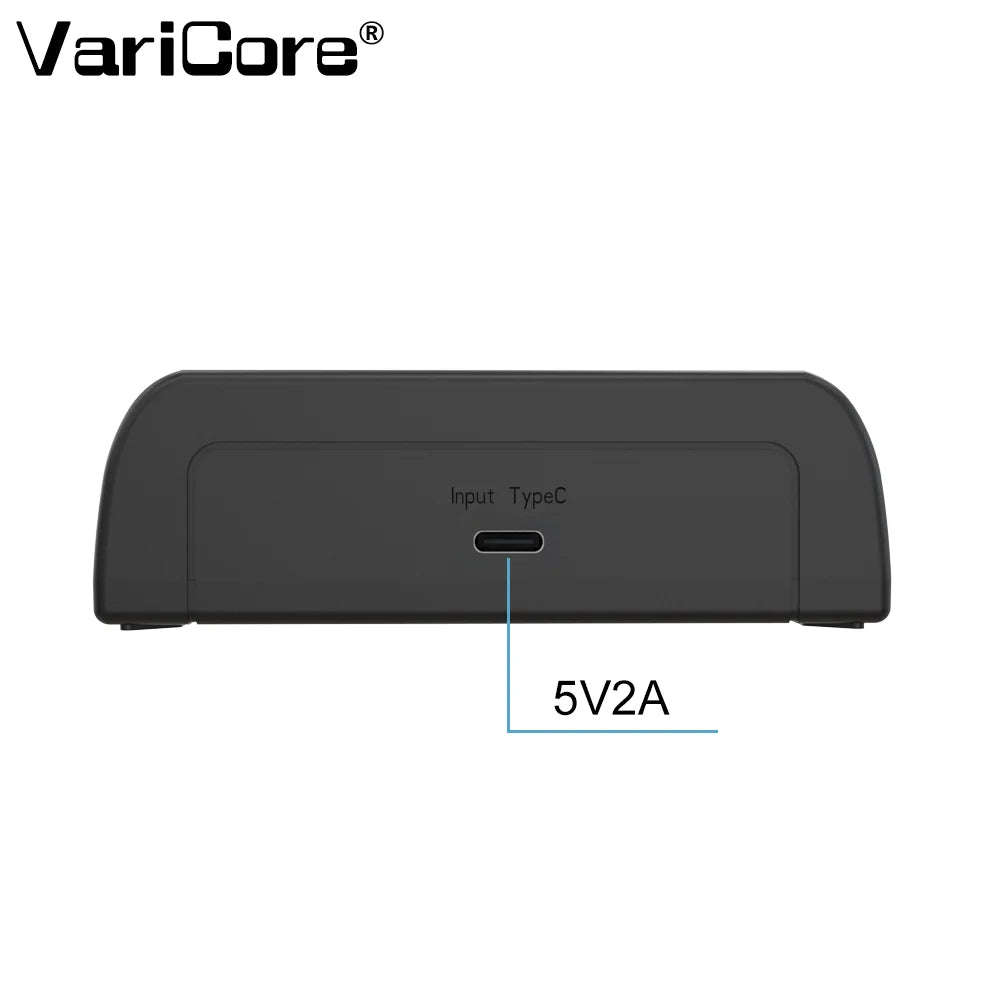
USB Type-C for 3.7V Li-ion 18650 21700 26650 3.2V LiFePO4 32700 1.2V Ni-MH AA AAA
- Quick charge : Yes
- Intelligent Charge : Yes
- Display screen : Yes
- Voltage range : USB (5-20V DC)
- Type : Electric
- Type : Device with USB Charger
- Type : Battery charger
- Certification : RoHs
- Certification : CE
- Certification : RoHS
- Output Current : 2A
- Max. Output Power : 2A
- Model Number : VCD4
- Voltage : 3.7


Precautions for Rechargeable Batteries
(Applicable to lithium-ion, lithium iron phosphate, lithium titanate and Ni-MH batteries)
1. Charging Specifications
Use a matched dedicated charger
Do not use mismatched chargers for batteries of different voltages. Chargers for 3.7V lithium-ion, 3.2V LiFePO4, 2.45V LTO and 1.2V Ni-MH batteries are not interchangeable. Large-format power cells must be charged with corresponding balancing chargers; do not charge large square cells directly with ordinary 18650 chargers.
Avoid overcharging
Stop charging immediately once the cut-off voltage is reached: 3.65V for LiFePO4, 4.2V for ternary lithium, 2.8V for LTO, and 1.4V for Ni-MH. Long-term overcharging may cause swelling, electrolyte leakage, overheating or fire hazards.
Suitable charging temperature
The optimal charging temperature ranges from 0 to 40. Fast high-current charging is prohibited below 0. Do not charge batteries under direct sunlight or in sealed cartons at high temperatures.
Matched charging current
For regular cells, slow charging at 0.2C~0.5C is recommended. High-rate power cells support short-term fast charging at 1C, but sustained full-power fast charging shall be avoided to reduce cycle degradation.
Prevent reverse connection during charging
Reversing the positive and negative terminals will instantly damage the cell and burn out the charger. For large cells with threaded terminals, double-check the +/- marks before wiring.
2. Discharge & Usage Prohibitions
Avoid over-discharging
Cut off power immediately when voltage drops below the discharge cut-off value: 2.0V for LiFePO4, 2.7V for ternary lithium, 1.5V for LTO, and 1.0V for Ni-MH. Severe over-discharge leads to permanent damage and renders the cell unchargeable.
Prevent short circuits
Direct contact between positive and negative metal terminals creates an extreme current surge, causing rapid overheating or explosion. Isolate conductive metal objects during storage and transportation.
Do not exceed rated discharge current
Strictly follow the nominal discharge rate marked on cells (5C/10C/20C). Continuous discharge beyond the rated rate results in overheating and swelling.
Matched loads
Ensure the battery voltage and capacity match the equipment. Do not forcibly connect cells of different specifications in series or parallel.
3. Notes for Series & Parallel Battery Packs (RV/Energy Storage Batteries)
Cells connected in series must be of the same model, capacity, internal resistance and age; install balancing boards to balance voltage differences.
Fit all multi-string battery packs with a BMS protection board to prevent overcharging and over-discharging of single cells.
Test voltage differences regularly. If the voltage gap exceeds 0.05V, perform balancing immediately; otherwise, the service life of the whole pack will degrade rapidly.
4. Storage Requirements
Store at partial charge for long-term idle periods
Lithium-ion and LiFePO4 batteries should be stored at 40%~60% state of charge; Ni-MH batteries can be stored fully charged. Recharge once every 3 months to avoid prolonged depletion.
Suitable storage environment
Store in cool and dry conditions at 10~25, away from heat sources, direct sunlight and rain. Do not seal batteries in plastic bags for long-term airtight storage.
Separate storage by category
Store new and old batteries, as well as different battery models separately. Wrap cells with exposed metal terminals individually to avoid accidental short circuits between cells.
5. Safety Protection & Damaged Battery Handling
Do not disassemble, puncture or squeeze cells
Discontinue use immediately if the cell shell is cracked, leaking or swollen; do not attempt to charge damaged cells.
Keep away from flammable and explosive materials
Do not charge or use batteries near bedding, textiles or gasoline. Ventilate RV solar energy storage batteries properly.
Do not charge water-damaged batteries
Fully dry cells that have come into contact with water. Discard them directly if abnormal performance persists after drying.
Emergency handling for abnormalities
If batteries overheat, emit strange odors or swell during charging: cut off power at once, move the battery to an open outdoor area and let it cool down. Dispose of it as hazardous waste instead of ordinary household garbage.
6. Additional Reminders for Different Battery Types
18650 cylindrical lithium batteries: Distinguish between flat-top/button-top cells and protected/unprotected cells. Models designed for flashlights and power banks cannot sustain high-current discharge.
LiFePO4 lithium iron phosphate: Operating temperature down to -20; capacity decreases at low temperatures. Ideal for energy storage and RV power systems.
LTO lithium titanate: Ultra-low temperature resistance down to -40 with over 10,000 charge cycles, but low nominal voltage; never charge above the 2.8V cut-off voltage.
Ni-MH AA/AAA batteries: No memory effect; no need to fully drain power before re...