

| Main centres: | 1-3 business days |
| Regional areas: | 3-4 business days |
| Remote areas: | 3-5 business days |
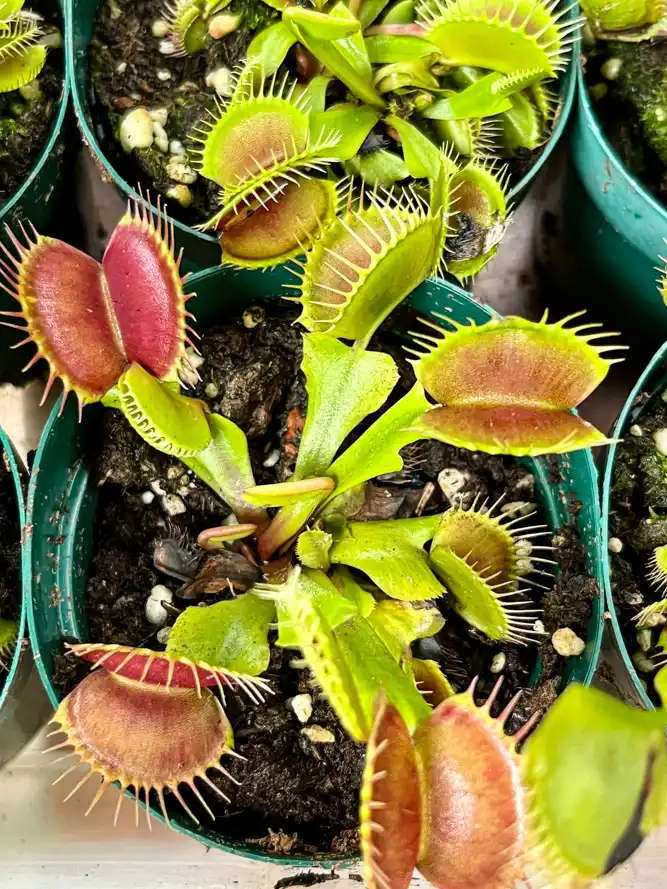
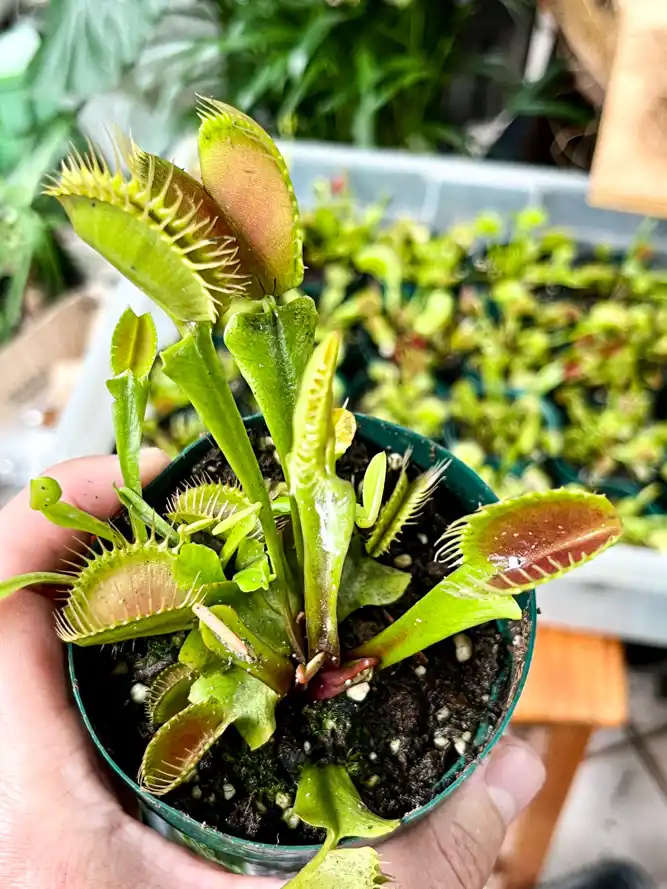
The Venus Fly Trap is nature's little show-off famous for its snapping traps that catch flies, gnats, and other tiny insects. Small enough for a sunny windowsill but bold enough to start conversations.
Plants are in a 10cm pot.
Commonly known as: Venus Fly Trap
Botanical name: Dionaea muscipula
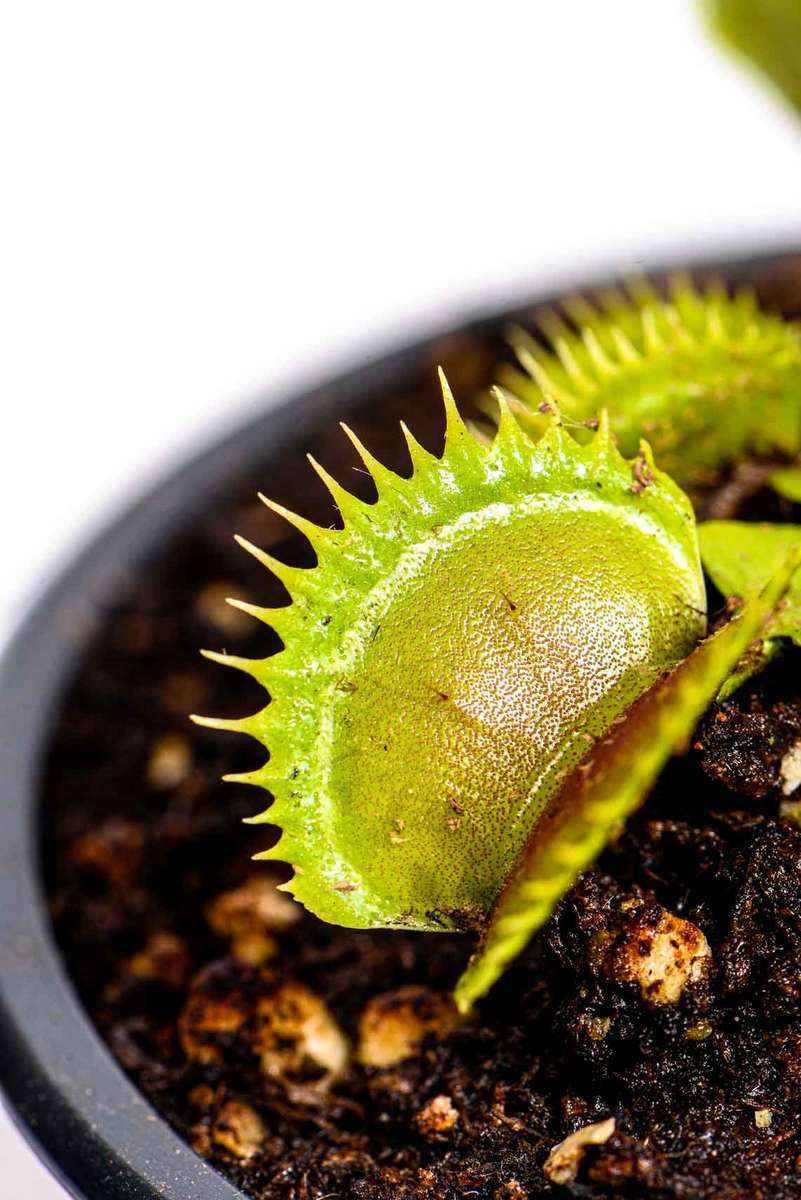
The Dionaea muscipula, or Venus Fly Trap, is a living curiosity a carnivorous plant that captures insects using its hinged traps lined with tiny trigger hairs. Each trap closes in less than a second when touched twice, digesting its prey for extra nutrients. It's a hardy, easy-going plant once you understand its rhythm and, when happy, produces delicate white flowers on tall stalks.

Keep the soil consistently moist at all times. Never let it dry out completely. Use rainwater, distilled, or filtered water only tap water contains minerals that can harm the roots. The easiest method is to keep a shallow saucer of water under the pot so the soil can wick moisture upwards.

At least 46 hours of direct sunlight a day. A bright, sunny windowsill, patio, or greenhouse shelf is perfect. Indoors with insufficient light, supplement with a small grow light to maintain colour and trap strength.

Moderate humidity suits it best. Typical indoor humidity (around 4060%) is fine, but a light misting in dry weather helps prevent the traps from crisping.

They need nutrient-poor, acidic soil. Use a 50:50 mix of sphagnum peat moss and perlite, or sphagnum moss alone never regular potting soil or compost. The roots rely on clean, airy media and cannot tolerate fertilisers or rich soil.

If grown outdoors, it'll catch its own meals flies, ants, and gnats. Indoors, you can offer one small insect every few weeks. Don't overfeed; each trap closes only a handful of times before it dies back. Never feed it meat or fertiliser.

Repot once a year in early spring using fresh sphagnum moss or peat-perlite mix. Avoid handling the traps too much and keep the roots moist during transplanting.

Yes. It goes dormant in winter, looking brown and tired, but it's just recharging. Keep it cooler (around 510 °C), reduce watering slightly, and resume normal care in spring when new traps appear.

Between 18 °C and 30 °C in summer. In winter dormancy, cooler temperatures down to 5 °C are fine. Avoid frost or extreme heat.
 FAQ's
FAQ'sQ: Can I touch the traps for fun?
Try not to it wastes the plant's energy and shortens the life of each trap.
Q: Why are the traps turning black?
It's natural for older traps to die back. Trim them off so new growth can emerge.
Q: Can I grow it outside?
Yes in a sunny, sheltered spot with consistent moisture and clean water.
Q: Does it need fertiliser?
No. Feeding insects is more than enough; fertilisers will burn the roots.
Be sure to visit and follow us and