Similar products

| Main centres: | 1-3 business days |
| Regional areas: | 3-4 business days |
| Remote areas: | 3-5 business days |
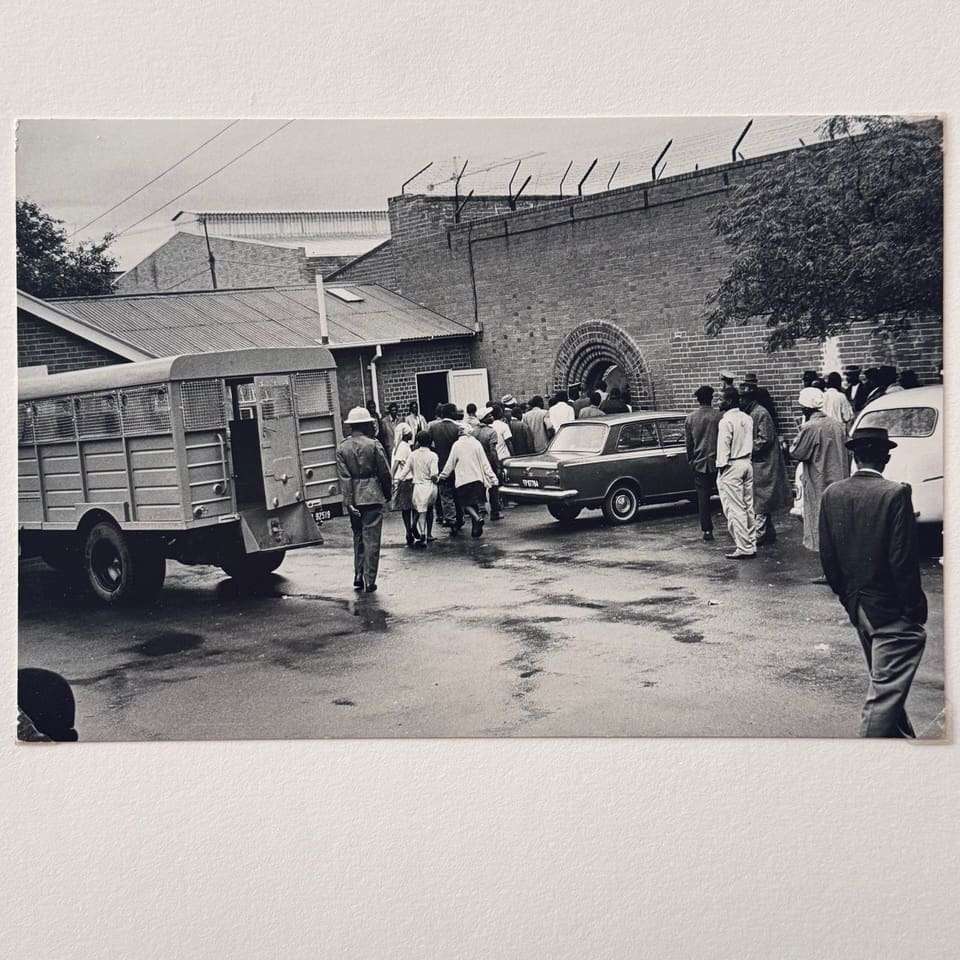
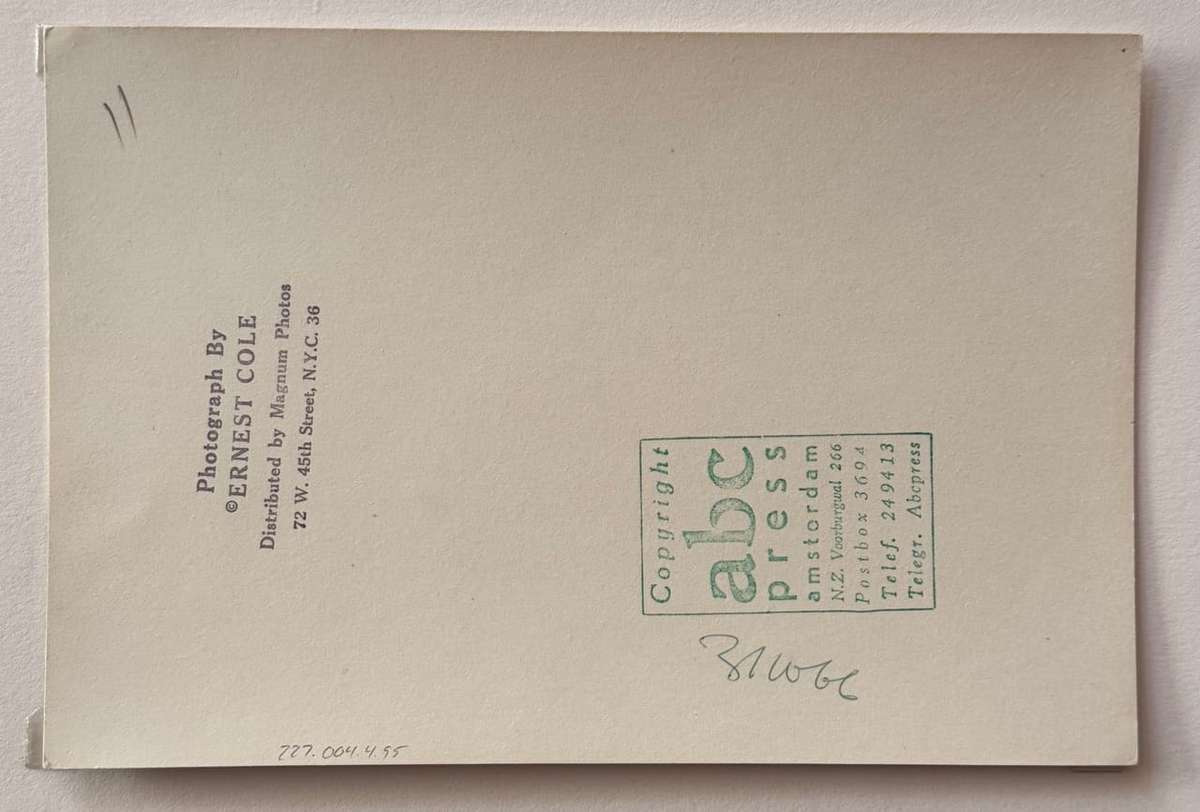
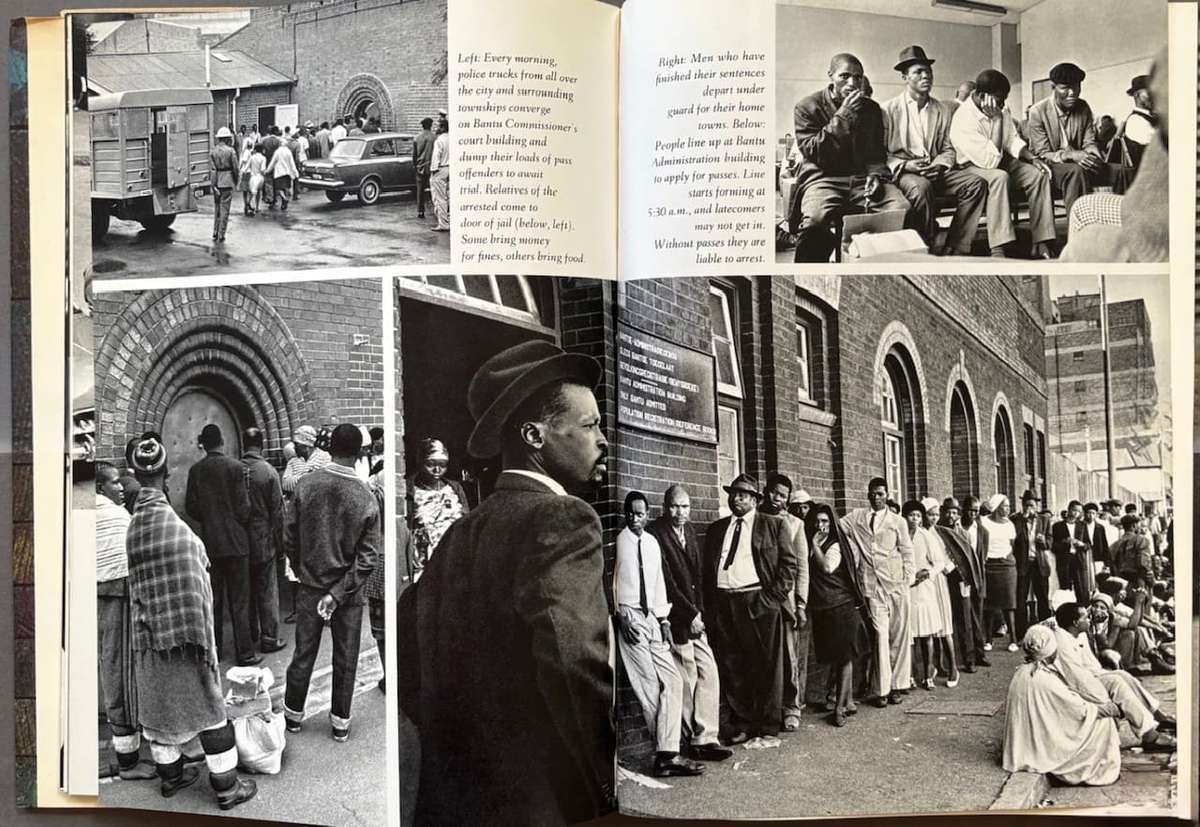
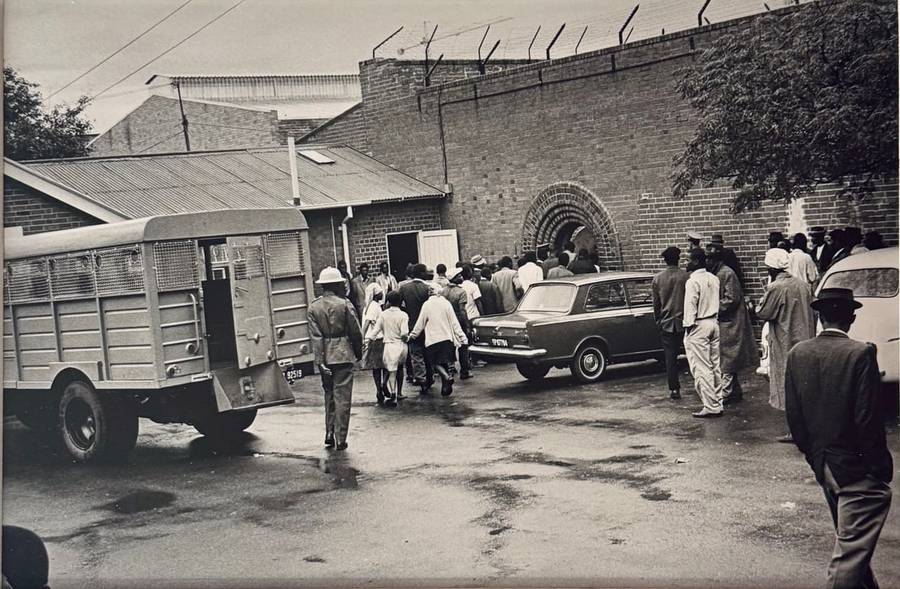
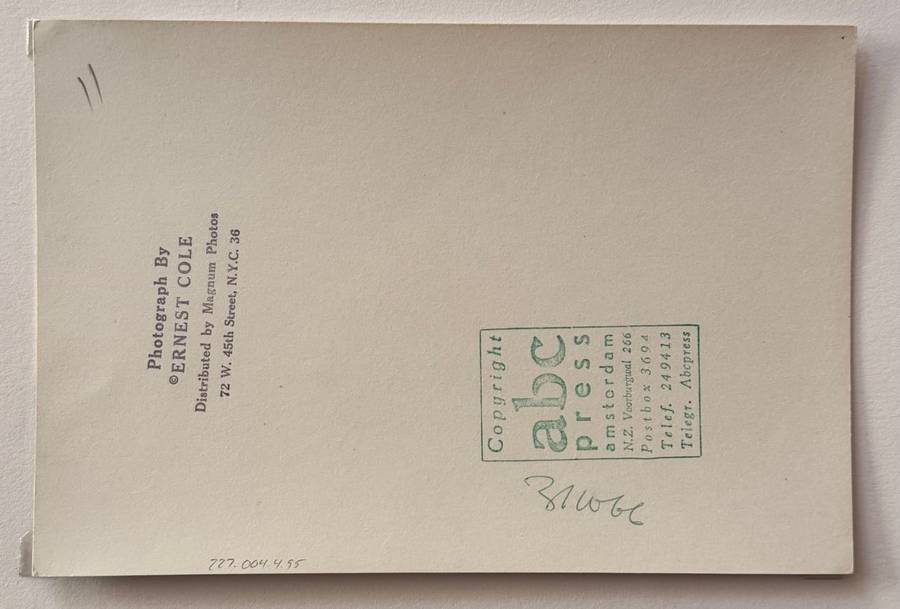
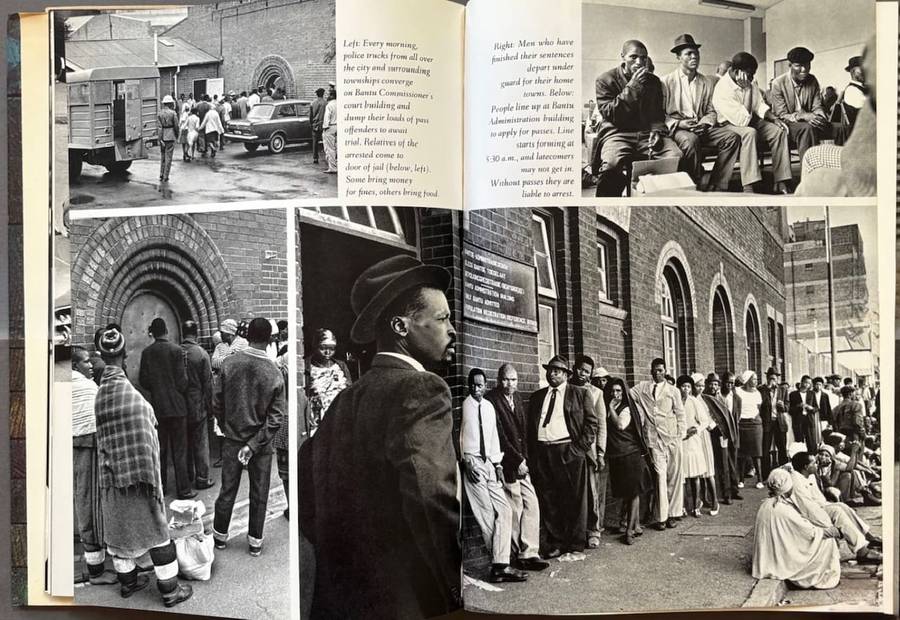
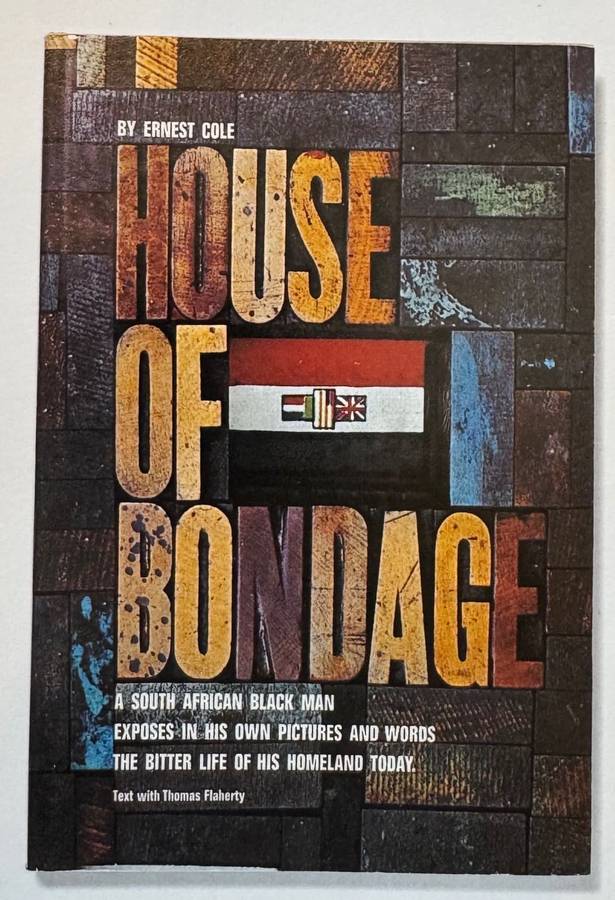
A vintage print, 16.2 x 24.2cm. Very good condition, slight signs of wear to the edges. Stamps of the ABC Press,Amsterdam and Magnum Photos, N.Y.C. to the verso. This image appears in Cole's important 1967 photobook, House of Bondage with the following caption: "Every morning police trucks from all over the city (Johannesburg) and surrounding townships converge on Bantu Commissioner's court building and dump their loads of pass offenders to await trial." "Both Volume I and Volume Il of this history contain many photobooks that have been political in intent, some that have even made a difference politically, but few that were both banned in their author's country and resulted in exile. House of Bondage was authored by a self-taught black South African photojournalist, Ernest Cole, and shows his experience of apartheid from the inside. To do this, Cole managed to get himself officially reclassified as 'coloured' rather than 'black', thereby raising himself half a notch up South Africa's rigid social scale and gaining himself more freedom of movement to carry out his self-imposed assignment. He then persuaded the Afrikaner authorities that the story he was photographing was about street crime amongst disaffected, ungrateful black youths rather than the appalling social inequalities of the apartheid system. This subterfuge enabled him to leave South Africa with his film and get House of Bondage published. The furore it caused made him a perhaps reluctant hero for a generation of aspiring black photographers; despite the success of the book, he never worked again in his homeland, and died penniless and in exile in the United States in 1990. But the story behind the publishing and subsequent reception of House of Bondage should not blind us to the fact that it is a work of genuine quality. It is a comprehensive view of black South African life under apartheid. Its text, written by Cole with the assistance of Thomas Flaherty, is integral to the pictures, making the book as much sociological document as photo-essay and polemic. Although the strictures of life in the black townships are heavily featured and there is crime and poverty aplenty, Cole also focused on education and work, and even on the aspiring black middle class. Nevertheless, as the title indicates, the story is mainly one of deprivation and the inevitable spiral of crime and violence that were its results. Some of the sequences - such as those on the tsotsis (street gangs) - are deeply memorable, and Cole also documents the institutional violence of the apartheid policy - the passbook arrests, police inspections, dehumanizing conditions in the diamond mines and all the humiliating street signage that accompanied social segregation. The comprehensiveness and humanity of its view is the reason for both its banning in South Africa and the plaudits it garnered elsewhere." (The Photobook: A History volume II, 2006, pg. 106-7, Martin Parr and Gerry Badger) Provenance: The estate of Phiroshaw Camay. A South African activist known for his work in the anti-part movement and as a founder of the Council of Unions. He died in 2016. A former librarian and an avid book collector much of his collection was donated by his partner Anne Gordon to the University of the University of the Witwatersrand to establish the Phiroshaw Camay Library.
Publisher: Ernest Cole, ABC Press, Magnum Photos
Date Published: c. 1964
First Edition: Yes